
Is it true that your phone’s battery drains fastest from a few predictable loads? You’ll see how screen brightness, refresh rate, background syncing, weak cellular or Wi‑Fi signals, CPU demand, location tracking, and charging habits each tax power in different ways. Some losses are obvious, while others hide in standby behavior and heat. Provided that you want to cut drain at the source, the next few factors matter more than you could imagine.
What Drains Smartphone Battery Life Fastest?
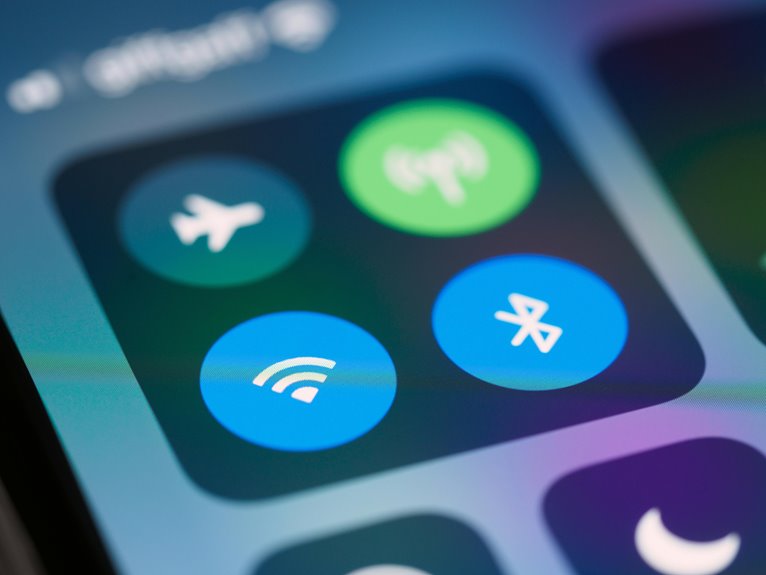
Provided that you keep 4G/5G, Wi-Fi, or bluetooth activity active while sending frequent data, your phone’s radio stack works harder and draws more current. Camera use also hits battery hard because it engages the sensor, image processing, and storage subsystems at once.
In practice, sustained background networking and heavy app interaction can outpace idle drain by a wide margin. You’ll get better longevity provided that you limit simultaneous high-load tasks and let the device rest between bursts.
Provided that you want to stay with the users who keep charge through the day, treat radios and camera sessions as the main power drivers, not minor conveniences.
Screen Brightness and Display Settings
After radios and camera use, the next major battery drain is the display itself. You control this load directly through screen brightness and display settings, so small changes can noticeably extend runtime. High luminance increases panel power draw sharply, especially on OLED and high-resolution screens. Adaptive brightness helps through lowering output once ambient light drops, while manual max brightness can cut efficiency fast. A higher display refresh rate also raises consumption because the panel updates more often.
- You feel smarter once your phone lasts longer.
- You stay in the group that gets through the day.
- You avoid the anxiety of a dying screen.
- You keep control instead of chasing chargers.
- You protect battery health with disciplined settings.
For best results, reduce brightness, lower refresh rate, and use adaptive controls consistently.
Background Apps and Battery Life
Even whenever you’re not actively using them, background apps keep the CPU, memory, and radios working, which can drain battery far faster than true idle. You’ll see this as app syncing checks mail, photos, or cloud data on a schedule, and as push notifications wake processes just to verify state. Each wake-up adds overhead, so even small tasks accumulate into measurable loss across the day.
To keep your phone in the efficient group, audit which apps might run after you leave them, then restrict background activity for services you don’t need constantly. You’ll still stay connected, but your device won’t spend energy maintaining unnecessary sessions. That’s the technical tradeoff: convenience versus idle efficiency, and you can tune it deliberately.
Weak Signals and Network Power Use
As your phone drops to a weak signal, the modem works harder to maintain Wi‑Fi, 4G, or 5G, and that extra effort can become one of the biggest battery drains. You’ll see this as signal strength falls: the radio increases retransmissions, raises antenna activity, and searches longer for a stable link.
That means your phone stays in a high-power state more often, even though you’re not actively using data. To stay in control, you can:
- feel less stressed in dead zones
- save power moving closer to access points
- avoid constant reconnect churn
- trust your device more in shared spaces
- keep your routine running longer
As you understand network load, you join users who optimize battery life with intent, not guesswork.
Processor Load and Battery Drain
Network load isn’t the only thing pulling your battery down; processor demand can be just as costly whenever apps, system services, and background tasks keep the CPU active. You’ll see drain rise as processor load climbs, because app processing forces frequent wakeups, higher clock speeds, and more heat.
In busy sessions, your phone’s battery can fall faster even though the screen stays steady, since compute-heavy code keeps the core from idling. Should you belong to the group that wants reliable all-day use, watch for apps that sync, compress, render, or analyze data in real time. Lowering processor load by closing unnecessary apps and trimming heavy app processing can reduce power draw and help your device stay efficient longer.
Location Services and Sensor Activity
Location services can drain battery steadily whenever your phone keeps GPS, motion sensors, and related background listeners active. You feel it most whenever GPS polling stays frequent, because the receiver wakes often and your device can’t rest. Motion sensor usage also matters: accelerometer and gyroscope checks support wayfinding, fitness, and situation-aware apps, but they add constant overhead. To keep control, audit app permissions, limit precise location to trusted tools, and disable always-on access for features you rarely use.
- You stay connected without needless drain.
- You protect your day from surprise battery loss.
- You join users who tune settings with intent.
- You keep wayfinding accurate whenever it truly counts.
- You reduce sensor chatter and preserve energy.
Charging Habits That Affect Battery Health
How you charge your phone shapes battery health over time, not just daily runtime. You help the cell last longer when you avoid repeated 0% swings, heat, and constant topping off. Fast charging cycles raise temperature and stress lithium chemistry, so use them whenever you need speed, not as your default. Overnight charging patterns can keep the battery near 100% for hours, which adds wear.
| Habit | Effect |
|---|---|
| 20% to 80% range | Lower stress |
| High heat while charging | Faster degradation |
| Fast charging cycles | More thermal load |
| Overnight charging patterns | Prolonged high state of charge |
| Partial charges | Better longevity |
You’ll fit in with users who value longevity through unplugging beforehand, cooling the device, and using optimized charging settings.
Frequently Asked Questions
How Do Session Patterns Improve Battery Life Prediction Accuracy?
Session clustering and usage sequence modeling improve battery prediction by capturing repeated app habits, usage timing, and changes in behavior across sessions. This gives the model a clearer view of real demand patterns and lowers prediction error compared with isolated snapshots.
Which Hardware Components Are Hardest to Model for Power Use?
CPU and camera modules are the toughest to predict for power draw, with Bluetooth not far behind. Accurate estimates depend on sensor calibration and thermal drift correction, since real operating states shift and fixed component baselines are not enough.
How Do Packet Intervals Change Battery Drain During Streaming?
Shortening packet intervals during streaming raises battery drain. Faster packet timing forces more radio wakeups and adds more overhead to each transfer, so the phone uses more energy to handle frequent data bursts.
Why Do Background Activities Reduce Efficiency More Than Idle Mode?
Background activities reduce efficiency because they keep the phone’s CPU, radios, and sensors active instead of letting them rest in idle mode. App refreshes and push notifications cause network checks, wakeups, and processing, which steadily consume energy.
What Battery-Life Concerns Influence Smartphone Purchase Decisions?
You’ll likely put battery life near the top of your buying criteria, because concerns about running out of power steer you toward phones that last longer, recharge faster, and keep up with bright screens, constant connectivity, and background apps without unexpected drain.