
You might not realize that an IoT network often relies more on edge nodes than the cloud. You connect devices like sensors, actuators, and controllers through Wi‑Fi, cellular, or LPWAN, then move data with MQTT or CoAP. That setup powers homes and factories, but it also creates security and latency tradeoffs that you’ll need to weigh carefully before you scale it further.
What Is an IoT Device Network?
An IoT device network is a connected system of physical objects embedded with sensors, software, and communication hardware that lets them collect, exchange, and act on data.
You’re working within device ecosystem basics whenever you link everyday assets into one coordinated environment.
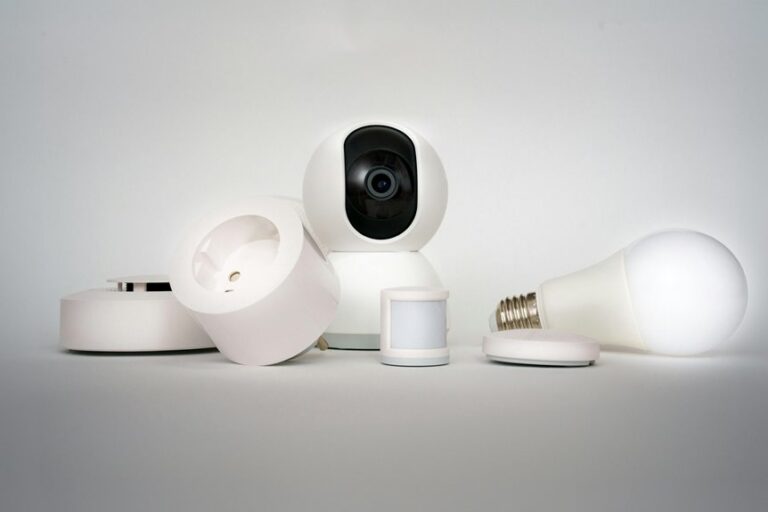
Smart object examples include thermostats, wearables, vehicles, industrial machines, and even toothbrushes or vacuums.
Each device can sense conditions, process inputs, and support autonomous tasks that improve efficiency and control.
You’ll often see these networks in homes, factories, farms, transportation, and cities, where devices share operational setting and respond to changing conditions.
Together, you and your connected devices create a scalable, data-driven system that extends beyond isolated gadgets and forms a practical, intelligent network.
How IoT Devices Connect and Share Data
IoT devices connect through layered networks that let sensors, actuators, and embedded controllers exchange data with gateways, cloud platforms, or nearby devices.
You usually start with device pairing methods such as QR codes, Bluetooth finding, or secure keys, so each unit joins your system with trust.
Next, the data exchange flow carries readings from sensors to an edge node, then onward to applications that analyze events and trigger actions.
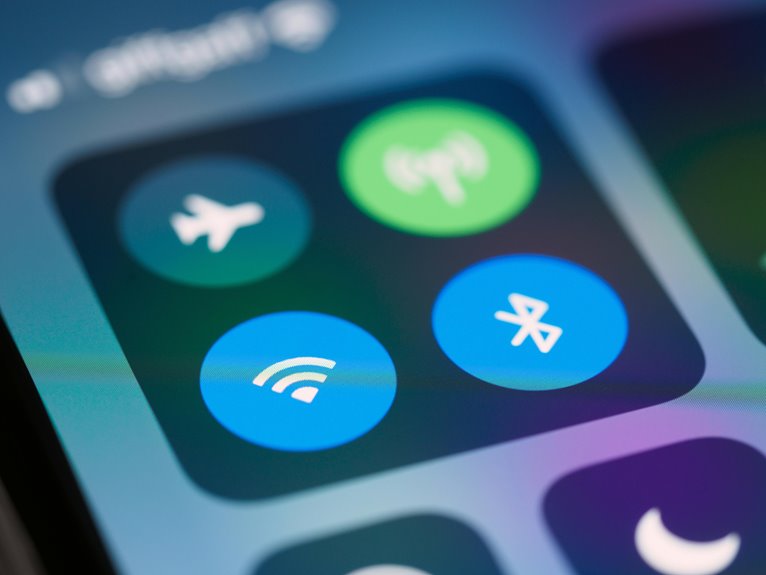
You can route traffic over Wi-Fi, cellular, or low-power links, depending on range and latency needs.
Lightweight protocols like MQTT and CoAP help you move small packets efficiently.
Whenever devices share status, commands, and alerts in real time, you keep your network responsive, coordinated, and ready for collaborative use.
What Makes Up an IoT Network?
You can break an IoT network into three core parts: the device layer, connectivity protocols, and data processing nodes.
The device layer includes sensors, actuators, and embedded controllers that capture and act on data.
Connectivity protocols move that data across wired or wireless links, while gateways and edge or cloud nodes process it for control and automation.
Device Layer
At the device layer, connected objects form the physical foundation of an IoT network through sensing conditions, processing data, and exchanging information.
You’re working with smart objects that collect real-world signals and turn them into usable inputs for your system. Strong sensor integration helps you combine temperature, motion, pressure, or location data inside one device, while unique device identifiers keep every node traceable and manageable.
- Sensors capture environmental changes
- MCUs process local data
- Actuators trigger actions
- Power sources keep devices running
You can expect this layer to include thermostats, wearables, vehicles, and industrial machines. Whenever you design it well, you help your network feel reliable, coordinated, and ready for shared automation across your connected community.
Connectivity Protocols
Connectivity protocols are what let IoT devices exchange data reliably, whether they’re talking over WiFi, Bluetooth, cellular, LPWAN, or mesh links. You choose them based on range, power, throughput, and latency, so your network fits the job.
MQTT messaging gives you lightweight publish-subscribe delivery, which works well whenever many devices need to share status with minimal overhead. CoAP efficiency helps you keep traffic lean on constrained sensors, especially when you’re operating on batteries or narrow links.
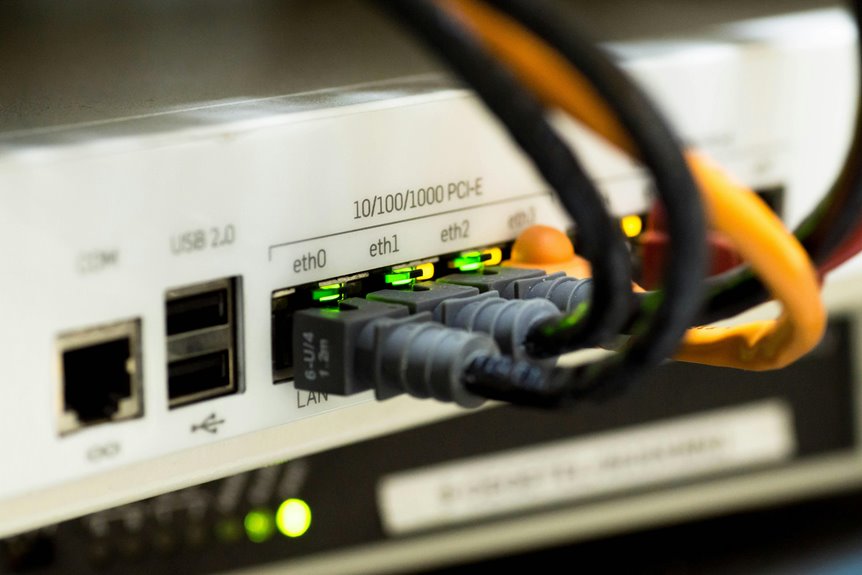
WiFi and Ethernet suit high-bandwidth nodes; BLE and Zigbee support short-range device groups; LTE-M, NB-IoT, and 5G extend reach; LoRaWAN covers sparse, low-power deployments. Whenever you select the right protocol mix, your connected system feels cohesive, dependable, and ready to grow with you.
Data Processing Nodes
- They aggregate readings from sensors, actuators, and edge devices.
- They apply data buffering strategies to prevent packet loss during spikes.
- They run local analytics pipelines for quick decisions before cloud sync.
- They package validated data for gateways, LAN, cellular, or LPWAN links.
When you design these nodes well, you give your system a dependable shared layer that supports smart homes, industry, and city deployments.
That consistency helps your devices stay connected, responsive, and ready for autonomous tasks.
Common IoT Use Cases in Home and Industry
In home and industrial settings, IoT systems let you automate routine tasks and monitor conditions in real time.
In your home, smart appliances like thermostats, lights, vacuums, and security cameras respond to schedules, occupancy, and sensor data, so you can cut effort and improve comfort. In industry, industrial automation links machines, conveyors, and inventory systems to track performance, trigger alerts, and coordinate workflows.
You can use connected meters to watch energy use, and smart HVAC controls to keep environments stable. Wearables and mobile devices also help you join a connected ecosystem where data flows between assets and cloud tools.
These use cases reduce manual work, improve visibility, and help you act faster with shared intelligence across your network.
Security Risks in IoT Networks
As IoT networks expand across homes, industry, and cities, they also increase your exposure to attack surfaces such as weak device authentication, insecure protocols, and poorly protected gateways. You face threats that can disrupt data flow, expose personal telemetry, and let attackers join your network unnoticed.
Common risks include:
- device spoofing risks that impersonate trusted sensors
- insecure firmware updates that install malicious code
- default credentials reused across fleets
- unencrypted traffic intercepted in transit
If you manage smart devices, you’re part of a shared security community, and your vigilance matters. Monitor logs, segment access, and verify device identities before you trust any signal. Each weak link can spread compromise across connected systems quickly.
How to Build a Reliable IoT Network
To build a reliable IoT network, you need to design for coverage, latency, power use, and device scale from the start. Choose connectivity that fits each device class: Wi-Fi for dense local links, cellular for wide mobility, and LPWAN for low-power reach.
Place gateways where they can balance traffic and bridge protocols cleanly. Add network redundancy with backup paths, dual gateways, and fallback links so one failure doesn’t isolate your devices.
Standardize routing, time sync, and message formats to cut errors. Use network monitoring to track signal quality, packet loss, battery drain, and uptime, then tune thresholds before faults spread.
You’ll build a setup your team can trust and grow with, while every node stays visible and accountable.
Where IoT Connectivity Is Heading Next
You’re seeing IoT connectivity shift toward edge-driven structures that process data closer to devices. This reduces latency, cuts backhaul traffic, and supports more autonomous control across sensors, gateways, and industrial endpoints.
At the same time, 5G and emerging next-gen networks are expanding capacity, reliability, and device density for the next wave of connected systems.
Edge-Driven IoT Growth
Edge computing is pushing IoT networks closer to the devices themselves, so data can be processed locally before it travels to the cloud. You gain edge intelligence as sensors, gateways, and microcontrollers run local analytics at the network edge, reducing latency and easing bandwidth use.
This setup helps you stay aligned with teams building faster, more resilient device networks.
- Process data where it’s collected
- Filter events before cloud transfer
- Support autonomous device actions
- Protect operations during outages
As your IoT fleet grows, edge-driven design lets you coordinate homes, factories, and vehicles with tighter control. You’ll rely on nearby compute to handle routine decisions, while the cloud manages long-term storage, updates, and fleet-wide understanding.
That balance keeps your system efficient and keeps you connected to a modern IoT community.
5G And Beyond
As edge computing keeps more decisions local, the next leap in IoT depends on faster, denser, and more reliable connectivity across 5G and the networks that follow.
You’ll see 5G handle massive device density, low latency, and high-throughput links for smart city sensors, vehicles, and industrial machines. It’ll support URLLC for autonomous infrastructure, so traffic systems, grids, and robots can react in near real time.
Beyond 5G, you can expect tighter integration with edge clouds, private cellular networks, and satellite links to extend coverage. That mix lets your devices stay connected in crowded zones, remote sites, and moving fleets.
Should you’re building IoT systems, you’re part of a network that’s becoming more adaptive, resilient, and community-wide.
Frequently Asked Questions
How Many Iot Devices Are Connected Worldwide Today?
About 18.5 billion IoT devices are connected worldwide today, and that number keeps climbing. Global estimates suggest connections could surpass 75 billion by 2025, showing how rapidly the network is expanding.
Which Wireless Technology Is Most Common in Iot Networks?
Wi-Fi is the most widely used wireless technology in IoT networks. Bluetooth, Zigbee, and LoRaWAN are also common when devices need low power use or long range.
What Role Does an Iot Gateway Play?
You use an IoT gateway to link devices, process data at the edge, convert protocols, and send information to cloud systems. It keeps your network efficient, secure, and able to work across different devices, helping you build a smarter connected environment.
Can Iot Devices Work Without Public Internet Access?
Yes. Devices can rely on local control and offline automation through Bluetooth, Wi-Fi, Zigbee, or a gateway, so they keep sensing, communicating, and acting without public internet access.
What Industries Use Iot Networks Beyond Smart Homes?
IoT networks power healthcare monitoring, industrial automation, agriculture, transportation, and smart cities, supporting connected operations across each sector. They help monitor patients, manage machines, and improve logistics with greater precision.