
You connect, you stream, you sync—Bluetooth makes short-range wireless communication feel simple. It moves data across the crowded 2.4 GHz band with timed packets and frequency hopping, then balances range, speed, and power across phones, headphones, sensors, and more. Classic handles audio well, Low Energy extends battery life, and pairing adds control, but the real tradeoffs start as interference, privacy, and compatibility enter the link.
What Is Bluetooth Technology?
Bluetooth technology is a short-range wireless standard that lets you exchange data between fixed and mobile devices without cables, network infrastructure, or line-of-sight.
You use it to form personal area networks that replace short wired links with low-power radio in the 2.4 GHz ISM band.
Its history overview traces back to a 1990s effort to standardize interoperable device connections, while its protocol origins reflect a design goal of simple, low-cost pairing across many vendors.
You’ll find it built for headphones, keyboards, sensors, and phones, so you can stay connected to your devices and your community.
The standard prioritizes compatibility, energy efficiency, and reliable short-range communication, making it a practical choice whenever you want seamless exchange without relying on an external network.
How Bluetooth Wireless Communication Works
While you pair two devices, Bluetooth creates a short-range radio link in the 2.4 GHz ISM band and breaks data into packets sent in timed slots over designated channels. You keep the connection stable because packet timing controls when each device transmits, so both ends know exactly while to listen and reply.
Bluetooth also uses frequency hopping, shifting rapidly among channels to reduce interference from Wi-Fi, microwaves, and other nearby signals. This shared rhythm helps you stay connected in crowded spaces.
The radio link carries your voice, files, or control signals without needing network infrastructure. By synchronizing transmission, your devices communicate efficiently, conserve power, and maintain secure, direct links that fit naturally into your personal area network.
Bluetooth Versions and Speed
As Bluetooth evolved, each version improved speed, range, or power efficiency to fit different device needs.
You can use a Bluetooth version comparison to see how Classic prioritized stable BR/EDR links, while Low Energy reduced airtime and battery drain. Bluetooth 4.x sharpened efficiency for short bursts, and Bluetooth 5 lifted LE throughput to 2 Mbit/s or extended range whenever you trade speed for coverage.
In a speed improvement analysis, you’ll notice the protocol doesn’t simply get faster; it balances payload size, hop timing, and power budget. That’s why your devices can join a common wireless ecosystem without forcing every link to use the same mode.
Whenever you understand the version, you pick the right performance profile and stay aligned with the network around you.
Common Bluetooth Devices and Uses
You use Bluetooth most often with wireless audio devices, such as headphones and speakers, to stream sound directly from phones, tablets, and laptops.
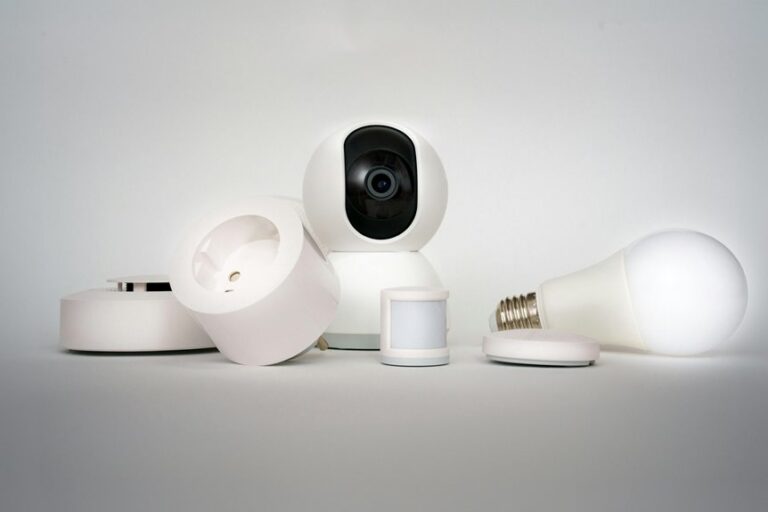
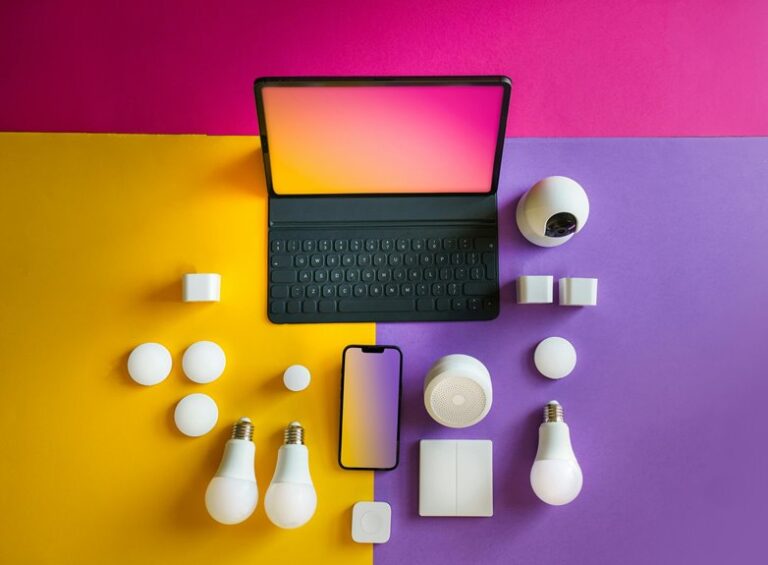
You also connect smart home accessories, including locks, lights, and thermostats, to support local control without network cabling.
For fitness tracking wearables, Bluetooth lets you exchange sensor data with your mobile device for activity monitoring and synchronization.
Wireless Audio Devices
Bluetooth audio devices use the short-range 2.4 GHz radio link to stream sound directly between a phone, tablet, laptop, or TV and peripherals such as wireless headphones, earbuds, speakers, and car infotainment systems.
You pair once, then your device keeps a secure link with low latency for calls, music, and video.
In everyday use, portable earbuds let you move freely without cable drag, while wireless speakers give you shared listening in a room, patio, or commute.
Bluetooth Classic usually carries the audio stream, and adaptive hopping helps limit interference from nearby Wi-Fi.
You get practical, low-power performance, so you can stay connected to your playlist, your team, and your space without feeling tethered.
Smart Home Accessories
Smart home accessories use Bluetooth to connect low-power devices like smart locks, light bulbs, thermostats, plugs, and sensors directly to your phone, tablet, or hub without relying on Wi‑Fi for every task. You gain local control with short-range pairing, which reduces latency and power draw while keeping setup simple.
In practice, smart plugs let you switch appliances on or off, monitor usage, and automate schedules from one interface. Automated lighting responds to scenes, timers, or occupancy sensors, so you can coordinate rooms without complex wiring.
Bluetooth’s mesh-capable devices extend coverage across your home, letting you stay connected to a shared system that feels coordinated and dependable. Because you pair devices securely, you keep control close, efficient, and personalized.
Fitness Tracking Wearables
Although they’re compact, fitness tracking wearables rely on Bluetooth to keep a continuous link between your body-worn device and a phone, tablet, or watch app. You get low-power synchronization that moves step counts, sleep metrics, and workout sessions without draining the battery fast.
The device samples sensors locally, then transmits activity monitoring data in short packets over the 2.4 GHz band. Your app can then analyze heart rate trends, pace, and recovery intervals with enough precision to support training decisions.
Because Bluetooth supports direct device-to-device communication, you don’t need Wi-Fi for routine updates. That makes the wearable feel integrated into your daily routine and into a community of users who track performance, compare goals, and stay accountable together.
Bluetooth Pairing and Discovery
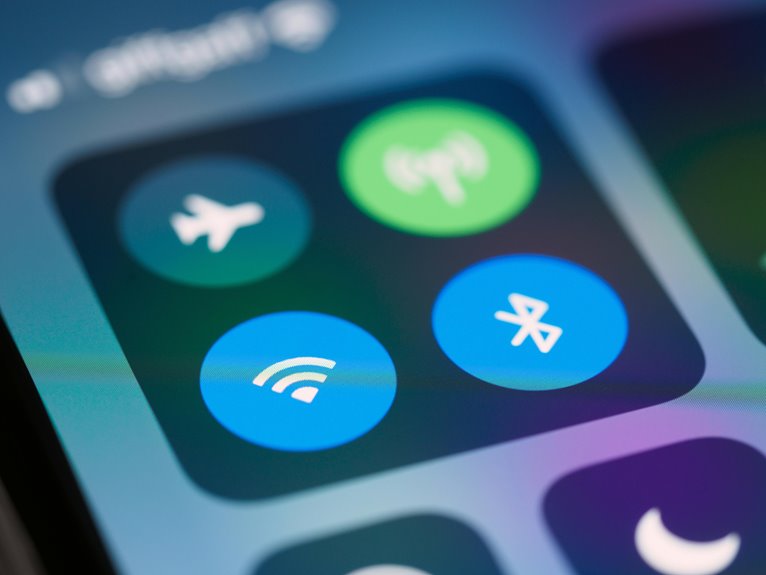
How do devices find each other and establish a trusted link? You initiate Bluetooth pairing by placing hardware in device discovery modes, where one advertises its presence and the other scans for it.
During this exchange, you compare identifiers, confirm compatibility, and start pairing authentication steps that verify both sides can trust the connection. Your device may request a PIN, passkey, or numeric comparison, and each method reduces spoofing risk.
After authentication, both devices store shared keys, so you won’t repeat the full process every time. Discovery and pairing create a private operating context for your devices, letting you join a familiar Bluetooth network with confidence, precision, and control.
That workflow keeps access intentional, organized, and efficient for you.
Bluetooth Range, Frequency, and Interference
You’ll find that Bluetooth range is typically limited to about 10 meters, though antenna design, transmit power, and obstacles can shift that distance.
Because Bluetooth operates in the crowded 2.4 GHz ISM band, Wi‑Fi, microwaves, and nearby wireless devices can introduce interference and reduce link stability.
You should evaluate signal strength by considering attenuation, device placement, and channel conditions, since these factors directly affect connection quality.
Bluetooth Range Limits
Bluetooth range is limited through its low transmission power, 2.4 GHz operation, and the behavior of radio propagation in shared unlicensed band. You can expect dependable links at close distance, but range degradation appears as signals pass through walls, furniture, and your body.
Environmental obstacles absorb, reflect, and scatter energy, so you may see reduced throughput before the connection drops. Bluetooth’s short-wavelength carrier helps compact antennas, yet it also makes propagation more sensitive to obstruction and multipath.
You’re part of the normal operating zone when devices stay within roughly 10 meters, though higher Bluetooth versions can extend that under ideal conditions. For reliable performance, place devices with clear pathways, minimize shielding, and match your setup to the space you share.
2.4 GHz Interference
Crowded 2.4 GHz band can weaken Bluetooth links because it shares the ISM band with Wi‑Fi, microwaves, and other emitters.
When you work in this crowded band, Bluetooth’s frequency-hopping system helps you stay connected via moving packets across 79 narrow channels, reducing sustained collisions.
If you’re near a kitchen or break room, microwave overlap can inject bursty noise that may block short transmissions.
Bluetooth Low Energy also spreads traffic across 40 channels, so adaptive frequency hopping can avoid persistently busy slots and keep your devices in sync.
You’ll usually get better results when neighboring radios cooperate, since coexistence matters as much as transmitter design.
For your team’s devices, choosing less congested channels can preserve reliable links without requiring new hardware.
Signal Strength Factors
Even with Bluetooth’s frequency-hopping design, signal strength depends on range, operating frequency, and local interference. You’ll see signal variation as distance grows, because 2.4 GHz energy loses power quickly in open space and even faster near walls, bodies, and furniture. Obstacle attenuation matters as you’re in a crowded room, since metal, concrete, and water-rich materials absorb or scatter packets.
- Range: keep devices within about 10 meters for stable links.
- Frequency: Bluetooth shares the ISM band with Wi‑Fi and microwaves.
- Interference: adaptive hopping helps, but congestion still raises retries.
If you place devices thoughtfully, you join a more reliable connection environment. Lower transmit power conserves battery, yet it also narrows margin, so positioning becomes critical for consistent throughput and fewer dropouts.
Bluetooth Low Energy in Smart Devices
As smart devices demand longer battery life and smaller radio footprints, Bluetooth Low Energy (LE) provides a low-power wireless link for point-to-point, broadcast, and mesh communication.
You can use it to keep wearables, sensors, and home nodes connected while preserving battery optimization and limiting sensor latency.
LE’s 40 channels and 2 MHz spacing reduce airtime, so your devices spend less time transmitting and more time sleeping.
You get reliable short-range links in the crowded 2.4 GHz band through adaptive hopping, which helps your network resist interference from nearby radios.
Because LE supports device identification, proximity, and mesh coverage, you can build systems that feel coordinated and efficient.
That makes you part of an ecosystem where smart devices work together without wasting power or responsiveness.
Bluetooth Audio, Calls, and Streaming
When you use Bluetooth for audio, calls, or streaming, the link typically runs over Bluetooth Classic, which supports synchronous voice traffic and asynchronous data packets for stable short-range communication. You rely on this framework whenever you join headphones, earbuds, or car systems that need predictable latency and clear voice paths. Key factors shape performance:
- audio codecs determine compression efficiency and perceived clarity.
- streaming quality depends on signal strength, interference, and device tuning.
- call handling balances microphone input with speaker output for natural conversation.
You’ll notice that well-matched devices keep music coherent and voices intelligible, so you feel connected to your gear and your community. In practice, Bluetooth’s short-range design supports hands-free use, smooth playback, and reliable everyday communication without complex setup.
Bluetooth Security and Privacy Risks
Bluetooth’s convenience for audio, calls, and streaming also creates privacy and security exposure, because it operates over open 2.4 GHz band and pairs devices through short-range wireless links that attackers can probe or abuse.
You face risks from device spoofing, where a malicious node imitates a trusted accessory and tries to join your personal area network. You can also be exposed to unauthorized tracking when broadcasts, identifiers, or presence signals reveal your device’s location or habits.
Bluetooth Classic and LE both rely on proximity-based discovery, so careless pairing can leak metadata even though payloads stay encrypted. In case you’re part of a connected group, you need to treat every nearby radio as potentially hostile and limit what your device advertises publicly.
Fix Common Bluetooth Problems
Even though Bluetooth usually works reliably, you’ll sometimes need to troubleshoot pairing failures, dropouts, weak range, or devices that won’t reconnect. Start by checking power, proximity, and whether both devices are in pairing mode. Then follow this sequence:
- Remove the old pairing record on both devices and pair again.
- Perform device resets if the connection stack hangs or audio stays unstable.
- Install firmware updates on headphones, speakers, phones, or adapters to correct protocol bugs.
You should also reduce interference by moving away from Wi-Fi routers, USB 3.0 hubs, and microwaves.
Should range still feel poor, test with another host to isolate the fault.
These steps help you stay connected with less guesswork, and they usually restore the reliable, low-power link Bluetooth was designed to deliver.
What’s Next for Bluetooth?
You can expect Bluetooth standards to keep advancing, with higher throughput, lower latency, and more efficient low-energy operation.
These changes’ll expand support for mesh networking, precise device positioning, and denser coexistence in crowded 2.4 GHz environments.
As integration improves, you’ll see Bluetooth embedded more deeply across wearables, sensors, vehicles, and other connected systems.
Emerging Bluetooth Standards
As Bluetooth continues to evolve, emerging standards are pushing the technology toward higher throughput, lower latency, and better support for dense IoT environments. You’ll see these gains in features that improve band efficiency and positional accuracy while keeping power budgets tight.
- Bluetooth LE Audio refines streaming with shared channels and synchronized playback.
- Mesh networking extends coverage across many nodes, so you can scale sensor clusters without central bottlenecks.
- Direction finding adds angle-based location data, helping you track assets more precisely.
For you, this means more reliable links in crowded RF spaces and tighter integration across devices that need to act as a coordinated system. The result isn’t just faster Bluetooth; it’s a standards stack built to keep you connected, informed, and technically aligned with modern wireless demands.
Future Device Integration
Bluetooth’s next integration phase will likely center on tighter coordination between phones, wearables, vehicles, and ambient IoT nodes, so devices can share situational information with less manual setup and lower latency. You’ll see cross platform ecosystems mature as pairing, identity, and permissions become portable across brands.
| Integration target | Expected effect |
|---|---|
| Phone to watch | Faster alerts |
| Car to headset | Safer voice control |
| Home sensors | Smarter automation |
| Medical wearables | Continuous monitoring |
| Edge hubs | Local decision-making |
For you, embedded sensor networks will matter most: they’ll expose richer state, while Bluetooth LE mesh and direction finding improve location-aware actions. The result should feel seamless, but it’ll still depend on standardized profiles, stronger security, and low-power coordination across mixed devices.
Frequently Asked Questions
How Does Bluetooth Handle Simultaneous Connections to Multiple Devices?
Bluetooth connects to more than one device by switching quickly between links, and Bluetooth Low Energy can keep several active at the same time. It relies on connection scheduling and device priority so key devices remain responsive while the rest share available bandwidth.
Why Do Some Bluetooth Devices Drain Battery Faster Than Others?
You’ll notice faster battery drain when a Bluetooth device transmits at higher power, keeps an active connection for longer periods, or lacks power-saving controls. Frequent scanning, boosted signal strength, multiple simultaneous connections, and heavier processing all increase energy use.
Can Bluetooth Work Through Walls and Furniture Reliably?
Yes, Bluetooth can work through walls and furniture, but the connection can become less stable quickly. Thick materials, distance, and interference all reduce signal strength, so fewer obstacles usually give better results.
What Causes Bluetooth Latency in Gaming and Video Playback?
Bluetooth latency is driven by codec processing delay, audio buffering, packet retransmissions, and frequency hopping overhead. Lag increases when interference, distance, or low power operation makes the device favor stable transmission over tightly synced playback.
How Is Bluetooth Used for Indoor Positioning and Tracking?
Bluetooth enables indoor positioning by combining proximity beacons with signal strength measurements. A device estimates its location from nearby beacon RSSI values and then updates its path across rooms, zones, and assets in real time.