
If you travel or work with gear across regions, you’ll want a compact, reliable step-up converter that handles inrush currents and runs cool 24/7. Pick units with toroidal or ring transformers, proper grounding, circuit breakers, and clear ratings so your devices don’t overheat or trip. I’ll walk you through a few models and the key specs to watch so you can match capacity, outlets, and protections to your gear-starting with a practical 1500W option.
| Yinleader 1500W Step Up/Down Voltage Transformer Converter |

| Versatile All-Rounder | Voltage Conversion: 110V ↔ 220V (step-up/step-down) | Continuous Power Rating: 1500W continuous | Transformer Type / Design: Toroidal transformer | VIEW LATEST PRICE | Read Our Analysis |
| uyoyous 3000W 110V to 220V Step-Up Power Converter |

| Heavy-Duty Step-Up | Voltage Conversion: 110V → 220V (step-up only) | Continuous Power Rating: 3000W nominal (continuous guidance; avoid >~1900W continuous) | Transformer Type / Design: Ultra-thin ring-type transformer | VIEW LATEST PRICE | Read Our Analysis |
| UMI 110V–220V Step-Up Voltage Converter (US) |
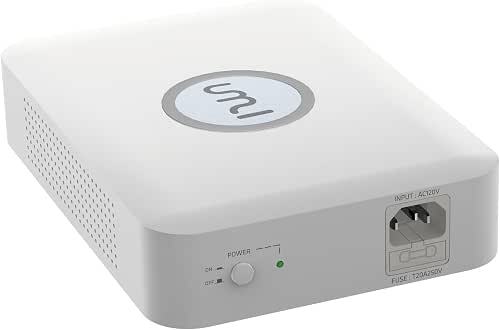
| Compact Traveler | Voltage Conversion: 110–120V → 220–240V (step-up) | Continuous Power Rating: 300W continuous | Transformer Type / Design: Ultra-thin toroidal transformer | VIEW LATEST PRICE | Read Our Analysis |
| Yinleader 5000W Step Up/Down Voltage Transformer Converter |

| High-Capacity Pro | Voltage Conversion: 110/120V ↔ 220/240V (step-up/step-down) | Continuous Power Rating: 5000W continuous | Transformer Type / Design: High-efficiency toroidal transformer | VIEW LATEST PRICE | Read Our Analysis |
| UMI 2400W Step-Up Voltage Converter 110V to 220V |

| Continuous Power Workhorse | Voltage Conversion: 110/120V → 220/230V (step-up) | Continuous Power Rating: 2400W continuous | Transformer Type / Design: Toroidal transformer (toroid core, copper coils) | VIEW LATEST PRICE | Read Our Analysis |
More Details on Our Top Picks
Yinleader 1500W Step Up/Down Voltage Transformer Converter
If you need a compact, reliable converter for everyday appliances, the Yinleader 1500W is a solid pick – it steps 110V and 220–240V up or down without changing frequency, runs continuously, and uses a toroidal transformer for stable, efficient output. You’ll get 1500W continuous power from an 8×6×6 in, 10 lb unit with low idle draw. Four outputs handle US and most international plugs (except large South African). Use it for CPAPs, laptops, phones, hair tools and TVs, but avoid high-draw devices over 1000W unless you choose a 3000W model. Dual breakers and support add safety.
- Voltage Conversion:110V ↔ 220V (step-up/step-down)
- Continuous Power Rating:1500W continuous
- Transformer Type / Design:Toroidal transformer
- Intended Appliance Compatibility:Small-to-medium household/consumer electronics (CPAP, laptops, hair tools, TVs, gaming)
- Safety Protections:Dual circuit-breaker protection (per voltage)
- Portability / Physical Size & Weight:8 × 6 × 6 in; 10 lb
- Additional Feature:Bi-directional voltage conversion
- Additional Feature:Four AC output sockets
- Additional Feature:Dual circuit-breaker protection
uyoyous 3000W 110V to 220V Step-Up Power Converter
For anyone who needs to run 220–240V appliances in North America, the uyoyous 3000W Step Up Converter delivers a compact, high-capacity solution that handles heavy loads like hair dryers and rice cookers. You plug it into 110V and get two 220V outlets for European/Asian gear. Its ultra-thin ring-type transformer keeps size down (9.8 × 8.1 × 2.9 in) while weighing 17.1 lb. Nominally 3000W, you should size devices ×1.3 for start-up current and avoid continuous loads above ~1900W. Confirm appliance power before use, monitor temperature during long runs, and remember it only steps up 110V→220V.
- Voltage Conversion:110V → 220V (step-up only)
- Continuous Power Rating:3000W nominal (continuous guidance; avoid >~1900W continuous)
- Transformer Type / Design:Ultra-thin ring-type transformer
- Intended Appliance Compatibility:High-power 220V appliances (hair dryer, rice cooker, beauty/home instruments)
- Safety Protections:Thermal/cooling guidance; general safety notes (confirm power/voltage)
- Portability / Physical Size & Weight:9.8 × 8.1 × 2.9 in; 17.1 lb
- Additional Feature:Step-up only (110→220V)
- Additional Feature:Two 220V international outlets
- Additional Feature:Ultra-thin ring transformer
UMI 110V–220V Step-Up Voltage Converter (US)
Travelers or expats who need to run 220–240V appliances in North America will appreciate the UMI 110V–220V Step-Up Converter’s compact, dual-socket design and 300W continuous rating, which lets you power two small devices from Euro/Asia plugs without bulky adapters. You’ll get an ultra-thin toroidal transformer in a compact 21.5 × 15.3 × 5.2 cm package weighing 2.7 kg, designed for energy-saving, quiet operation. It’s CE and CQC certified with microcomputer control and protections for thermal, fuse, overload, and short-circuit faults. Don’t exceed 300W – overloads may trigger alarm or automatic shutdown.
- Voltage Conversion:110–120V → 220–240V (step-up)
- Continuous Power Rating:300W continuous
- Transformer Type / Design:Ultra-thin toroidal transformer
- Intended Appliance Compatibility:Small 220V appliances from Europe/Asia (general low-power devices)
- Safety Protections:Thermal, fuse, overload, short-circuit protections; microcomputer control
- Portability / Physical Size & Weight:8.46 × 6 × 2.05 in; 6.0 lb
- Additional Feature:Built-in microcomputer control
- Additional Feature:CE and CQC certified
- Additional Feature:Compact ultra-thin toroid
Yinleader 5000W Step Up/Down Voltage Transformer Converter
Choose the Yinleader 5000W Step Up/Down Transformer Converter when you need a heavy-duty, continuous-run solution that reliably converts 110/120V ↔ 220/240V for high-draw appliances up to a 3000W maximum load. You get a 5000W-rated toroidal transformer built for 24/7 operation with stable output and low consumption. It includes a US power cord, three US 110–120V sockets and three universal 220–240V sockets (won’t accept large South African plugs). It converts voltage only, not frequency, so check 50Hz/60Hz compatibility. Built-in circuit breakers protect each voltage output, and manufacturer support is available. Don’t use it to charge EVs.
- Voltage Conversion:110/120V ↔ 220/240V (step-up/step-down)
- Continuous Power Rating:5000W continuous
- Transformer Type / Design:High-efficiency toroidal transformer
- Intended Appliance Compatibility:Medium-to-high-power household appliances (up to stated MPC ~3000W)
- Safety Protections:Built-in circuit breaker protection (per voltage)
- Portability / Physical Size & Weight:(not explicitly dimensioned) larger unit; 5000W unit weight implied heavier (includes US cord) – rated for continuous 24/7
- Additional Feature:High-capacity 5000W rating
- Additional Feature:Six total AC sockets
- Additional Feature:EV charging usage warning
UMI 2400W Step-Up Voltage Converter 110V to 220V
If you need to run heavy-duty 220–230 V appliances on U.S. 120 V outlets, the UMI 2400W Step-Up Converter is built to handle them-its 2400 W continuous (4,600 W intermittent) toroidal transformer lets you power high-draw devices like air fryers, coffee makers, and hair dryers without frequent trips or shutdowns. You’ll get quiet, efficient operation from the toroid core with pure copper coils, plus an LED readout for input voltage and wattage. ETL and CE certifications and multiple protections guard your gear. At 9.45 x 2.75 x 7.28 inches and 18.7 lb, it’s portable and robust.
- Voltage Conversion:110/120V → 220/230V (step-up)
- Continuous Power Rating:2400W continuous
- Transformer Type / Design:Toroidal transformer (toroid core, copper coils)
- Intended Appliance Compatibility:Large-capacity 220V appliances (hair dryer, coffee maker, rice cooker, blender, air fryer, toaster)
- Safety Protections:Multiple protections (surge, over-power, over-current, thermal, overload, short-circuit, anti-leakage)
- Portability / Physical Size & Weight:9.45 × 2.75 × 7.28 in; 18.7 lb
- Additional Feature:Intermittent 4600W boost
- Additional Feature:LED input/power display
- Additional Feature:Broad safety certifications (ETL, CE)
Factors to Consider When Choosing Step Up Power Converters
When picking a step-up converter, you’ll want to check power capacity and ratings to make sure it can handle your devices without overheating. Confirm voltage and frequency compatibility, match plug and outlet types, and look for built-in safety protections like surge and short-circuit guards. Also consider size, weight, and portability so the unit fits your setup and travel needs.
Power Capacity And Rating
Because appliances draw different amounts of power at startup and during steady operation, you should match a step-up converter’s continuous and peak wattage ratings to the device’s needs. Choose a converter whose continuous rating equals or exceeds the appliance’s steady-state wattage to avoid overloads and unexpected shutdowns. For motors or heating elements with high inrush currents, pick a unit rated 1.3–2× the running wattage so brief surges won’t trip it. Verify both continuous and intermittent (peak) specs; continuous handles sustained use, peak covers short high loads like blenders or hair dryers. If you plan 24/7 operation, derate the converter by adding margin to reduce heat and extend life. Also confirm thermal cutouts, breakers, or fuses match the intended load for safe operation.
Voltage And Frequency Compatibility
Although voltage conversion is the primary job of a step-up converter, you also need to confirm frequency compatibility since most transformers don’t change Hz and mismatched frequency can impair motors, clocks, and timing-sensitive electronics. Check your appliance’s nameplate or manual for acceptable input voltage and required frequency-some gear lists 50/60 Hz or a wide voltage range like 100–240V. Make certain the converter supplies the correct target voltage (e.g., 110–120V ↔ 220–240V) to avoid permanent damage. For frequency-sensitive items-turntables, certain medical devices, synchronous motors-use solutions that match both voltage and Hz or a combined voltage-and-frequency inverter. If you’re operating on the opposite mains frequency, verify cooling, motor speed, and timing will remain safe or consult the manufacturer.
Plug And Outlet Types
If your appliance’s plug doesn’t match the converter’s sockets, you’ll face loose connections, unsafe adapters, or forced jury‑rigging-so always check plug type, voltage-specific outlet form, and grounding before you buy. Verify the converter’s output sockets match your appliance’s pin configuration (two‑pin Euro, three‑pin UK, NEMA US) to avoid insecure adapters. Make sure the converter supplies the correct voltage outlet form (110–120V vs 220–240V) so plugs fit without forcing. Confirm outlet number and spacing so bulky plugs or multiple connectors won’t block neighboring sockets or exceed rated capacity. Use grounded three‑prong outlets for devices requiring earth connections. Don’t rely on pin‑shape adapters without checking current rating and polarity, since mismatches can cause overheating, poor contact, or equipment damage.
Safety Protections Built In
When choosing a step‑up converter, prioritize built‑in safety features that protect both your gear and your home; these protections trip, shut down, or warn you when things go wrong so you don’t have to rely on luck or ad‑hoc fixes. Look for overcurrent/overload protection-circuit breakers or fuses-that trip if a device exceeds rated wattage. Make certain thermal protection shuts the unit down or engages a thermostat if the transformer overheats during extended use. Confirm short‑circuit protection and rapid fault interruption to reduce fire and equipment damage risks. Check for ground‑fault, insulation, and leakage protection to prevent electric shock by isolating live parts from the chassis or ground. Prefer converters with indicator LEDs or digital displays plus audible alarms to notify you of overloads, overheating, or input voltage issues.
Size Weight And Portability
Because power rating drives transformer mass, you’ll want to balance the wattage you need against the size and weight you can realistically carry. Higher continuous power ratings need more copper and core material, so bigger ratings mean heavier units. If you travel often, favor toroidal or ring-type designs for a flatter, more compact profile versus bulky EI cores. Aim for handheld-friendly sizes-roughly under 10 lb and about 10 × 8 × 3 inches-if you’ll move it frequently. Match size to both continuous and startup loads: converters sized only for intermittent peaks can still be heavy. Finally, factor in ventilation and mounting clearance; a compact case may still require extra room for cooling. That prevents surprises and keeps your kit truly portable.