
You probably don’t know that many smartphone “rules” sound true because they’re repeated so often, not because they’re accurate. You might believe overnight charging, closing every app, or chasing full signal bars always helps, but the reality is usually more detailed. A few common habits can waste your time or even hurt performance. Before you trust the next tip, you’ll want to see which myths actually hold up.
Why Smartphone Myths Spread So Easily
Smartphone myths spread easily because they sound simple, feel believable, and often match what people already expect. You could hear a claim from a friend, see it repeated online, and trust it before you check the facts. That’s how tech misinformation gains momentum. Repetition creates familiarity, and familiarity can look like truth.
Marketers also amplify myths whenever they spotlight features that sound impressive but don’t tell the whole story. Whenever you want quick answers, myths offer certainty without effort, so they stick. Myth persistence grows whenever people share advice to help each other, because belonging matters.
Should you pause, compare sources, and look for evidence, you help stop the cycle and make smarter choices together.
Does Charging Overnight Ruin Battery Health?
You may worry that leaving your phone plugged in all night hurts battery health, but modern smartphones stop charging once they hit full capacity.
That means overnight charging usually isn’t the real problem people believe it is.
The bigger battery issues come from heat, frequent deep drains, and aging over time.
Overnight Charging Risks
Although it’s a common worry, charging your phone overnight doesn’t ruin battery health.
Your device stops drawing power once it reaches full charge, so you can sleep without stressing about battery safety. Good charging habits still matter: use a reliable charger, avoid heat, and keep the port clean.
When you plug in before bed, you’re simply topping off the battery while the phone manages power on its own. You don’t need to hover over it or unplug at a certain minute.
For most users, overnight charging is a normal routine that fits busy days and helps you start mornings ready. So you can join the many people who charge this way and trust your phone to handle it safely and efficiently.
Battery Health Myths
- Keep your battery between roughly 20% and 80% whenever you can.
- Use battery calibration only if your percentage readings seem off.
- Avoid heat, since warmth stresses lithium-ion cells more than staying plugged in.
If you want a simple routine, charge whenever it fits your day.
You’re not hurting your phone by sleeping while it’s connected.
Modern batteries and software work together to protect battery health, so you can focus on using your device confidently.
Do You Really Need to Close Every App?
You don’t need to close every app to keep your phone running well, because your system already manages memory and pauses most background apps for you.
In fact, forcing apps shut can make your phone work harder when you reopen them and can use more battery.
Closing an app only helps whenever it’s frozen, glitching, or clearly draining power in the background.
App Memory Management
Most people don’t need to close every app on their phone, because modern operating systems manage memory for you. You can trust the system to pause, store, and reopen apps efficiently, which is why task manager myths keep spreading.
Your phone uses ram caching behavior to keep recently used apps ready, so switching back feels fast.
- Background apps usually sit idle, not draining power.
- Closing apps can force extra loading later.
- Your device clears memory as soon as it truly needs room.
When Closing Helps
There are a few situations where closing an app does help, but they’re the exception, not the rule. Whenever an app freezes, crashes, or drains battery while misbehaving, an app force close can reset it.
You may also close a heavy game or editing tool whenever you won’t use it again soon and want to free its active resources.
For everyday use, though, your phone handles memory well on its own. Keeping apps open usually improves task switching efficiency, because you can return to them faster without restarting. So don’t feel pressured to clear everything. You’re not being careless whenever you leave apps in the background; you’re using your phone the way modern systems are designed to work.
Do More Bars Mean a Stronger Signal?
Do more bars actually mean a stronger signal? Not always. Your phone’s signal strength indicator is a simplified estimate, and one extra bar doesn’t guarantee better calls, faster data, or fewer dropouts. What matters is network coverage quality, plus congestion, obstacles, and your device’s antenna.
- A full set of bars can still hide a weak, busy tower.
- Fewer bars may still support smooth messaging and browsing.
- Your location indoors or outdoors can change readings fast.
You belong in the group that checks what your phone actually does, not just what the icon suggests. If your service feels slow, test a call, reload a page, or move a few steps before blaming the display. The bars help, but they don’t tell the whole story.
Is Public Wi‑Fi Always Unsafe?
Public Wi‑Fi isn’t always unsafe, but it can expose you to risks if you treat every network like a trusted one. You can stay in control through checking public Wi Fi security basics before you connect and while avoiding sensitive logins on open hotspots. | Risk | Safer move |
| — | — |
|---|---|
| Fake hotspot | Confirm the network name with staff |
| Snooping | Use HTTPS and a VPN |
| Shared files | Turn off sharing |
| Captive portals | Enter details only on the real login page |
These captive portal risks matter because look‑alike pages can collect your data if you rush. You’re safer once you join familiar networks, limit automatic connections, and keep your phone updated. Public Wi‑Fi can fit your day, but trust should never be automatic.
Do More Megapixels Mean a Better Camera?
A lot of phone myths work the same way: they sound technical, but they miss how the device actually works. More megapixels don’t automatically give you better photos. You get sharper results if the camera has a larger sensor size, a good lens, and smart image processing.
- Megapixels mainly control image size, not all around quality.
- A bigger sensor usually captures more light and detail.
- Strong processing can improve color, noise, and sharpness.
That’s why some lower-megapixel phones still win camera tests. You can belong to the group that checks real-world reviews instead of marketing labels. If you compare phones, look past the number on the box and focus on how the camera performs in low light, motion, and everyday shots.
Does Clearing Cache Speed Up Your Phone?
Should your phone feels slow, clearing the cache can sometimes help, but it’s not a magic fix. Cache stores temporary data so apps can load faster, and a large, messy cache might cause hiccups. When you clear it, you might free space and fix glitches, especially after an update or app crash.
Still, many cache cleanup myths promise a big speed improvement that you won’t always get. Your phone’s slowdown usually comes from low storage, outdated software, or too many heavy apps. So treat cache clearing as one of your practical performance troubleshooting tips, not the whole solution.
Should you want a smoother phone, keep storage open, update apps, and restart regularly.
Will 5G Drain Your Battery Faster?
5G can use a bit more battery than 4G, but usually not enough to worry about. You might notice higher 5g power draw whenever your phone hunts for weak signals or switches towers during a network handoff. That’s normal, and it doesn’t mean 5G is ruining your day.
- Strong 5G signal: Your phone works efficiently and often uses little extra power.
- Weak coverage: The modem enhances effort, so battery use rises.
- Mixed networks: Frequent switching can drain more than 4G alone.
If you want to save battery, stay in strong coverage, use Wi‑Fi if you can, and let your phone pick the best mode. You’re not missing out through using 5G; you’re simply trading a bit more power for faster speeds and a smoother connection.
Frequently Asked Questions
Can Airplane Mode Improve Battery Life?
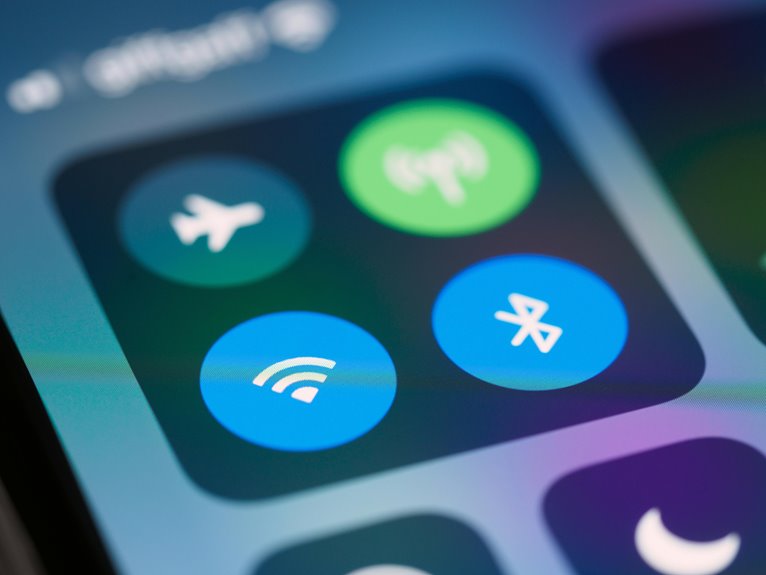
Yes. It can help a little, but it is not a miracle. Turning on airplane mode stops signal searching and radio use, so battery life often lasts longer, especially in weak coverage or when you do not need any connections.
Should You Let Your Phone Battery Reach Zero?
No, you should not let your phone battery drain to zero. You can charge it whenever convenient because lithium ion batteries do not need calibration. Your phone powers off at its cutoff point to protect the battery and help extend its lifespan.
Do Software Updates Slow Down Older Phones?
No, you usually will not notice slower speeds. Updates often bring security fixes and bug repairs, while older hardware causes most lag. If performance drops, try clearing the cache or restarting the phone.
Can Background App Refresh Be Safely Disabled?
Yes, you can turn off background app refresh if you do not need apps to sync data or receive updates in the background. This can reduce battery use and mobile data use, but some apps will only update when you open them.
Is Wireless Charging Worse for Battery Health?
No, wireless charging is not inherently worse for battery health. It can create more heat during charging, which may gradually affect battery lifespan, but with a reliable charger and regular use, the impact is usually small.