
Like a trusted lighthouse in fog, you’ll want a power source that never quits when the lights go out. You need clear specs, fast recharge, and reliable pure‑sine AC for sensitive gear. This roundup compares five compact and high‑capacity options, points out LiFePO4 benefits, and flags what to check for appliances and UPS needs-keep going to find the right balance of runtime, recharge speed, and safety for your setup.
| Jackery Explorer 300 Portable Power Station (293Wh) |

| Best for Camping | Battery Capacity (Wh): 293 Wh | AC Output (continuous): 300 W | USB-C Power Delivery: 60 W PD (input/output) | VIEW LATEST PRICE | Read Our Analysis |
| EF ECOFLOW Delta 3 Classic 1024Wh Portable Power Station |
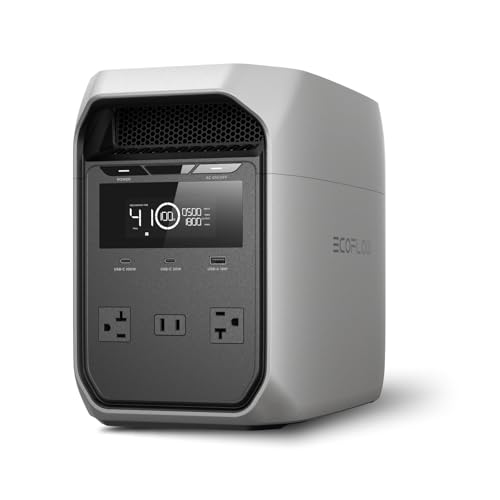
| Best Home Backup | Battery Capacity (Wh): 1024 Wh | AC Output (continuous): 1800 W | USB-C Power Delivery: 100 W USB-C | VIEW LATEST PRICE | Read Our Analysis |
| Anker SOLIX C300 Portable Power Station (288Wh) |

| Best Fast Charger | Battery Capacity (Wh): 288 Wh | AC Output (continuous): 300 W | USB-C Power Delivery: Up to 140 W USB-C (two-way, PD 3.1) | VIEW LATEST PRICE | Read Our Analysis |
| 600W 293Wh Portable Power Station with 100W PD | Best High-Power Output | Battery Capacity (Wh): 293 Wh | AC Output (continuous): 600 W | USB-C Power Delivery: 100 W USB-C PD (plus 24 W USB-C) | VIEW LATEST PRICE | Read Our Analysis | |
| Anker SOLIX C300 288Wh Portable Power Station |
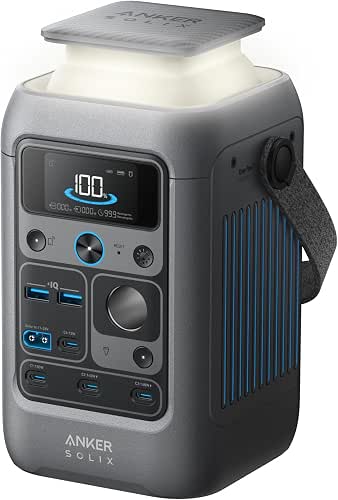
| Best Compact Power | Battery Capacity (Wh): 288 Wh | AC Output (continuous): 300 W | USB-C Power Delivery: Dual PD 3.1 USB-C (up to 140 W each; also 100 W noted) | VIEW LATEST PRICE | Read Our Analysis |
More Details on Our Top Picks
Jackery Explorer 300 Portable Power Station (293Wh)
If you need a lightweight, portable power source for camping, road trips, or emergency backup, the Jackery Explorer 300 delivers-its 293Wh pack and 300W pure sine AC output give you reliable juice for laptops, cameras, and small appliances while weighing just 7.1 pounds and recharging quickly via wall, car, USB‑C PD, or solar. You can recharge to 80% in about two hours using a wall outlet plus the 60W PD USB‑C. It supports AC, car, and Jackery SolarSaga 100 panels with an integrated MPPT controller. Ports include PD 60W, QC3.0, USB‑A, DC car, and two AC outlets.
- Battery Capacity (Wh):293 Wh
- AC Output (continuous):300 W
- USB-C Power Delivery:60 W PD (input/output)
- Recharge Methods (includes solar):Wall AC, car outlet, solar (Jackery SolarSaga compatible)
- Portability / Weight:7.1 pounds (portable)
- Intended Uses / Applications:Outdoor/off-grid activities (camping, overland, road trips, blackout backup)
- Additional Feature:Integrated MPPT controller
- Additional Feature:Simultaneous wall+PD recharge
- Additional Feature:Charges up to 6 devices
EF ECOFLOW Delta 3 Classic 1024Wh Portable Power Station
Choose the Delta 3 Classic when you need a long-lasting, fast-charging backup that powers heavy appliances-its 1024Wh LiFePO4 battery and 1800W continuous (3600W surge) output handle refrigerators, microwaves, and laptops while delivering 0–80% AC charging in about 45 minutes and a UPS switch under 10 ms to keep sensitive gear running. You’ll get EV-grade CTC construction, a Smart BMS, and LiFePO4 cells rated for 10+ years of daily use. Expandable output reaches 2600W with X-Boost, and a 100W USB-C port covers modern devices. Use AC, 500W solar (≈2.5 hours), or app-controlled features like Storm Alert and Self-Powered Mode.
- Battery Capacity (Wh):1024 Wh
- AC Output (continuous):1800 W
- USB-C Power Delivery:100 W USB-C
- Recharge Methods (includes solar):Wall AC, solar (500 W example), fast AC charging (X-Stream)
- Portability / Weight:(Designed for home/portable use) – larger unit (1024 Wh) – heavier than small units (not explicitly listed)
- Intended Uses / Applications:Home backup, camping, RVs, off-grid living, sensitive electronics (UPS use)
- Additional Feature:LiFePO4 10+ year cells
- Additional Feature:<10 ms UPS switch
- Additional Feature:Ultra-fast 0–80% charging
Anker SOLIX C300 Portable Power Station (288Wh)
With its 288Wh LiFePO4 battery and 300W continuous output, the Anker SOLIX C300 is ideal for campers and remote workers who need a quiet, long-lasting power source that still fits in a backpack. You’ll get 300W continuous (600W surge), 3,000-cycle longevity, and a 25 dB noise floor. Recharge quickly via PD 3.1 USB-C at up to 140W or wall power (80% in ~50 minutes); solar and car charging are supported (avoid certain Anker panels). Three AC outlets, multiple USB-C/A ports and a car socket cover common devices. It’s compact, durable, strap-ready, and backed by a five-year warranty.
- Battery Capacity (Wh):288 Wh
- AC Output (continuous):300 W
- USB-C Power Delivery:Up to 140 W USB-C (two-way, PD 3.1)
- Recharge Methods (includes solar):Wall AC, USB-C PD, car, solar (recommended Anker panels)
- Portability / Weight:6.16–(compact travel-friendly) ~6.16 pounds listed for Product #5 version; Product #3 described as compact (~15% smaller) – lightweight
- Intended Uses / Applications:Outdoor, travel, camping, laptops, phones, cameras (general portable use)
- Additional Feature:3000 charge cycles
- Additional Feature:Ultra-quiet 25 dB noise
- Additional Feature:Strap-compatible compact design
600W 293Wh Portable Power Station with 100W PD
Best High-Power Output
View Latest PriceThe 600W BailiBatt DW601S is ideal for campers and travelers who need a lightweight, reliable backup power source that still packs enough punch to run laptops, cameras, and small appliances. You get a 293Wh grade-A lithium battery in a 7.7 lb package, delivering 600W pure sine AC and 1,200W surge for short bursts. Use the 100W USB-C PD to fast-charge laptops, plus a 24W USB-C PD and QC3.0 USB-A ports for phones and accessories. The BMS and LCD keep you informed and protected. Recharge every 1–2 months when idle; car cable sold separately.
- Battery Capacity (Wh):293 Wh
- AC Output (continuous):600 W
- USB-C Power Delivery:100 W USB-C PD (plus 24 W USB-C)
- Recharge Methods (includes solar):Wall AC, car (optional cable), solar (supported)
- Portability / Weight:7.7 pounds (lightweight)
- Intended Uses / Applications:Home backup, camping, emergencies, travel, outdoor adventures
- Additional Feature:600W pure sine output
- Additional Feature:1200W surge capability
- Additional Feature:LCD status display
Anker SOLIX C300 288Wh Portable Power Station
If you need a compact, fast-recharging backup for camping, travel, or short outages, the Anker SOLIX C300’s 288 Wh LiFePO4 pack delivers high-cycle durability and quick dual PD 3.1 USB-C charging so you’ll get to 80% in about an hour. You’ll appreciate its 300 W continuous output in a 30% smaller dark-gray chassis (6.16 lb), with car socket, multiple USB-C (up to 140 W two-way) and USB-A ports, plus a 60 cm 140 W USB-C cable. Recharge by USB-C, solar, or car; use recommended 60 W or 100 W solar panels. It includes a three-year battery warranty.
- Battery Capacity (Wh):288 Wh
- AC Output (continuous):300 W
- USB-C Power Delivery:Dual PD 3.1 USB-C (up to 140 W each; also 100 W noted)
- Recharge Methods (includes solar):USB-C wall charger, car, solar (recommended Anker panels)
- Portability / Weight:6.16 pounds (compact)
- Intended Uses / Applications:Outdoor, camping, travel, emergencies
- Additional Feature:Includes 140W USB-C cable
- Additional Feature:3-year LiFePO4 warranty
- Additional Feature:30% smaller footprint
Factors to Consider When Choosing Battery Generators
When choosing a battery generator, you’ll want to compare capacity and runtime so it actually meets your power needs. Check the types of outputs, recharge speed options, portability and weight, and the battery chemistry for overall longevity. Balancing these factors helps you pick a unit that fits how and where you’ll use it.
Capacity And Runtime
Balancing capacity and runtime lets you pick a battery generator that actually meets your needs. Capacity, shown in watt-hours (Wh), is the total energy you have-300 Wh can supply 300 W for one hour or 30 W for ten hours. To estimate runtime, divide Wh by device watts and subtract about 10–20% for inverter and system losses. Remember usable capacity may be less than quoted Wh because manufacturers limit depth of discharge (DoD) to extend battery life, often reserving 10–20%. Also factor continuous output and surge capability: Wh sets total energy, but continuous and surge watts determine whether motors or compressors will start and run. List devices and hours, sum required Wh, then add 20–30% extra for inefficiencies and unexpected use.
Output Types Available
Think about the outlets and ports as the bridge between your battery generator and the devices you need to run. Check AC outlets first: they supply household-standard power and are rated by continuous and surge watts-compare both so motors and refrigerators start and run. Look for pure sine wave AC if you’ll power sensitive electronics or medical gear; it’s cleaner and safer than modified sine wave. Use DC outputs, including 12V car ports, for efficient charging of LED lights, pumps, and some portable fridges without wasting energy through an inverter. Count USB-A and USB-C ports for phones, tablets, and laptops; USB-C PD (commonly 60–140W) can fast-charge many laptops. Finally, verify total power distribution limits so simultaneous use won’t overload the unit.
Recharge Speed Options
Speed matters: how quickly a battery generator refills can be the difference between a brief outage and a long disruption, so check combined charging options, input wattage, solar compatibility, battery chemistry, and UPS/switching specs before you buy. You’ll want units that accept parallel inputs (AC plus USB‑C PD, for example) so you can slash recharge time. Match charger power to your needs-higher input wattage (60–500 W) trims time to 80%; low‑watt inputs can take many hours. If you plan solar, size panels to the station’s max solar input so you don’t bottleneck. Prefer LiFePO4 and strong BMS designs for faster, safer charge curves. Finally, confirm UPS or <10 ms switching and whether the unit can charge under load without extending recharge time.
Portability And Weight
When you’re choosing a battery generator, weight and portability should match how you’ll actually use it-light units (6–8 lbs) work for hikes, midweight options suit car camping, and anything heavier is best for vehicle-based or home backup. Check unit weight (typically 6–35+ lbs) against how you’ll carry it, and compare dimensions and form factor so it fits tents, trunks, or gear packs. Use weight-to-capacity ratio (lbs per Wh) to judge efficiency-lower is better for long trips. Include the extra mass of accessories like panels and cables when planning. Look for transport aids: integrated handles, straps, removable batteries, or wheels on heavier units. Choose a design that stores or attaches accessories cleanly to speed deployment.
Battery Chemistry Longevity
Because different chemistries age and wear in distinct ways, you should weigh cycle life, calendar aging, and operating conditions when choosing a battery generator. Li-ion packs give high energy density but often degrade after several hundred to ~1,500 cycles depending on cell type and use. LiFePO4 sacrifices density for longevity, commonly delivering 2,000–5,000+ cycles-better for daily or long-term cycling. Remember cycle life is tied to depth of discharge: shallower cycles (about 50% DoD) yield far more usable cycles than frequent 100% drains. Calendar aging still reduces capacity over time; storing at moderate state of charge (roughly 40–60%) and keeping temperatures cool slows decline. Avoid constant fast charging, high C-rate discharges, and heat, since those accelerate electrode wear and capacity fade.
Safety And Monitoring Features
Although battery generators can save you from outages and reduce fuel use, their safety and monitoring features determine whether they’ll protect your gear and your home. You should pick units with an integrated Battery Management System (BMS) that handles over/under-voltage, over-current, short-circuit, over-temperature, and cell balancing to prevent thermal runaway and extend battery life. Insist on temperature monitoring and active cooling or thermal management that throttles or shuts down when temperatures get unsafe. Get clear real-time monitoring via LCD or app for state-of-charge, input/output watts, voltage, current, and cycle count so you spot issues early. Prefer <10 ms UPS transfer and surge protection for sensitive electronics. Finally, verify safety certifications (UL, CE, RoHS, UN38.3) and documented cell chemistry protections like LiFePO4.