
Imagine turning your laptop into a full desktop with a single cable – it’s more doable than you think. You’ll get a crisp display, extra ports for peripherals, stable power delivery, and fewer adapters to juggle. I’ll walk you through top picks like the HP and Samsung monitors, compact USB-C hubs, and powerful multiport docks so you can pick what fits your workflow – and which trade-offs to watch for.
| VIENON USB 3.0 to HDMI 7-in-1 Hub |

| Budget Multiport | Display Output: HDMI output (up to 1920×1080, mirror/extend) | USB Ports / Hub: 1x USB 3.0 + 2x USB 2.0 + 2x USB‑C data ports | Power Delivery / External Power: USB-C power port for DC input to power hub/peripherals | VIEW LATEST PRICE | Read Our Analysis |
| HP 24″ FHD 100Hz IPS Monitor with USB Hub |
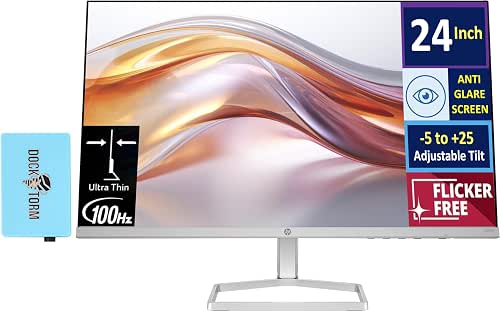
| Best for Gamers | Display Output: HDMI 1.4 (24″ FHD panel built-in) | USB Ports / Hub: Integrated USB hub (includes Docztorm USB port expander, SuperSpeed up to 5Gbps) | Power Delivery / External Power: No PD port listed (monitor is powered, includes USB expander) – external power supplied via monitor power | VIEW LATEST PRICE | Read Our Analysis |
| Acer 7-in-1 USB-C Hub with 4K HDMI |

| Compact Powerhouse | Display Output: HDMI port (4K@30Hz) | USB Ports / Hub: 2x USB‑A 3.1 + 1x USB‑C (data, 5Gbps) | Power Delivery / External Power: Type‑C PD charging port (up to 100W) | VIEW LATEST PRICE | Read Our Analysis |
| Samsung FT45 24″ WUXGA IPS Monitor (LF24T454GYNXZA) |

| Ergonomic Pro | Display Output: HDMI + DisplayPort (monitor with 2x HDMI + DP) | USB Ports / Hub: 2x USB hub ports (integrated in monitor) | Power Delivery / External Power: Monitor power with USB hub (built-in power via monitor supply) | VIEW LATEST PRICE | Read Our Analysis |
| TobenONE 18-in-1 Triple 4K Laptop Docking Station | Ultimate Docking | Display Output: 3x HDMI (supports dual/triple 4K@60Hz) | USB Ports / Hub: 9x USB ports (part of 18-in-1 docking station) | Power Delivery / External Power: PD charging support (100W PD; requires external power adapter) | VIEW LATEST PRICE | Read Our Analysis |
More Details on Our Top Picks
VIENON USB 3.0 to HDMI 7-in-1 Hub
If you need a compact dock that adds both an HDMI display and multiple USB ports, the VIENON USB 3.0 to HDMI 7-in-1 Hub is a practical pick – you connect it to a Windows or Mac laptop to mirror or extend at 1920×1080 (Windows 7 won’t extend). Built-in driver installs from the removable disk; restart after installing. You get one USB 3.0 (5 Gbps), two USB 2.0 and two USB-C data ports (480 Mbps), plus a USB-C power input to stabilize high-draw devices. Note USB 2.0 display limits to 800×600 and HDMI must be set to 1920×1080 or below.
- Display Output:HDMI output (up to 1920×1080, mirror/extend)
- USB Ports / Hub:1x USB 3.0 + 2x USB 2.0 + 2x USB‑C data ports
- Power Delivery / External Power:USB-C power port for DC input to power hub/peripherals
- Host Compatibility (OS / Devices):Windows 7/8/10 and macOS (not Linux/XP/Vista/Wintablet)
- Multi‑Monitor / Extended Display Support:Supports mirror and extend modes (single HDMI at 1080p)
- Video Resolution Limits:Max HDMI 1920×1080 (HD); USB‑2.0 displays limited to 800×600
- Additional Feature:Built-in driver install
- Additional Feature:USB-C power input
- Additional Feature:Mixed USB-A/C ports
HP 24″ FHD 100Hz IPS Monitor with USB Hub
Gamers and remote workers who need a compact, clutter-free setup will appreciate the HP 24″ FHD 100Hz IPS Monitor with USB hub. You get a 24-inch 1920×1080 IPS panel with 300 nits, 100Hz refresh, flicker-free tech, anti-glare coating, and a low-blue light filter that preserves color. Its ultra-thin three-sided borderless design and cable containment keep your desk tidy, and tilt adjusts from -5° to +25°. Connectivity includes HDMI 1.4 and VGA, and it ships with the Docztorm Dock Special Edition USB port expander for up to 5Gbps sync. Note: no VESA mount.
- Display Output:HDMI 1.4 (24″ FHD panel built-in)
- USB Ports / Hub:Integrated USB hub (includes Docztorm USB port expander, SuperSpeed up to 5Gbps)
- Power Delivery / External Power:No PD port listed (monitor is powered, includes USB expander) – external power supplied via monitor power
- Host Compatibility (OS / Devices):Works with common PC setups (Windows/typical laptops; designed for learning/gaming/content)
- Multi‑Monitor / Extended Display Support:Designed for side‑by‑side dual monitor setups (monitor pairs easily)
- Video Resolution Limits:Built‑in panel 1920×1080 (FHD)
- Additional Feature:100Hz refresh rate
- Additional Feature:Thin 3-sided borderless
- Additional Feature:Cable containment system
Acer 7-in-1 USB-C Hub with 4K HDMI
The Acer 7-in-1 USB-C Hub with 4K HDMI is ideal for professionals and travelers who need a compact way to add ports and charge a laptop while driving a single external display. You get a space-gray aluminum adapter (5.12 x 1.38 x 0.39 in, 2.11 oz) that splits one USB-C into HDMI (4K@30Hz), two USB-A 3.1, a USB-C, a Type-C PD (up to 100W), MicroSD and SD slots. USB data runs to 5Gbps; video requires DP Alt Mode and tops out at 4K@30Hz. Plug in PD power (65W+ recommended) for full functionality; it’s travel-ready and broadly compatible.
- Display Output:HDMI port (4K@30Hz)
- USB Ports / Hub:2x USB‑A 3.1 + 1x USB‑C (data, 5Gbps)
- Power Delivery / External Power:Type‑C PD charging port (up to 100W)
- Host Compatibility (OS / Devices):Compatible with Windows, ChromeOS, Linux, macOS (requires DP Alt Mode for video)
- Multi‑Monitor / Extended Display Support:HDMI supports single external display (4K@30Hz or 1080p); extension depends on host
- Video Resolution Limits:HDMI up to 4K@30Hz (also supports 1080p)
- Additional Feature:Aluminum heat-dissipating body
- Additional Feature:100W PD charging
- Additional Feature:MicroSD + SD slots
Samsung FT45 24″ WUXGA IPS Monitor (LF24T454GYNXZA)
For anyone who needs a compact, color-accurate workspace with built-in device ports, the Samsung FT45 24″ WUXGA IPS is a smart pick because its 1920 x 1200 IPS panel delivers sharp text and wide viewing angles while two USB hub ports let you plug peripherals directly into the monitor. You’ll get vibrant colors, 178° viewing, and ultra-thin three-sided bezels for clean multi-monitor setups. Connectivity includes two HDMI ports and DisplayPort. The stand adjusts for height, swivel, tilt, and pivot, plus VESA mounting. Eye Saver Mode and Flicker-Free tech reduce strain, built-in speakers add convenience, and a three-year warranty tops it off.
- Display Output:HDMI + DisplayPort (monitor with 2x HDMI + DP)
- USB Ports / Hub:2x USB hub ports (integrated in monitor)
- Power Delivery / External Power:Monitor power with USB hub (built-in power via monitor supply)
- Host Compatibility (OS / Devices):Compatible with PCs (standard monitor compatibility; multi-OS via video inputs)
- Multi‑Monitor / Extended Display Support:Monitor supports multi‑monitor setups (thin bezels, 2 HDMI + DP for multiple displays)
- Video Resolution Limits:Monitor WUXGA 1920×1200 (higher‑than‑FHD vertical resolution)
- Additional Feature:Height-adjustable stand
- Additional Feature:Built-in speakers
- Additional Feature:3-year warranty
TobenONE 18-in-1 Triple 4K Laptop Docking Station
Ultimate Docking
View Latest PriceIf you need one hub that turns a laptop into a full desktop rig, the TobenONE 18-in-1 delivers-especially for Windows and Chrome OS users who want triple 4K at 60Hz, 100W charging, and a wide array of ports to ditch dongles and tidy cables. You get 18 ports: nine USB, HOST, PD, three HDMI, Ethernet, SD/microSD readers, and a 3.5mm jack, letting you connect monitors, storage, audio, and networking without adapters. It drives triple or dual 4K@60Hz for smooth multitasking and requires an external power supply over 65W (adapter not included). Not recommended for Mac users.
- Display Output:3x HDMI (supports dual/triple 4K@60Hz)
- USB Ports / Hub:9x USB ports (part of 18-in-1 docking station)
- Power Delivery / External Power:PD charging support (100W PD; requires external power adapter)
- Host Compatibility (OS / Devices):Designed for Windows and Chrome OS laptops (not recommended for Mac)
- Multi‑Monitor / Extended Display Support:Supports dual or triple 4K displays at 60Hz (explicit multi-monitor docking)
- Video Resolution Limits:Supports 4K@60Hz on multiple displays (dual/triple 4K@60Hz)
- Additional Feature:Triple 4K@60Hz support
- Additional Feature:18 total ports
- Additional Feature:Ethernet + audio jack
Factors to Consider When Choosing USB Hub Monitors
When you’re picking a USB hub monitor, check the types and number of ports to make sure it handles your peripherals and desired display connections. Confirm power delivery support and the monitor’s maximum resolution so your laptop stays charged and visuals look right. Also consider which video inputs it offers and whether the stand gives the height, tilt, and swivel you need for comfortable use.
Port Selection And Types
Although you might focus on screen size and resolution, port selection determines how many and what kinds of devices your USB hub monitor can actually support. You’ll want a mix: USB-A (2.0/3.x) for legacy peripherals, USB-C for modern laptops and accessories, plus HDMI or DisplayPort for external displays. Choose USB 3.0 or higher ports to get up to 5 Gbps transfer rates for fast file moves and responsive peripherals. Multiple video outputs let you expand to one or more monitors easily. Look for specialized ports-SD/microSD readers, Ethernet RJ45, and audio I/O-to streamline workflows without adapters. Note port variety matters more than sheer count; prioritize types that match your current devices and planned setups.
Power Delivery Support
Port selection sets up how many devices you can plug in, but power delivery (PD) determines whether those devices-especially laptops-stay charged and run at full speed through the hub. You’ll want a hub with PD if you plan to power a laptop through the monitor rather than using a separate charger. Look for a dedicated PD charging port and an external power supply rated at 65W or higher to guarantee stable, sufficient power. Check the PD wattage-higher ratings charge faster and support more power-hungry machines. PD-enabled hubs also handle distribution, preventing drops when multiple peripherals draw current simultaneously. Always verify compatibility between your laptop’s charging requirements and the hub’s PD rating for reliable, continuous operation.
Display Resolution Limits
Because USB hub monitors rely on both the hub’s video hardware and your computer’s port capabilities, you should check their combined resolution limits before buying. Many hubs cap HDMI output at 1920×1080 to maintain stable performance, while some advertise 4K but often only at 30Hz, which feels less smooth than native 60Hz panels. Older or low-power ports like USB 2.0 can force much lower resolutions (even 800×600), so verify your laptop’s port specs. Extending or mirroring at higher resolutions depends on both the hub’s output and the connected device’s supported modes. Exceeding a hub’s max resolution usually yields no image or poor quality, so match hub specs to your display and workload needs.
Monitor Connectivity Options
When choosing a USB-hub monitor, think about the ports it offers and how they’ll fit your devices and workflow. Pick monitors with multiple HDMI and DisplayPort inputs if you plan to switch sources or run multi-monitor setups. Look for USB-A and USB-C ports so you can plug keyboards, mice, and external drives directly into the screen. Prefer USB-C with Power Delivery if you want one-cable charging plus video and data – it simplifies docking. Check supported video standards (HDMI 1.4, VGA, DisplayPort) because they determine compatible devices and maximum resolutions. Finally, note USB port speeds: an integrated hub cuts clutter, but USB 2.0 will bottleneck transfers compared with USB 3.0, so match hub speed to your peripherals’ needs.
Ergonomics And Adjustability
If you’re going to spend hours in front of a USB-hub monitor, pick one with adjustable stands-tilt, swivel, pivot and height controls let you set a comfortable viewing angle and cut neck and eye strain. Choose ultra-thin bezels or borderless designs to make multi-monitor layouts feel seamless and reduce visual distraction during extended work. Look for VESA-mount compatibility so you can use adjustable arms or wall mounts to optimize posture and free desk space. Integrated cable management keeps cords tidy, preventing clutter that forces awkward reaches or compromises workspace ergonomics. Prefer lightweight, slim profiles for easier repositioning and alignment as tasks or seating change. Together, these features let you create a flexible, ergonomic desktop that adapts to your workflow.
Compatibility With Devices
Wondering whether a USB hub monitor will play nicely with your setup? Check OS compatibility first-some hubs limit support to Windows, macOS, Linux, or Chrome OS. Match port types: if your laptop uses USB-C or USB 3.0, pick a monitor whose hub offers those standards to get full data speeds and functionality. Confirm the hub can supply enough power for peripherals and, if needed, for your laptop via power delivery. Verify video inputs and hub bandwidth support the resolutions and refresh rates your computer can output. Finally, look for features like DisplayPort Alt Mode over USB-C, PD wattage ratings, and multi-monitor support so you won’t hit unexpected limits when you dock and expand your workspace.