
You’ll think a label printer could single‑handedly tame chaos in your home or office – and it might. You’ll want devices that plug into USB, spit out crisp 203+ dpi text and barcodes, and handle everything from narrow ID tapes to 4×6 shipping labels without fuss. I’ll walk you through five top picks and the key factors that keep labeling fast, reliable, and low‑maintenance, so you can pick the right fit.
| Brother P-Touch PC Connectable Label Maker (PT-P700),White |
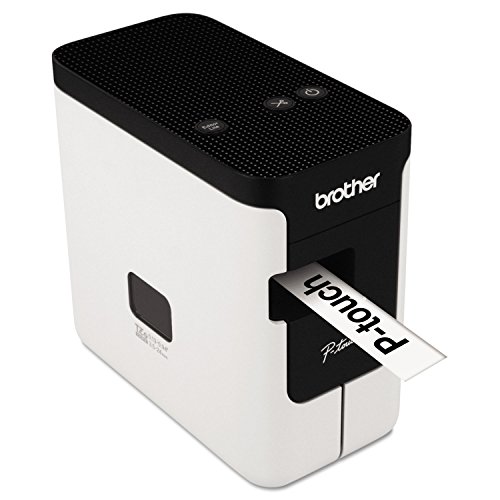
| Best for Office Labeling | Connectivity: USB 2.0 (Mini‑B) | Power Type: AC adapter (included) or 6 AA batteries | Label/Print Technology: Thermal/label tape (no ink) | VIEW LATEST PRICE | Read Our Analysis |
| DYMO LabelManager Plug N Play Label Maker for PC or Mac (1768960) |
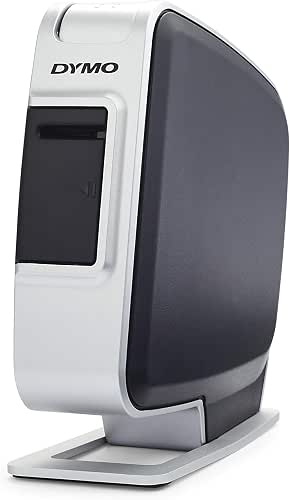
| Easiest Setup | Connectivity: USB (plug‑and‑play) | Power Type: Internal rechargeable lithium‑ion (recharges via USB) | Label/Print Technology: Thermal/label tape (black print on D1 tape) | VIEW LATEST PRICE | Read Our Analysis |
| OFFNOVA 4×6 Thermal Shipping Label Printer |

| Shipping Specialist | Connectivity: USB only | Power Type: USB powered (desktop USB connection; driver required) | Label/Print Technology: Direct thermal printing | VIEW LATEST PRICE | Read Our Analysis |
| 4×6 Bluetooth Shipping Thermal Label Printer for Business |

| Most Versatile Connectivity | Connectivity: USB + Bluetooth (but requires FlashLabel Pro app) | Power Type: USB powered (also supports Bluetooth; includes internal battery/portable capability implied) | Label/Print Technology: Thermal printing (direct thermal) | VIEW LATEST PRICE | Read Our Analysis |
| ORGBRO 4×6 Thermal Shipping Label Printer (USB) |

| High-Volume Workhorse | Connectivity: USB only | Power Type: USB powered | Label/Print Technology: Thermal direct printing | VIEW LATEST PRICE | Read Our Analysis |
More Details on Our Top Picks
Brother P-Touch PC Connectable Label Maker (PT-P700),White
If you need a compact label maker that ties directly to your computer for custom, professional-looking labels, the Brother P‑Touch PT‑P700 is a solid choice. You connect it via USB 2.0 and use P‑touch Editor Lite on Windows or Mac to design labels, import logos, and grab cloud templates. It prints black-on-white laminated tape up to 24 mm wide with 180 x 360 dpi resolution, using thermal tape (inTZe starter included). At 3.1 x 6 x 5.6 inches and 1.56 pounds, it runs on AC or six AAs, has 64 MB memory, and suits office asset, file, and signage labeling.
- Connectivity:USB 2.0 (Mini‑B)
- Power Type:AC adapter (included) or 6 AA batteries
- Label/Print Technology:Thermal/label tape (no ink)
- Platform Compatibility:Windows (7/8/Vista) and Mac OS X (10.6–10.8) via PC/Mac software
- Intended Use / Primary Application:Office labeling (files, assets, IT/electrical, storage, signage)
- Driver/Software Requirement:P‑touch Editor Lite software/printer drivers included for PC/Mac
- Additional Feature:Laminated label durability
- Additional Feature:Wide tape width support
- Additional Feature:inTZe starter tape included
DYMO LabelManager Plug N Play Label Maker for PC or Mac (1768960)
A plug-and-play USB design makes the DYMO LabelManager Plug N Play (model 1768960) ideal for small business owners and home users who want quick, software-free label printing from a PC or Mac. You’ll connect via USB and control printing from your computer-no installer required-and print custom text, fonts, graphics, and barcodes (UPC, EAN, Code 39/128). It uses authentic DYMO D1 tapes in 6, 9, or 12 mm widths and outputs black print. The unit includes a rechargeable lithium‑ion battery charged over USB, 64 MB memory, and compact dimensions (3.15″ D x 6.81″ W x 8.74″ H).
- Connectivity:USB (plug‑and‑play)
- Power Type:Internal rechargeable lithium‑ion (recharges via USB)
- Label/Print Technology:Thermal/label tape (black print on D1 tape)
- Platform Compatibility:Windows and Mac (plug‑and‑play from computer)
- Intended Use / Primary Application:Home & office organization (custom labels, barcodes)
- Driver/Software Requirement:No separate software installation required (plug‑and‑play; controlled from computer)
- Additional Feature:Rechargeable lithium battery
- Additional Feature:Prints standard barcodes
- Additional Feature:Plug-and-play (no install)
OFFNOVA 4×6 Thermal Shipping Label Printer
Choose the OFFNOVA 4×6 when you need a no-frills, high-speed USB-only label printer that reliably churns out standard 4 x 6 shipping labels for small businesses or busy home-shippers. You plug it into Windows, Mac, Chromebook, or Linux, install the driver from OFFNOVA’s site, feed label stock, and print. Direct thermal printing handles widths from 1.57 to 4.1 inches at 150 mm/sec – roughly 80 labels per minute – and it’s rated for over 12 hours daily. Auto calibration recognizes labels so you skip adjustments. It’s a compact desktop solution for UPS, FedEx, USPS, Etsy, eBay, Shopify, Amazon, and more.
- Connectivity:USB only
- Power Type:USB powered (desktop USB connection; driver required)
- Label/Print Technology:Direct thermal printing
- Platform Compatibility:Windows, Mac, Chromebook, Linux (driver required)
- Intended Use / Primary Application:Shipping labels (UPS/FedEx/USPS; e‑commerce platforms)
- Driver/Software Requirement:Driver download required from OFFNOVA website before printing
- Additional Feature:High 150 mm/s speed
- Additional Feature:Automatic label calibration
- Additional Feature:Continuous heavy-duty use
4×6 Bluetooth Shipping Thermal Label Printer for Business
Small businesses and sellers who ship frequently will appreciate the x6 Bluetooth Shipping Thermal Label Printer for Business because it combines fast thermal printing with both Bluetooth and USB connectivity for flexible, on‑the‑go or desktop use. You’ll get inkless thermal prints up to 180 mm/s and support for 1.38–4.41-inch media, perfect for 4×6 labels. Bluetooth printing requires the FlashLabel Pro app (iOS, Android, Mac; Windows needs the advanced driver), while USB works across macOS, Windows, ChromeOS and Linux – a USB drive includes drivers and tutorials. The FlashLabel Pro library offers thousands of templates, icons and fonts for professional, customizable labeling.
- Connectivity:USB + Bluetooth (but requires FlashLabel Pro app)
- Power Type:USB powered (also supports Bluetooth; includes internal battery/portable capability implied)
- Label/Print Technology:Thermal printing (direct thermal)
- Platform Compatibility:iOS/Android (FlashLabel app) and macOS/Windows/ChromeOS/Linux via USB/driver or app
- Intended Use / Primary Application:Shipping & multi‑purpose business labels (shipping, barcodes, price tags, etc.)
- Driver/Software Requirement:FlashLabel Pro app required for Bluetooth; USB drivers available (built‑in USB drive with drivers)
- Additional Feature:FlashLabel Pro app required
- Additional Feature:Built‑in driver USB drive
- Additional Feature:3,000+ templates library
ORGBRO 4×6 Thermal Shipping Label Printer (USB)
If you ship frequently and need fast, reliable labels, the ORGBRO 4×6 thermal printer delivers – printing up to 72 crisp 4×6 labels per minute at 203 DPI while handling over 650,000 labels over its lifetime. You plug it in via USB (no Bluetooth) and, in under a minute, install drivers from the included flash drive and start printing. It supports Windows (not ARM), macOS, Chrome OS, and Linux, and works with Amazon, eBay, Etsy, Shopify, UPS, and more. Using thermal direct media (1.0–4.5 inches wide) cuts consumable costs, and ORGBRO provides lifetime free technical support.
- Connectivity:USB only
- Power Type:USB powered
- Label/Print Technology:Thermal direct printing
- Platform Compatibility:Windows, macOS, Chrome OS, Linux
- Intended Use / Primary Application:Shipping labels / warehouse & FBA labels (4×6 shipping labels, barcodes)
- Driver/Software Requirement:Printer drivers included on USB flash drive; driver installation required
- Additional Feature:203 DPI printhead
- Additional Feature:Lifetime technical support
- Additional Feature:Very high duty life
Factors to Consider When Choosing USB Label Printers
When choosing a USB label printer, you’ll want to match print resolution to the barcode and logo quality you need. Check media size compatibility, connection options, and whether the printer’s software and drivers work with your setup. Also compare speed and throughput so the printer keeps up with your workflow.
Print Resolution Needs
Often you’ll balance resolution against speed and throughput: higher dpi yields sharper text, denser barcodes, and crisper logos, but 203 dpi is usually enough for standard 4×6 shipping labels while 300–600 dpi is better for small fonts, high-density QR codes, or fine graphics. Decide based on label content: use 203 dpi for shipping and basic barcodes to get faster prints and lower processing demands. Choose 300 dpi or higher when you need legible tiny text, intricate logos, or compact barcode symbologies that require a specific X-dimension and quiet zone for reliable scanning. Also factor viewing distance and label detail-larger, distant labels tolerate lower dpi; close-up, information-dense labels need higher resolution to remain readable and scannable.
Media Size Compatibility
Because label sizes and formats vary widely, you’ll want a printer that matches your widest and shortest roll dimensions, supported media types, and feed hardware. Check maximum printable width and supported roll/label widths (for example, 1.0–4.5 in or up to 115 mm) so it handles your common sizes. Verify minimum and maximum label length the cutter/print engine supports-some accept ~25 mm up to 1000 mm-for short asset tags and long continuous labels. Confirm media format compatibility: die-cut rolls, continuous rolls, fanfold sheets, or 4×6 slip labels. Make certain sensors and auto-calibration work with your gap or black-mark spacing to prevent misfeeds. Finally, consider maximum media thickness and accepted core/roll diameters to avoid jams or adapters.
Connection Type Options
After you’ve matched media sizes and sensor settings to your labels, check how the printer will connect to your workflow. USB-only printers give reliable, high-speed transfers (usually USB 2.0 or higher) and minimal latency for large files, but they force a direct cable to a single host and limit shared access. Some models separate data and power: a few draw power from the USB port, while others need an AC adapter or rechargeable battery for sufficient wattage-confirm which to avoid power shortfalls. Pay attention to connector type (USB-A, USB-Mini, USB-C) so you won’t hunt for adapters or special cables. Many units are plug-and-play on modern systems, yet some still require driver or firmware installs for advanced barcode and formatting features.
Software And Drivers
Verify that the printer’s drivers and bundled software match your systems and workflow needs so you won’t run into installation headaches or feature gaps. Check OS compatibility (Windows 7–11, macOS 10.15+, Linux, ChromeOS) and whether drivers are built‑in, downloadable, or provided on media; confirm regular updates. Make sure the software supports the file formats and features you use-PDFs, common image types, barcode symbologies, direct thermal printing, variable data, and batch/CSV import. Look for dedicated label design tools or compatibility with template libraries and PDF import, plus barcode generation. Finally, verify the connection driver type (standard USB class vs proprietary) so the printer works reliably without repeated installs or extra compatibility layers.
Speed And Throughput
Good driver support and efficient software help your printer reach its rated speed, but real-world throughput depends on more than raw mm/sec specs. You’ll see speeds listed in mm/sec or labels per minute (150–180 mm/sec or 60–80 four-by-six labels/minute are common for fast models), yet actual output falls when you increase DPI, print larger labels, or include complex graphics.
Check duty cycle and recommended daily volumes so the unit can handle continuous use without overheating or premature wear. Beware USB and PC bottlenecks: driver efficiency, spooling, and host processing can slow jobs. Finally, factor end-to-end job time – formatting, calibration, peel-and-present mechanisms, and cutter speed – because these determine how many finished labels you get per hour, not just headline specs.
Power And Portability
While choosing a USB label printer, consider how and where you’ll power it: some models need AC only, others have built‑in rechargeable batteries or use standard replaceables, and those choices directly determine whether you can print at a fixed station or on the move. Check power-source options against your use cases: if you plan mobile printing, pick units that recharge via USB or include a built‑in battery. Compare power consumption (watts) or battery capacity to estimate runtime and energy cost for continuous tasks. Note warm‑up times and whether the printer is intended for intermittent desktop use or many hours of continuous operation. Finally, factor in weight and dimensions-lighter, compact models are easier to carry between workstations or offsite.
Durability And Duty
Power and portability shape where you’ll use a USB label printer, but durability and duty determine how long it will reliably perform there. Check the rated duty cycle-labels per day or monthly volume-so you don’t exceed the printer’s intended workload. Inspect print mechanism specs, like thermal printhead life measured in kilometers of media or expected labels between failures, to gauge long-term reliability. Favor machines with metal chassis or reinforced plastics and look for MTBF or operating-hour ratings if you need continuous or industrial use. Confirm recommended continuous-operation limits and any cooling or rest cycles to prevent overheating. Finally, consider availability and cost of replaceable wear parts and manufacturer support, since repairability affects total cost of ownership.
Label Customization Features
Although label size and print quality matter, the customization tools determine how well your labels match branding and function. You should pick a printer that handles a wide range of widths-from narrow 3.5–24 mm tapes to wider options near 4.5 inches-so you can make anything from tiny IDs to shipping labels. Confirm the editor supports rich fonts, scalable text, and TrueType imports to keep branding consistent. Make sure it accepts graphics, logos, and barcode types like UPC, Code 128, and QR for scannable, professional labels. Check that precise lengths are settable (25 mm up to 1000 mm) and look for template libraries to speed design. Prefer software that saves reusable templates and variable fields for batch printing and automated personalization.