
As you glance at your phone, it’s no coincidence that the next jump in smartphones is already taking shape. You’ll see foldable screens, on-device AI, and faster 6G links turning phones into quieter, more capable assistants. Security, batteries, and charging will also change how you use them every day, but the real shift is how much they’ll start doing before you even ask.
The Trends Driving Smartphone Innovation
Several converging technologies are driving the next wave of smartphone innovation.
You’ll see 6G raise speed, cut latency, and let your device handle AI tasks in real time. That shift gives you smoother streaming, faster syncing, and tighter coordination with the services you already rely on.
At the same time, quantum processors will move advanced computation onto your phone, reducing dependence on the cloud and expanding what you can do locally.
Security is changing too: biometric authentication is becoming multi-layered, combining voice, iris, and behavioral signals to verify you quickly and accurately.
Together, these trends create phones that feel more responsive, more secure, and more personal. Should you value belonging in a connected network, this is where your next device is headed.
Foldable Displays and New Screen Designs
You’ll see foldable displays push smartphone design beyond flat slabs, but durability remains the key test.
Flexible screen materials and hinge systems have to withstand repeated bending without sacrificing performance or lifespan.
At the same time, edge-to-edge visuals can maximize usable space and make the display feel more immersive.
Foldable Screen Durability
Foldable displays are moving from novelty to practical hardware, but durability remains the key hurdle. You should judge them by hinge stress testing and crease resistance metrics, not marketing claims.
Those numbers tell you how well the panel survives repeated opens, closes, and pocket pressure without visible wear. You’ll also want sturdy cover layers, stronger adhesive bonds, and tighter dust control, since small particles can accelerate failure.
If you’re first to adopt, choose models with verified cycle counts and service support, because long-term reliability still separates trusted devices from risky experiments. As the category matures, manufacturers will compete on endurance, and you’ll benefit from designs that keep the display smooth, responsive, and confidence-inspiring through everyday use.
Flexible Display Innovations
With foldable durability improving, the next question is how flexible displays can reshape phone design beyond the hinge.
You’ll see rollable display concepts that let a device expand whenever you need more space, then shrink for pocket carry.
You’ll also see stretchable screen materials that can bend, curve, and recover without cracking, opening room for new form factors that feel less rigid and more personal.
For you, that means a phone can match your task instead of forcing a fixed layout.
Designers can reduce mechanical stress, simplify internals, and create devices that adapt to work, entertainment, and travel.
The real shift isn’t novelty; it’s control.
You gain a screen that responds to your routine, helping you stay connected to a tech community that values flexibility and smarter design.
Edge-To-Edge Visuals
As foldable displays mature, edge-to-edge visuals are becoming the standard for maximizing usable screen space without enlarging the device footprint.
You’ll notice bezel free displays sharpening immersion while improving touch accuracy and visual continuity. Screen to body design now matters because you want more content, less frame, and a device that feels current.
- You get fuller video playback.
- You read and game with fewer interruptions.
- You enjoy compact phones that still feel expansive.
- You join a design-forward crowd that values efficiency.
Manufacturers are pairing curved glass, under-display cameras, and flexible panels to reduce distractions and keep layouts clean. That shift doesn’t just look modern; it improves utility. Should you want a phone that fits your lifestyle and signals you’re ahead of the curve, edge-to-edge is where you belong.
How AI Will Power Smarter Smartphones
AI is set to turn smartphones from reactive tools into proactive assistants that manage tasks across your apps, accounts, and routines. You’ll notice proactive task orchestration as your phone links calendars, messages, payments, and alerts without constant taps. With cross app voice control, you can say one command and watch it handle booking, sharing, or follow-up tasks. That shift makes your device feel like part of your workflow, not a separate tool.
| AI capability | What you do | Result |
|---|---|---|
| Predictive suggestions | Confirm actions | Faster decisions |
| App linking | Speak once | Less switching |
| Routine learning | Set goals | Smoother days |
You’ll get more from every interaction, and your phone will feel smarter because it understands background, timing, and your habits.
Smarter Phone Security That Unlocks Faster
Security is becoming faster and less intrusive, so you can open your phone in ways that feel nearly instantaneous. You’ll still get strong protection, but it won’t slow you down. Modern systems combine facial scans, voice checks, and behavioral signals, so your device knows it’s really you. That’s where multifactor authentication helps: it verifies more than one trait without making you repeat a long passcode. Quantum encryption adds another layer, making stolen data far harder to decode.
- Tap less, trust more
- Open with a glance
- Keep threats out quietly
- Stay secure, stay included
You get speed, privacy, and confidence in one flow. This isn’t just security; it’s security that fits how you live.
5G and Beyond: What Comes Next for Connectivity
While 5G is still rolling out, 6G is already setting the direction for the next leap in smartphone connectivity.
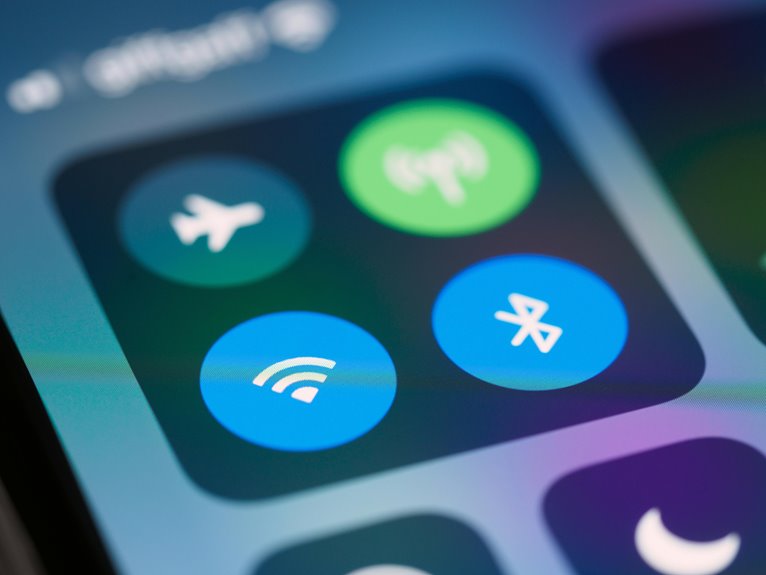
You’ll get faster response times, denser network capacity, and AI-managed routing that keeps your calls, streams, and apps steady in crowded places. Terahertz links can push data rates far beyond today’s limits, while edge intelligence helps your phone adapt in real time. You’ll also see smoother satellite handoff, so your connection can stay alive whenever towers drop away, including remote roads, open water, and disaster zones.
That matters because connectivity is becoming a shared baseline, not a premium perk. As networks evolve, you’ll belong to a more seamless digital ecosystem where your phone stays connected, responsive, and ready wherever you go.
Future Smartphone Battery Breakthroughs
You’ll likely see solid-state batteries reshape smartphone endurance via packing more energy into smaller, safer cells. They can also reduce heat and improve longevity, which matters as phones handle heavier AI, 6G, and on-device processing loads.
Faster wireless charging will then make top-ups more practical, cutting downtime without forcing you to rely on bulky cables.
Solid-State Battery Advances
Solid-state batteries could be one of the biggest smartphone battery breakthroughs because they replace liquid electrolytes with solid materials, improving energy density, safety, and long-term durability.
You’ll likely notice energy density gains that let your phone last longer without growing bulkier, while thermal stability improvements reduce swelling and overheating risks.
- Longer daily use
- Safer fast discharge
- Better aging resistance
- Thinner device designs
You benefit whenever engineers pack more power into less space, and that matters provided you want a phone that keeps pace with your day.
These batteries also support more reliable performance under stress, so your device feels dependable in the moments you care about most.
As adoption grows, you’ll join a user base that expects smarter, cleaner power from every charge.
Faster Wireless Charging
As wireless power systems improve, faster wireless charging could become the most practical battery breakthrough because it cuts downtime without forcing you to accept bigger batteries or thicker phones. You’ll notice the difference as a short stop restores hours of use, keeping you ready for work, travel, and shared plans.
Higher wireless charging efficiency will matter most, since it reduces heat, waste, and battery wear while providing more energy per minute. Magnetic charging pads will help you align instantly, so you can charge without fuss and keep your routine moving.
As phones gain 6G radios, AI tools, and richer displays, quick top-ups will feel essential. You won’t just own a better device; you’ll stay connected to the pace your circle expects.
How Smartphones Will Fit Everyday Life
Smartphones will fit everyday life through becoming less like standalone devices and more like intelligent control centers for communication, work, security, and home management. You’ll rely on them as trusted hubs that simplify routines and strengthen your place in connected communities. AI will anticipate needs, while 6G will keep interactions instant and seamless. To stay balanced, design will highlight digital wellness and ambient companionship, helping your phone support you without demanding constant attention.
- You’ll manage calendars, messages, and payments in one flow.
- You’ll secure access with biometrics and quantum-grade protection.
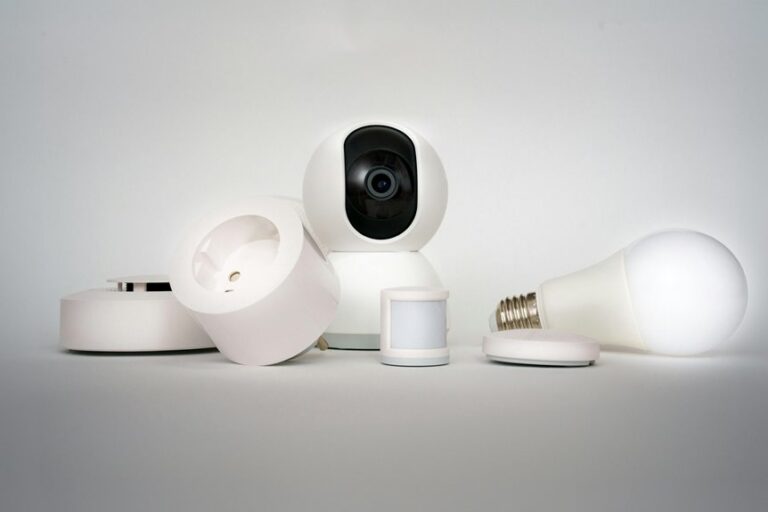
- You’ll coordinate wearables, lights, locks, and appliances.
- You’ll get situation-aware help that feels personal, not intrusive.
This shift won’t replace your life; it’ll organize it, reduce friction, and make belonging easier to maintain every day.
Frequently Asked Questions
Will Smartphones Use 6G for Real-Time AI Processing?
Yes, 6G will likely support real time AI processing by shifting inference to the device and nearby edge networks, reducing delay and keeping you connected.
Will Quantum Computing Run Directly on Future Smartphones?
Not yet, but phones may eventually include small quantum components for narrow tasks. Because qubits are delicate, those components could handle specific local jobs while larger cloud systems manage demanding computations, improving speed and security.
Can Biometric Security Include Voice, Iris, and Behavioral Patterns?
Yes, biometric security can include voice authentication, iris scans, and behavior based access. It can use multiple verification layers to improve trust, speed up access, and make device protection feel smooth and personalized.
Will Phones Become Fully Portless With E-Paper Secondary Screens?
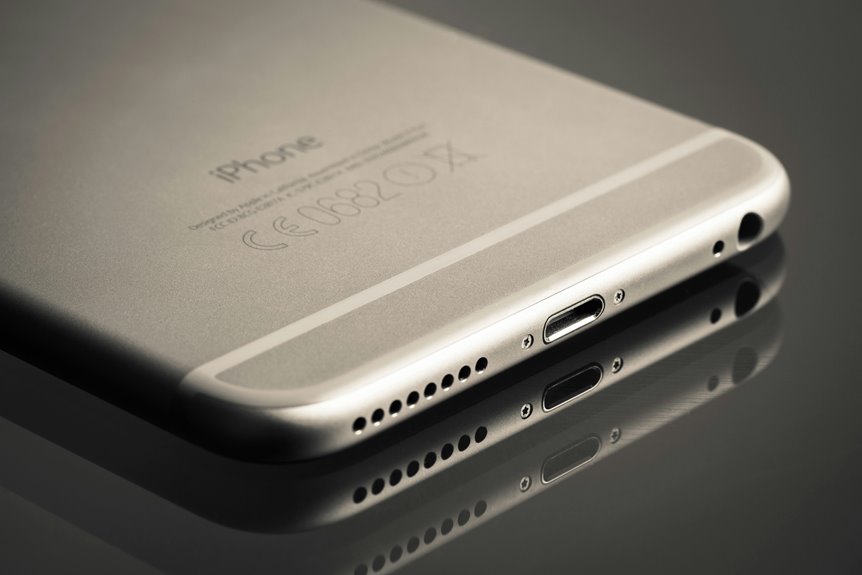
Yes. Portless designs are likely to appear first because 100x faster connectivity and tighter sealing improve portless durability. You will also get E Paper notifications on secondary screens, reducing power use while keeping you connected and informed.
Could Batteries Eventually Eliminate the Need for Regular Charging?
Yes, future battery advances could let devices run far longer between charges. Higher energy density, better efficiency, and lower power displays may extend battery life to weeks or even more, though charging would still eventually be necessary.