

You press a key, move a trackpad, or open a file, and the laptop turns that action into data, instruction, and output. Inside the chassis, the CPU, RAM, storage, buses, and power controls work in sequence and in parallel, each handling a specific part of the process. The operating system coordinates it all, but the real flow begins much earlier than you may expect, and the bottleneck isn’t always where you believe it is.
Inside a Laptop: The Main Components
You can trace this motherboard layout to see how component placement supports power delivery, signal routing, and thermal control. Your keyboard, storage, wireless module, and fans all link through specific connectors, so each subsystem has a defined role.
Because space is limited, engineers position parts to minimize trace lengths and preserve airflow. Once you understand this arrangement, you’re better prepared to identify failures, upgrade compatible parts, and feel confident working within your own machine’s framework without guessing or damaging adjacent circuits.
How the Processor Handles Tasks
Whenever you press a key or click a mouse, the laptop converts that input into digital instructions the processor can act on. You rely on the CPU to fetch each instruction, decode its meaning, and execute the required operation with exact timing.
Inside the instruction pipeline, several steps overlap, so the processor can keep work moving efficiently instead of waiting on one task at a time. The operating system supports task scheduling, assigning processor time to running programs and shifting between them whenever needed.
This coordination lets your browser, editor, and music player share the machine without conflict. Through handling instructions in sequence and managing priorities, the processor turns your actions into responsive system behavior you can trust as part of a well-tuned laptop environment.
How RAM Speeds Up Performance
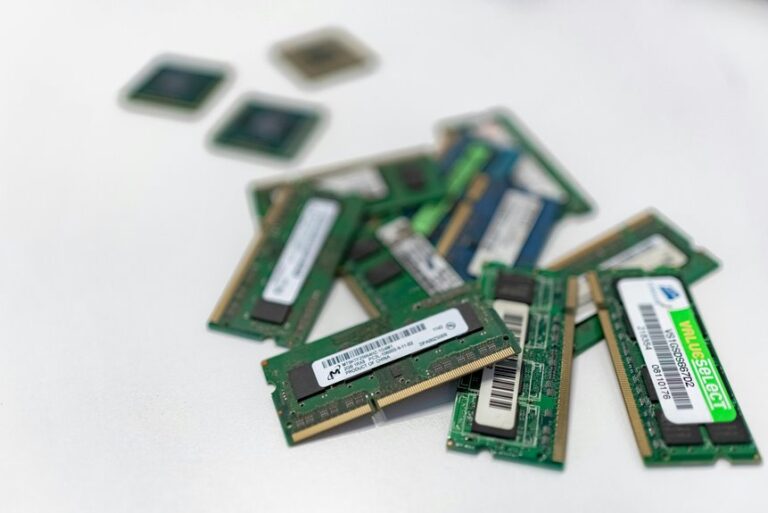
RAM gives the CPU fast temporary storage for the data and instructions it needs most, so your laptop doesn’t have to keep pulling everything from slower long-term storage.
Because the processor can fetch working data quickly, you cut memory latency and reduce stalls in the fetch-decode-execute cycle.
That means your apps load faster, switch more cleanly, and keep running whenever you multitask.
You’ll notice better application responsiveness whenever your browser, editor, and chat tools share RAM efficiently, since the operating system can place active processes where the CPU can reach them quickly.
In a well-tuned system, RAM works with cache and shared-memory design to keep core access efficient.
For you, that translates into smoother control, less waiting, and a laptop that feels ready whenever you are.
Where Laptop Data Is Stored
You store laptop data in both volatile and nonvolatile memory types, each serving a distinct function. RAM holds active data temporarily while storage devices such as SSDs or hard drives retain files after power is off.
This separation lets your system access working data quickly while preserving long-term data reliably.
Storage Devices
Storage devices hold data persistently, unlike RAM, which only stores information temporarily for quick access to the CPU.
In your laptop, SSD vs HDD choices shape speed, noise, and durability. An SSD uses flash storage, so you’ll boot faster, load apps quicker, and feel less waiting in daily work. An HDD relies on spinning platters, so it offers larger capacities at lower cost, but it responds more slowly. You can keep your operating system, documents, photos, and software on either device, and you’ll want external backup options to protect that data from failure or loss.
For a reliable setup, choose storage that matches your workload, budget, and need for portability. That way, you stay connected to a system that fits you.
Memory Types
Laptop memory comes in layers, and each one stores data for a different purpose and duration.
In your laptop’s memory hierarchy, RAM is volatile memory: it holds the programs and data the CPU needs right now, then clears them once power stops. Cache memory sits closest to the processor and speeds repeated access to instructions and values. Your storage drive, such as an SSD, keeps files, apps, and the operating system even once the machine is off.
Together, these types balance speed, capacity, and persistence. Once you understand this structure, you can trace how data moves from long-term storage into fast working memory, then back again as tasks change. That’s the core flow your laptop relies on every day.
How Laptops Move Data Between Components
You can consider of your laptop’s internal data movement as a network of buses and links that carry signals between the CPU, RAM, storage, and peripherals.
The CPU fetches data from cache initially, then RAM, while controllers route traffic to devices like the keyboard, display, and Wi‑Fi module.
These paths let each component exchange information with minimal delay and keep the system synchronized.
Data Buses And Links
Data buses and communication links act as the laptop’s internal road network, carrying bits of data between the CPU, RAM, motherboard, GPU, and other components. You rely on bus design to define width, speed, and direction, while signal routing keeps each transfer organized and electrically clean.
- Parallel buses move multiple bits at once.
- Serial links reduce pin count and improve integrity.
- Controller hubs coordinate traffic across shared paths.
When you open an app, the system sends commands across these links so your hardware can stay synchronized. You’ll notice that better routing lowers latency and interference, helping every component feel like part of one coherent team.
In modern laptops, compact traces and high-speed lanes let data move fast without wasting space or power.
Memory And Cache Flow
Whenever the CPU needs information, it pulls it from RAM initially because RAM gives fast, temporary access to active programs and tasks. You can consider the cache hierarchy as a speed ladder: L1 sits closest, then L2, then RAM, each step reducing memory latency.
| Level | Speed | Role |
|---|---|---|
| L1 cache | Fastest | Stores immediate instructions |
| L2 cache | Fast | Holds repeated data |
| RAM | Slower | Keeps active workloads |
If the data is already in cache, your CPU avoids a RAM fetch and executes sooner. In the event it is not, the controller checks the next level, preserving efficiency across cores. This shared path helps you stay in control of multitasking because the system answers requests with the nearest useful copy, not the slowest one.
Peripheral Communication Paths
Peripheral communication paths let a laptop move information between the keyboard, touchpad, storage, network modules, and display without confusion or delay. You depend on the motherboard’s buses and controller chips to route packets, scan codes, and video frames with tight timing. As soon as you connect peripherals, the system follows external device routing rules, then matches them to signal connector standards so data arrives intact.
- Keyboard and touchpad inputs become digital events.
- Storage controllers transfer files to RAM and CPU.
- Display and wireless modules return processed output.
You belong in this flow because every component speaks a defined protocol, and your laptop coordinates them through drivers, interrupts, and shared pathways. This disciplined routing keeps latency low, preserves power, and prevents collisions.
How Laptops Manage Power and Battery Life
Laptops manage power through balancing performance demands with tight battery constraints, and the operating system, BIOS, and hardware components all work together to reduce energy use. You rely on battery optimization features that lower processor speed, dim the display, and idle unused devices when demand drops.
The BIOS controls charging behavior by protecting the cell from overvoltage and coordinating safe power delivery from the adapter. Inside the chassis, voltage regulators supply only the current each component needs, so the CPU, GPU, and wireless modules don’t waste energy. Thermal sensors also guide fan response, because excess heat raises consumption.
When you unplug, these controls help you keep working longer, and they make the laptop feel efficient, predictable, and ready for your workflow.
What the Operating System Does
Beyond power management, the operating system coordinates how your laptop actually behaves while you use it. It gives you user interface management, so windows, menus, and settings respond in a consistent, familiar way.
It also handles software resource scheduling, assigning CPU time, memory access, and device attention so each app gets what it needs without crowding others out.
You’re part of this coordinated environment, where the system keeps tasks orderly and performance predictable.
- Launches and closes applications efficiently
- Protects files and permissions
- Balances background services with active work
How Input Becomes On-Screen Action
Whenever you press a key, move a mouse, or trigger a sensor, the input device converts that physical action into digital data the laptop can interpret.
You join the system’s signal path at the input stage, where keyboard signal translation maps each press to a code the operating system recognizes. Your mouse sends a click or motion packet, and the laptop routes it through the motherboard to memory and the CPU. The operating system decodes the event, updates application state, and passes drawing instructions to the GPU. Then mouse click visualization appears on the display as cursor movement, selection, or a changed window state. In this process, you and your laptop stay synchronized through precise, low-latency communication.
Why Laptops Slow Down and Overheat
When your laptop slows down or starts to overheat, the cause is usually a bottleneck in CPU processing, memory access, or heat removal. You’re seeing the system protect itself, not fail randomly. The CPU might hit thermal throttling, reducing clock speed to cut heat. RAM pressure can also force constant swapping, which delays tasks and makes the machine feel sluggish.
- Dust buildup blocks airflow and raises internal temperatures.
- Weak fans or dried thermal paste reduce heat transfer.
- Too many active apps compete for shared memory and CPU time.
If you keep vents clear and close unused programs, you help the motherboard and cooling system stay balanced. That’s how your laptop stays fast, stable, and part of your workflow.
Frequently Asked Questions
Why Does Cache Memory Improve Performance More Than RAM Alone?
Because cache sits much nearer to the CPU, it cuts memory access delays sharply. It also keeps frequently used data ready for the processor, so the system responds faster than RAM by itself can provide.
How Does Shared Memory Help Multiple CPU Cores Work Together?
Shared memory lets multiple CPU cores read and update the same data in one place, so they can coordinate without passing copies back and forth. This reduces communication overhead, shortens wait times, and helps parallel tasks stay in step.
What Happens During the BIOS Startup Check?
During BIOS startup, the firmware runs hardware initialization and POST tests to verify key components, detect faults, and confirm the system is ready to boot.
How Do Software Drivers Communicate With Different Hardware Parts?
Device driver interfaces translate software requests into the signals and commands each hardware component expects. Drivers handle command mapping, protocol details, and data flow so processors, storage devices, displays, and other parts can operate together reliably.
Why Can Integrated Graphics Save Space and Power?
Integrated graphics save space and power by combining CPU and GPU functions in one efficient chip, which reduces board area, cuts the number of parts, lowers heat output, and improves overall efficiency.