

Once you wait for your laptop to reach the desktop, you’re seeing several stages compete for time: firmware checks, storage speed, startup apps, and background services. Should your system still use an HDD, or your BIOS scans too many devices, boot time can stretch quickly. Even RAM limits, malware, and power settings can add delay. The real bottleneck isn’t always obvious, and one setting can change more than you expect.
What Slows Laptop Boot Time?
Your laptop’s boot time is usually slowed via three main factors: firmware initialization, disk-based OS loading, and startup programs.
You first wait while BIOS or UEFI checks hardware and hands control to the OS; on some systems, that phase can consume nearly half the total time.
Next, the system loads core files, then you see login screen lag if the storage subsystem or boot order forces extra scanning.
After that, background services and startup apps extend the path to desktop interaction, even when you don’t need them yet.
You can measure boot from power-on to desktop-ready, which helps you identify which stage you and your team should optimize together.
SSD vs. HDD Boot Time
As you compare SSD and HDD boot times, the storage device usually becomes the dominant variable after BIOS/UEFI initialization. You’ll see an SSD deliver faster, more consistent starts because it reads system files with low latency and no mechanical seek delay. An HDD must move heads and handle HDD fragmentation, so boot files often load in scattered bursts. In practice, your machine may feel ready sooner with an SSD, especially after repeated startups.
| Drive | Boot behavior |
|---|---|
| SSD | Rapid, uniform access |
| HDD | Slower, variable access |
| Hybrid remark | SSDs reduce wait time and improve response |
If you value quick access and a smoother routine, an SSD usually fits your setup better. SSD endurance also supports long-term reliability, so you’re not trading speed for fragility.
BIOS and Boot Order Delays
Even with an SSD handling the OS load, BIOS and UEFI still account for a large share of total boot time on many systems. You can’t optimize what you don’t measure, so treat pre-OS firmware as a distinct phase. BIOS initialization delays often come from hardware checks, device handshakes, and compatibility routines that run before control passes to the OS.
Should you enable Fast Boot, disable unused controllers, and set your SSD as the primary boot device, you reduce boot device scanning and cut wasted polling. That matters because every extra second spent searching peripherals delays your path to the desktop.
Once you tune these settings, you join the group of users who get predictable, efficient startups without sacrificing stability or control.
How Startup Programs Slow Boot Time
Whenever you load too many startup programs, they compete for CPU, disk, and memory during boot and extend the time it takes to reach a usable desktop.
Each background app you let start automatically adds initialization work, I/O requests, and service checks that slow the login path.
When you trim unnecessary entries, you can reduce startup contention and recover faster boot performance.
Startup Program Overload
Startup programs are one of the biggest reasons a laptop’s boot time slows down, because each item set to launch at startup adds more work before you can reach the desktop. You can restore speed with startup cleanup and disciplined autostart management, so your system feels responsive again.
| Item | Impact | Action |
|---|---|---|
| Chat app | High | Disable |
| Updater | Medium | Delay |
| Sync tool | High | Keep only when needed |
Each enabled entry competes for memory, CPU time, and disk access during boot. Whenever you trim the list, you shorten initialization and reduce user frustration. You’re not alone in this; most slow boots come from accumulated launches, not weak hardware. Review startup entries regularly, remove what you don’t trust, and keep only essential software.
Background App Delays
Background apps can keep slowing boot long after the login screen appears, because they launch services, tray agents, sync clients, and updaters that compete for CPU time, disk access, and memory. You might think the desktop is ready, but a concealed app launch can still queue network checks, license validation, and telemetry.
That extra work creates background service delay, especially after multiple vendors install their own watchdogs. You can cut this load via auditing startup entries, disabling nonessential companions, and delaying sync tools until after login.
After you belong to a lean setup, your laptop reaches interactive speed sooner, feels more responsive, and spends less time fighting tasks you don’t need at boot.
How RAM Affects Laptop Startup
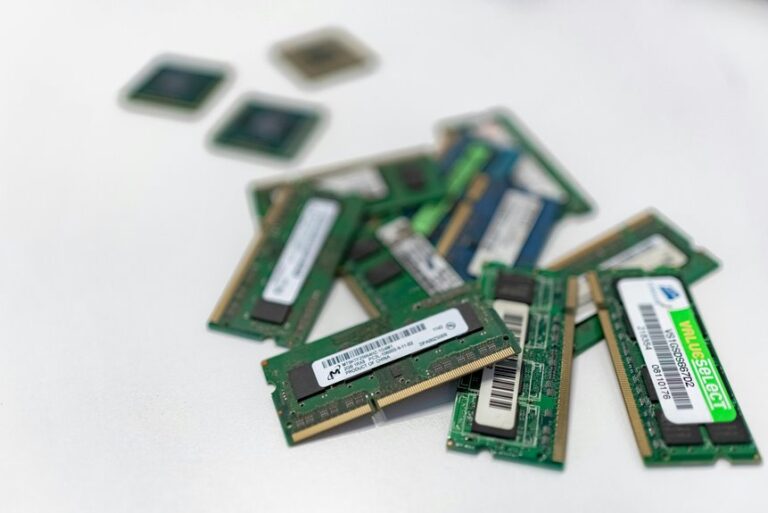
You’ll usually see RAM affect startup only when capacity is tight, because insufficient memory forces the system to page data to disk during boot.
Faster RAM can reduce a small portion of initialization delay, but it won’t change boot time as much as storage or firmware settings.
Whenever you launch many startup services, higher RAM capacity helps absorb that load and keeps the system from stalling during logon.
RAM Capacity Limits
RAM capacity has only a limited effect on laptop boot time unless the system is severely undersized and forced to page during startup. You’ll usually see the bigger gains from preventing memory exhaustion, not from adding beyond your workload’s need.
Once you cross the practical memory ceiling for the operating system and your startup set, extra gigabytes rarely change the launch sequence. If you run too close to task cache limits, Windows may reload components from storage and slow the initial desktop phase.
In a well-tuned machine, enough RAM keeps startup data resident, so you join the desktop without swapping delays. For most users, matching capacity to your normal boot profile matters more than chasing large numbers, and that’s the benchmark your team should use.
Memory Speed Impact
As memory speed is a factor, it usually affects laptop startup far less than storage latency and firmware overhead, though a faster RAM subsystem can still trim small delays during driver initialization and initial system services. You’ll notice this most as your system already uses an SSD and lean firmware. Memory bandwidth helps the CPU feed setup routines efficiently, while lower cache latency reduces brief stalls in code paths that touch data repeatedly.
- Faster RAM won’t fix slow boot disks.
- Higher memory bandwidth can smooth initial loading work.
- Lower cache latency improves tiny access bursts.
- Mixed modules often run at the slower profile.
If you’re tuning startup with the rest of the community, treat RAM speed as a minor, measurable advantage, not the main boot-time lever.
Multitasking Startup Load
Even on a well-tuned laptop, multitasking startup load can stretch boot time because the OS has to allocate memory for drivers, background services, and any apps set to launch at sign-in. Your RAM doesn’t usually slow raw firmware checks, but it can shape startup concurrency when too many processes compete at once. | Factor | Effect | |—|—| | High launch count | More memory claims | | Low RAM capacity | Earlier paging | | Heavy services | Longer ready state | Since you belong to a power-user setup, trim launch sequencing so the OS loads essentials before all else and defers the rest. That reduces contention, keeps memory resident, and helps you reach the desktop faster with fewer stalls.
How Updates and Drivers Slow Startup
Updates and driver installs can slow startup because they add services, scheduled tasks, and background checks that run before you reach the desktop. You’ll see this most after major releases or chipset installs, where driver update delays extend POST-to-login time. Firmware patch impact can be even sharper provided the installer resets device tables or retrains hardware.
- New drivers might validate signatures at boot.
- Updaters can stage files in multiple reboots.
- Firmware flashes might lengthen initialization.
- Outdated packages can trigger retry loops.
You belong in the fast-boot group as long as you keep drivers current, but not excessive. Review update history, remove stale vendor tools, and reboot only after bundled installs finish. That keeps startup predictable, stable, and measurably quicker.
Background Apps Before Login
Before you even reach the desktop, background apps can add measurable delay during loading services, tray helpers, sync clients, and security modules during the pre-login phase. You’ll notice login item delays once each component waits on disk, network, or policy checks. Tray app hooks also extend initialization because they register callbacks before your session becomes usable.
| Component | Effect | Impact |
|---|---|---|
| Sync client | Auth checks | Slow |
| Security module | Policy scan | Moderate |
| Tray helper | Hook setup | Variable |
If you belong to a performance-focused setup, you should audit these entries and keep only the ones you need. Fewer pre-login agents mean less contention, cleaner execution paths, and a faster handoff to your desktop.
How Fast Startup Changes Boot Time
Fast Startup changes boot time by skipping a full kernel shutdown and restoring a saved system state on the next power-on, which cuts out a large part of the normal initialization path. You’ll usually see faster desktop access, especially when your storage is already tuned. This is hybrid shutdown behavior: Windows preserves drivers and kernel data, then reloads them instead of rebuilding everything.
- It trims shutdown work.
- It shortens the next power-on sequence.
- It fits well with SSD-based systems.
- It delivers clear Fast Startup benefits for routine use.
You still boot normally after a restart, so benchmark results can differ. For a faster, tighter startup flow, you and your laptop stay in sync with less waiting and more consistency.
Malware and Corrupted System Files
You might notice longer pauses while security software inspects startup entries and while the system retries failing files.
That delay often comes from persistence mechanisms, altered drivers, or damaged registry references that keep your laptop from initializing cleanly.
Effective malware removal reduces concealed hooks that intercept boot processes, and targeted file repair restores missing or inconsistent system components.
You’ll get the best result once you verify integrity after cleanup, because residual corruption can still stall initialization.
Should you want reliable startup performance, treat recurring boot delays as a sign that your system needs deeper inspection, not just a quick reboot.
How Power Settings Affect Startup
After you’ve ruled out malware and file corruption, power settings are the next place to check because they can change how your laptop initializes from shutdown to desktop. You’ll want to review 1. power plan settings, since aggressive energy-saving profiles can alter wake sequencing and delay device checks. 2. sleep mode behavior, because hybrid sleep or hibernation-style states often preserve more hardware context than a true shutdown.
3. fast startup options, which can shorten the path to the login screen by reusing system state. 4. advanced adapter and lid actions, since they might trigger extra resume logic. Upon you tune these options carefully, you join a group of users who understand that startup speed isn’t only about hardware; it’s also about how your system manages power shifts.
How to Speed Up Laptop Boot Time
To speed up your laptop’s boot time, start with measuring it from initial power-on to desktop interaction so you can see where the delay occurs. Compare results against boot time benchmarks, then isolate BIOS, storage, and startup overhead.
Enable Quick Boot or Fast Boot in UEFI, set your SSD first in boot order, and disable unused controllers or legacy devices.
Next, trim startup programs with your system’s startup manager; each removed task reduces initialization work. Should your system have accumulated clutter, perform clean install optimization to restore a leaner launch path.
After each change, retest under the same conditions so you can track gains precisely. You’ll feel more in control, and your laptop’s startup should become consistently faster and more predictable.
When to Upgrade Your SSD or RAM
When boot time still lags after you’ve trimmed BIOS overhead and startup programs, the next question is whether your hardware has become the bottleneck. You should upgrade the SSD whenever storage health checks show rising reallocated sectors, slow reads, or your drive is nearly full. Upgrade RAM whenever you regularly hit memory limits, swap to disk, and feel app lag.
- Choose an SSD provided that your boot drive is mechanical.
- Pick more RAM provided that multitasking causes paging.
- Verify motherboard compatibility considerations before buying.
- Compare cost against the boot-time gain you’ll actually get.
You’re not alone here: many laptops need only one targeted upgrade. Prioritize the component that directly limits startup, then test again to confirm measurable improvement.
Frequently Asked Questions
What Is the Standard Way to Measure Laptop Boot Time?
You measure laptop boot time from the moment you press the power button until the desktop becomes responsive, using boot timing tools and operating system logs. Track key stages such as the logo, loading screen, and first usable interaction.
Why Does BIOS Take so Much of the Startup Process?
BIOS startup can feel slow because it spends time initializing hardware before the operating system begins. It checks device settings, detects connected components, and performs firmware setup. Older devices, compatibility checks, or a long memory training step can make the delay more noticeable.
Does a Clean Install Boot Faster Than an Old System?
Yes, you will usually boot faster after a clean install because a fresh operating system removes old startup items and unnecessary background processes. A lean system often feels more responsive. You reduce startup tasks, simplify disk access, and recover speed.
How Much Do CD or DVD Drives Affect Boot Speed?
You’ll usually see only a small slowdown at startup from CD or DVD drives. The main delay comes when the BIOS scans for removable media, especially if it checks empty trays or looks at the optical drive before the SSD.
Can Startup Time Improve Without Changing Hardware?
Yes, you can improve startup time without new hardware. You can reduce delays by turning off startup services and background processes, especially when multiple auto launches pile up. Use exact settings to regain speed and stay in control.