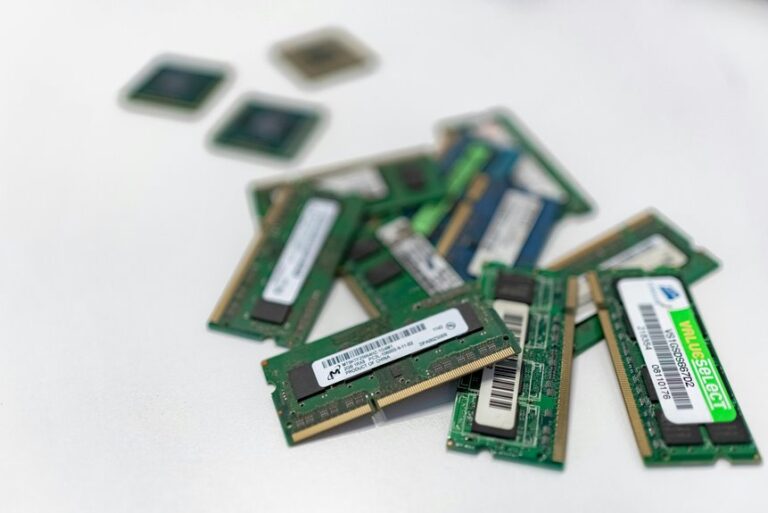


While your laptop slows while you’re editing a spreadsheet and streaming audio, you’re seeing multiple hardware parts work together. You rely on the motherboard, CPU, RAM, SSD, GPU, display, battery, cooling system, keyboard, and touchpad to keep it usable. Each component has a specific role, and whether one falls behind, the whole system changes in ways you could not expect.
Main Laptop Components
At the heart of any laptop, the motherboard serves as the main circuit board that connects and coordinates all internal hardware. You rely on it to link the processor, memory, storage, display, cooling, and power paths into one working system. In compact models, manufacturers solder key parts directly to the board to reduce size and weight, which shapes the build materials and affects repair challenges.
You’ll often see RAM mounted close to the board for fast access, while storage sits in the base and the screen assembly stays in the lid. The power system feeds low-voltage DC to every component, and the fan and heat sink manage temperature. Whenever you understand these main laptop components, you can troubleshoot with confidence and stay connected to your machine.
Laptop Processor Basics
The CPU is the laptop’s brain, handling instructions, basic arithmetic and logic, and the input/output tasks that keep every component working together.
You rely on its processor architecture to define speed, core count, cache layout, and power use, so your system feels responsive and efficient. In each CPU instruction cycle, it fetches, decodes, executes, and stores results fast enough to keep you moving.
- Choose more cores for smoother multitasking.
- Check clock speed for burst performance.
- Compare cache size for quicker repeat access.
- Match thermal limits to your laptop’s chassis.
When you understand these basics, you can pick a processor that fits your workflow and join users who value balanced performance, stability, and control.
RAM and Storage
While the CPU handles processing, RAM gives your laptop fast temporary workspace for active programs, and storage keeps your files, apps, and operating system whenever power is off.
You benefit from enough RAM whenever you multitask, because it reduces slowdowns as apps compete for memory. RAM speed differences can affect responsiveness, especially in systems tuned for integrated graphics. Storage capacity shapes how much data you can keep locally, while SSDs usually load programs faster than hard drives.
Check storage upgrade options before you buy, since some laptops let you swap drives or add a second device, but others use soldered parts. Matching RAM and storage to your workload helps you fit into a system that stays efficient, reliable, and ready for daily use.
How the Motherboard Connects Everything
Behind every RAM module, drive, and processor is the motherboard, the main circuit board that links the laptop’s internal hardware into one working system. You rely on its motherboard chipset layout to route signals, assign resources, and keep each part synchronized.
Through internal bus communication, the CPU, memory, and storage exchange data fast and reliably. Power traces on the board distribute electricity where it’s needed, while soldered connectors keep compact laptop designs stable.
- See how each part gets its data path
- Notice where power and control meet
- Understand why upgrades can be limited
- Feel confident tracing system interactions
Laptop Graphics and Display Hardware
Your laptop’s graphics and display hardware turns digital output into what you see on screen, with the GPU rendering images and the LCD panel presenting them to you.
You rely on the motherboard’s integrated graphics controller or discrete graphics controller options to drive pixels efficiently, while the display pipeline handles color, refresh rate, and resolution.
Different display panel types, including IPS, TN, and OLED, trade off viewing angle, contrast, and power use, so you can match your setup to your needs.
The backlight or self-emissive panel produces visible imagery, and the display cable carries signals from the system board to the screen.
Once you understand these parts, you’re better equipped to choose a laptop that fits your team’s workflow and visual expectations.
Keyboard, Touchpad, and Other Inputs
After seeing how the display presents output, it’s just as essential to look at the input devices that let you control the laptop.
Your keyboard is one of the main typing devices, and you use it to enter text, commands, and shortcuts with speed and accuracy. Your touchpad acts as the primary pointing device, letting you move the cursor, click, drag, and scroll without an external mouse. Many laptops also include extra inputs that strengthen your workflow and keep you connected.
- Keyboard layouts support fast, comfortable typing
- Touchpads translate finger motion into precise cursor control
- Function keys trigger hardware and software actions
- Built-in sensors and cameras expand interaction options
When you know how these parts work, you can use your laptop more confidently and efficiently.
Laptop Battery and Power System
You can estimate battery capacity through checking its watt-hours or milliamp-hours, which indicate how long your laptop can run on stored energy.
The charging circuit regulates power flow from the adapter to the battery and internal components, preventing overcharge and unstable input.
You should also match the power adapter’s voltage, current, and connector type to your laptop’s requirements to guarantee safe charging.
Battery Capacity Basics
Battery capacity determines how long a laptop can run on stored energy before it needs to reconnect to AC power, and it’s measured in watt-hours or, less commonly, milliamp-hours. You use this rating to judge runtime estimation and compare models fairly. Larger numbers usually mean longer unplugged use, but real results depend on brightness, workload, and efficiency.
- Higher capacity can support all-day work.
- Smaller batteries reduce weight and thickness.
- Battery cycle life affects long-term usable capacity.
- Power-hungry CPUs and displays shorten runtime.
When you belong to a mobile workflow, understanding capacity helps you plan charging stops and avoid surprises. Treat the spec as a baseline, then adjust expectations for your apps, network use, and thermals.
Charging Circuit Functions
Inside the laptop’s power path, the charging circuit manages how incoming AC power is converted, regulated, and routed to both the system board and the battery.
You rely on it to keep voltage and current within safe limits while it coordinates battery charging regulation with system demand.
It senses battery state, temperature, and load, then adjusts charge flow to protect cells and preserve runtime.
With dc input protection, it blocks reverse current, surges, and polarity faults before they can reach sensitive components.
This circuit also decides whenever to power the laptop directly from external power and whenever to top off the battery.
Whenever it works well, you get stable operation, efficient charging, and dependable energy transfer across the whole power chain.
Power Adapter Compatibility
Once the charging circuit has regulated incoming power, the adapter itself has to match the laptop’s voltage, current, connector, and polarity requirements. You need the right adapter wattage so your system charges safely and stays stable. Provided the adapter underpowers your laptop, you’ll see slow charging or shutdowns under load; provided it overdelivers voltage, you can damage the board. Check connector polarity before you plug in, because reversed polarity can fail instantly.
- Match voltage exactly
- Meet or exceed required current
- Verify plug size and shape
- Confirm connector polarity and wattage
When you choose a compatible adapter, you protect your battery, reduce heat, and keep your machine running with the same reliable setup your community trusts.
Cooling System Parts
The cooling system in a laptop keeps heat under control so the CPU and other internal parts can operate safely.
You rely on the fan, heat sink, and thermal path to move heat away from the processor. Good heat sink design increases surface area, while the fan pulls air across the fins to improve dissipation. While you handle fan maintenance, you reduce dust buildup, preserve airflow, and lower noise.
You should also keep vents clear and make sure the chassis allows steady circulation. If the cooling system works well, your laptop stays stable under load, throttles less often, and lasts longer. In a well-built machine, you and your device stay in sync through reliable temperature control.
Wi‑Fi Cards and Laptop Ports
After you keep temperatures under control, you can look at how a laptop connects to networks and external devices through Wi‑Fi cards and ports. Your wireless card setup links the motherboard to wireless networks, letting you join your system’s online community with stable throughput and low latency. Most laptops use integrated modules, but some support replacement cards provided the slot and antenna layout match.
- Check the card form factor before upgrading.
- Verify antenna leads are secure and matched.
- Use USB, HDMI, and audio ports for expansion.
- Review port expansion options to support docks and adapters.
Ports give you wired connectivity for data, displays, and peripherals.
You’ll often rely on them for charging, file transfer, and adding devices without opening the chassis.
Speakers, Webcam, and Audio Hardware
You’ll usually find laptop speakers near the keyboard or hinge area, where their placement affects stereo separation and acoustic output.
The webcam’s sensor quality determines image sharpness, low-light performance, and frame stability during video calls.
Audio input ports, such as the microphone jack or combo audio jack, let you connect external headsets and recording gear.
Speaker Placement
Laptop audio hardware is usually tucked into the top and lower edges of the chassis, where small speakers, the webcam, and related components can function without taking up much space. You’ll often find drivers behind a speaker grille design that protects the openings while letting sound pass cleanly. Proper placement helps you get clearer mids, tighter bass, and better stereo sound balance across the keyboard deck.
- Top-edge speakers aim sound toward you for direct playback.
- Lower-edge speakers can add reflected output from your desk.
- Internal routing keeps cables short and signals stable.
- Balanced placement helps your team of components work as one.
Webcam Quality
Just as speaker placement shapes audio output, webcam quality depends on how well the camera module, sensor, lens, and internal wiring are integrated into the top bezel.
You get sharper video as camera lens clarity stays high, the sensor handles low light cleanly, and the housing blocks glare.
Check video resolution settings so your calls match your bandwidth and display needs. A well-aligned webcam keeps faces centered, reduces edge distortion, and preserves detail for meetings, classes, and content creation.
When the lens sits behind a dirty cover or loose bezel, image noise and blur rise fast.
You’ll feel more confident on camera as the hardware delivers consistent focus, color balance, and frame stability. For best results, keep the bezel clean and choose settings that fit your use case.
Audio Input Ports
Audio pathways shape how sound and voice move through the laptop, and the speakers, microphone, webcam audio, and related ports all depend on tight integration with the motherboard and audio controller.
You rely on these inputs whenever you join calls, record notes, or stream content. Your laptop might include:
- a microphone jack for direct voice capture
- a line in port for external audio sources
- integrated webcam mics for quick conferencing
- speaker outputs for local monitoring
The audio hardware converts analog signals to digital data, then routes them through the CPU and drivers.
Whenever ports stay clean and undamaged, you get stable capture and clear playback. Should you belong to a remote team or creative workflow, dependable input ports help you stay connected and heard.
Frequently Asked Questions
Which Laptop Parts Are Usually Soldered and Not Easily Replaceable?
Usually, the laptop’s CPU, RAM, and built in WiFi module are often soldered to the motherboard, which makes upgrades difficult. Like parts sealed into a ship’s hull, they stay fixed in place. Soldered CPU replacements are uncommon, but this design helps keep the laptop slim and dependable.
What Causes a Laptop LCD Inverter to Fail?
Your laptop LCD inverter often fails when the power circuit deteriorates or the inverter parts age. Heat damage, voltage surges, and loose cable connections can also interrupt backlight power and lead to a dim or flickering screen.
How Does a Laptop Motherboard Distribute Power to Components?
The motherboard takes the adapter’s incoming power, converts it into the voltages each section needs, and sends those rails to the CPU, RAM, storage, and display circuits. It also smooths the power delivery so the laptop’s internal parts can operate reliably and stay in sync.
Why Is Laptop RAM Important for Multitasking Performance?
You need RAM because it stores the apps you are using right now, and more RAM with higher speed helps your laptop move between tasks more quickly. That improves app switching, cuts down on wait times, and makes the system feel more responsive when you juggle multiple programs.
What Is the Difference Between HDD and SSD Storage?
You get slower mechanical storage with an HDD, while an SSD uses flash memory for faster boot times, quieter operation, and better shock resistance. SSDs also offer better durability in most everyday use cases.