

Your laptop’s speed depends on more than raw CPU power. You’ll see lag whenever RAM is tight, storage is nearly full, or background apps keep competing for resources. An SSD usually cuts load times sharply, while an HDD can bottleneck everything. Power settings, browser tabs, heat, and driver quality also shape responsiveness. The real question is which factor is limiting your system most—and it isn’t always the one you expect.
Why Laptops Slow Down
Laptops slow down as limited hardware, cluttered storage, and software overhead force the system to work harder than it should. You feel the lag when RAM fills, apps compete for cache, and disk access replaces fast memory. As battery aging reduces voltage stability, the system might throttle to protect components, which can make performance feel inconsistent.
Software bloat adds background services, startup items, and update checks that consume CPU cycles, memory, and storage bandwidth. You also notice slowdowns whenever temp files, logs, and fragmented data pile up. Should your drive stay near capacity, Windows swaps more often and responsiveness drops.
You’re not alone; most aging laptops lose speed through this same mix of resource pressure, thermal limits, and inefficient software behavior.
How CPU Speed Affects Laptop Performance
Whenever your processor clocks higher, it can execute more instructions per second, which usually improves responsiveness in everyday tasks.
You’ll notice faster app launches, snappier menu traversal, and shorter waits during calculations.
Still, cpu clock speed isn’t the only factor you should weigh.
Core design, cache size, and thermal limits shape real-world gains, so processor generation differences matter a lot.
A newer chip at a moderate frequency can outperform an older chip that advertises a higher number.
Should you be comparing systems, look at sustained acceleration behavior, not just peak GHz.
For your workflow, the best choice is the processor that keeps pace under load without throttling, so you feel consistent performance and stay in control.
How Much RAM You Need for Multitasking
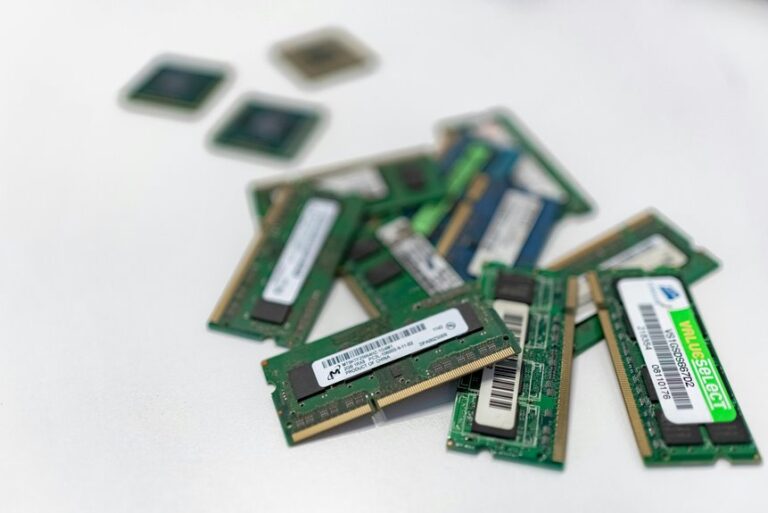
For everyday multitasking, 8GB RAM usually handles web browsing, email, and office apps without major slowdowns.
Should you run heavy apps like photo editors, virtual machines, or modern games, 16GB or more gives you more headroom and fewer memory bottlenecks.
A RAM upgrade is one of the most cost-effective ways one can improve multitasking on Windows 10 or 11.
Everyday Multitasking Needs
If you regularly keep a browser, email, chat apps, and a few office tools open at once, 4GB RAM is the bare minimum for Windows 10, but it’ll feel tight and can trigger slowdowns from memory swapping.
For a smoother baseline, 8GB lets you work with fewer pauses and better tab switching, while 16GB gives you more headroom for daily workflow habits that stack apps all day.
You’ll also notice battery life tradeoffs: more RAM doesn’t drain power much, but extra background activity can. Check Task Manager to see real usage, then match your memory to how you actually work.
If you belong to the group that keeps many tabs, sync tools, and notes open, upgrading RAM is one of the most cost-effective changes you can make.
Heavy App Requirements
As your workload shifts from everyday browsing to video editing, large spreadsheets, virtual machines, or modern gaming, 4GB RAM quickly becomes a bottleneck and 8GB can still feel constrained. You’ll notice lag whenever heavy app demands compete for memory, because each browser tab, timeline, or VM reserves a slice of active RAM.
For resource intensive workloads, 16GB is the practical baseline, giving you enough headroom to keep apps responsive while you switch between tasks. Should you routinely run creative suites, code editors, and game launchers together, 32GB can keep performance steadier.
You don’t need guesswork: check your usage in Task Manager and compare peak memory against available RAM. That data tells you whether your current setup supports the pace you expect.
RAM Upgrade Benefits
Upgrading RAM increases how many tasks your laptop can handle at once, so multitasking feels smoother and less constrained. You’ll notice fewer stalls when you keep browsers, office apps, and chat tools open together.
For basic use, 8GB usually works; for heavier workloads, 16GB gives you better headroom, and 32GB helps if you edit media or run virtual machines. This memory expansion reduces paging to disk, which protects responsiveness.
You also get more consistent performance scaling as app demands rise, so your system stays stable under load. Check your current slots and memory type before buying, then match modules for the best gain.
If you want your laptop to feel like part of a capable team, RAM is one of the smartest upgrades.
SSD vs. HDD: Which Is Faster?
You’ll get faster boot times and shorter app load times with an SSD because it reads and writes data much quicker than a hard drive.
An HDD relies on spinning platters and a moving head, so its mechanical design limits access speed and increases latency.
Should you want better system responsiveness, an SSD is the clear performance upgrade.
SSD Speed Advantages
Why is an SSD faster than an HDD? You get speed from flash memory, not spinning platters, so latency drops and your laptop feels responsive.
With an SSD, you’ll see boot acceleration, quicker app launches, and faster file access because the controller reads data with minimal mechanical delay. That matters whenever you want your system to keep up with you.
- No seek time for head movement
- Parallel data handling across memory cells
- Better flash storage endurance with proper wear leveling
You’ll also benefit from steadier performance under mixed workloads, since SSDs keep throughput consistent. For your team of power users, that means fewer waits and smoother multitasking. Choose an SSD whenever you want measurable gains in daily speed, not just benchmark numbers.
HDD Performance Limits
HDDs hit clear performance limits because spinning platters and mechanical read/write heads add latency, slowing boot times, app launches, and file access.
You’re seeing mechanical disk latency in action: every seek costs time, and random reads suffer most. Compared with an SSD, an HDD can’t match low-access delay or steady throughput, especially under multitasking.
File system fragmentation makes the gap worse, because scattered blocks force extra head movement and raise wait times. You’ll get more consistent speed from an SSD, but provided that you’re on an HDD, keep free space available and defragment it only once needed.
That won’t make it fast, yet it can reduce overhead. For teams optimizing shared laptops, this difference matters.
How Background Apps Slow Your Laptop
Background apps consume RAM, CPU cycles, disk activity, and network bandwidth even while you’re not using them, which can slow boot times, reduce multitasking capacity, and make active programs feel less responsive. You can cut this overhead by trimming services that quietly refresh data, check updates, or launch at sign-in. That background sync drain often hides inside chat clients, cloud storage, and launchers.
A startup app delay also compounds every reboot and keeps your workflow from feeling smooth.
- Review Task Manager for resource-heavy apps
- Disable nonessential startup entries
- Uninstall tools you don’t rely on
When you keep only the apps that matter, your laptop responds faster, your sessions start cleaner, and you stay in control with the rest of your team.
How to Keep Your Laptop Cool
You should keep your laptop’s intake and exhaust vents unobstructed so airflow can carry heat away efficiently. Place it on a hard, flat surface and avoid blocking the fan openings, since restricted ventilation raises internal temperatures and can trigger thermal throttling.
You should also remove dust from the vents and fan path regularly, because buildup reduces airflow and degrades cooling performance.
Ventilation Basics
Good laptop ventilation keeps internal temperatures low enough to prevent thermal throttling, which helps sustain CPU and GPU performance under load. You can improve cooling through keeping intake and exhaust areas clear so air moves through the chassis efficiently. Watch the airflow pathways: blocked vents trap heat, raise component temperature, and cut sustained speed.
Check exhaust placement before using the laptop on a desk, lap, or stand, because rear or side outlets need open space to discharge hot air.
- Keep the rear edge raised slightly.
- Use flat, hard surfaces for intake access.
- Leave several centimeters around vents.
When you belong to a group that values performance, these simple positioning habits help everyone get steadier results, lower noise, and fewer slowdowns during demanding tasks.
Dust Removal
Dust buildup inside the chassis restricts airflow and acts as thermal insulation, so even a well-ventilated laptop can run hotter and throttle sooner. You should inspect fan buildup and cooling vents regularly, because lint on blades and fins lowers static pressure and weakens heat transfer. Power down, unplug, and use short bursts of compressed air to dislodge debris through the vents, then wipe external grilles with a dry microfiber cloth.
Provided you’re comfortable opening the case, clean the heatsink and fan directly, but avoid overspinning the fan. Schedule this maintenance every few months, or more often in dusty spaces.
Whenever you keep airflow clear, you protect clock speeds, reduce noise, and stay in the group of users who get consistent performance.
Update Drivers and Windows for Better Speed
Keeping Windows, drivers, and apps current helps your laptop run faster through improving compatibility, fixing bugs, and reducing performance bottlenecks.
You protect driver compatibility once you install GPU, Wi‑Fi, and chipset updates from trusted sources, then verify each version matches your hardware. Smart update scheduling helps you avoid surprise slowdowns, so set a weekly check or let Windows Update run outside your work hours.
- Install critical security and stability patches initially.
- Reboot after major updates so changes load cleanly.
- Review Device Manager for warnings or failed installs.
If you stay current, your system usually boots cleaner, handles apps more efficiently, and joins the rest of your setup in a smoother performance baseline.
Over time, that consistency keeps your laptop responsive without extra effort.
Free Up Storage and Clear Cache
Freeing up Local Disk C space often cuts slowdowns because Windows has less need to swap data to disk whenever RAM fills up. You can apply disk cleanup basics via deleting downloads, uninstalling stale apps, and using Storage Sense for temporary file removal. That keeps your system lean and helps you stay in the fast group.
| Action | Benefit | Frequency |
|---|---|---|
| Clean temp files | Reclaims space | Weekly |
| Empty Recycle Bin | Reduces clutter | Weekly |
| Run Disk Cleanup | Removes caches | Monthly |
Check browser and app caches, too. Whenever you clear them, you reduce concealed storage bloat and improve file access consistency. Keep at least 15% free space on SSDs, and your laptop’ll feel more responsive during everyday work.
How Browser Tabs Affect Performance
Although a single browser tab may seem harmless, dozens of open tabs can quickly consume RAM, CPU time, and GPU resources. You’ll notice slower window switching, delayed script execution, and higher fan activity as tab memory usage climbs.
Each tab can keep code, media, and cached state active, so even idle pages still compete with system resources.
To stay efficient with your group of tabs:
- Close tabs you’re not using.
- Bookmark pages instead of leaving them open.
- Use browser session recovery so you can reopen your workspace fast.
When you trim tab count, you reduce background processing and free memory for the apps you actually need. That keeps your laptop responsive and helps you work with confidence, not clutter.
Use Power Modes to Improve Speed
While you switch your laptop to a higher power mode, you let the CPU and system components run with fewer aggressive power limits, which can improve responsiveness during demanding tasks. Use the balanced power profile for everyday work, because it keeps performance steady without wasting unnecessary energy. Whenever you need maximum speed, choose a high-performance option provided your system offers it, and keep battery saver mode for light tasks or travel.
You’ll notice faster app launches, smoother multitasking, and fewer dips under load once the power policy matches the workload. To stay efficient as a team with your device, change modes before heavy editing, gaming, or large data tasks. This simple adjustment won’t add hardware, but it can reveal noticeably better speed from the laptop you already own.
Best Hardware Upgrades for Faster Performance
Your laptop still feels sluggish after software tuning, the most effective hardware upgrades are usually RAM and storage. You’ll get the biggest gain via moving from an HDD to an SSD, which cuts boot time and speeds app launches. Adding RAM helps you keep more tabs, documents, and background tasks open without swapping to disk.
Should you work in portable workstations, check for free slots and matched module speeds before buying. For graphics-heavy workflows, external graphics can help, but it’s only worth it should you CPU and power delivery already keep up.
- Upgrade RAM to improve multitasking.
- Install an SSD for faster loads.
- Use external graphics for demanding visuals.
Frequently Asked Questions
Can Readyboost Still Help Older Laptops With Limited RAM?
Yes. On an older laptop with little RAM and a hard drive, ReadyBoost can still improve read caching, but older Windows compatibility limits mean the boost is usually small, not close to SSD speed.
Should I Defragment an SSD to Improve Speed?
No, you should not defragment an SSD to make it faster. It adds unnecessary wear to the drive and gives almost no performance benefit because flash storage is not slowed much by file fragmentation. For better results, keep some free space available and install the latest firmware.
How Often Should I Restart My Laptop for Best Performance?
Restart your laptop once a day to keep it running well. A reboot clears temporary memory, resets apps that are using too much RAM, and helps startup services stay reliable. If you use many programs at once, restarting more often can help keep things responsive.
Does Fast Startup Actually Make Laptops Boot Faster?
Yes, fast startup can reduce boot time by skipping part of the shutdown process, especially on laptops with HDDs. You may gain a few seconds, but the benefit is usually smaller on SSDs and it can interfere with a true full shutdown.
When Should I Reinstall Windows to Fix Slow Performance?
Reinstall Windows if malware cleanup, virus removal, and driver repair still leave the computer slow, and hardware problems have already been ruled out. It can wipe out persistent software clutter and help restore stable performance.