
When you’ve ever tapped your phone to pay, pair earbuds, or open a poster link, you’ve already used NFC without much thought. Your phone creates a tiny radio field that only works once another device is just inches away, which makes the whole system fast and practical. But that short range isn’t the whole story, and the real limits start to matter once things don’t connect as expected.
What NFC Does on Your Phone
NFC on your phone lets you tap to share data, make contactless payments, and read nearby tags without a physical connection.
You use it for quick actions that feel natural, whether you’re paying at checkout, pairing accessories, or opening a link from a poster.
With tag scanning, your phone can recognize a nearby tag and launch useful content right away.
That makes everyday tasks smoother and helps you move through shared spaces with less friction.
Shortcut triggers let you automate actions too, so a tap can start route guidance, share a contact, or connect to a routine you use often.
NFC keeps things simple, fast, and familiar, so you can join in without extra steps.
How NFC Works in Smartphones
Inside your phone, an NFC chip and antenna work together to create a tiny radio field at 13.56 MHz.
Whenever you tap near another device or tag, your phone powers the link and exchanges data through inductive coupling without a physical connection.
That quick handoff lets you pay, pair, or share info in less than a second.
NFC Hardware Components
A smartphone’s NFC setup usually includes a small antenna coil, a radio chip, and a secure element or software-based wallet layer that work together to handle tap-based communication. Your NFC chip design manages timing, power, and security, while antenna coil design helps your phone sense nearby fields with precision. | Part | What it does | Why you care |
| — | — | — |
|---|---|---|
| Antenna coil | Picks up NFC fields | Makes taps reliable |
| NFC chip | Controls the radio link | Keeps your phone responsive |
| Secure element | Protects credentials | Guards your wallet |
| Wallet layer | Stores app logic | Simplifies payments |
| Frame | Holds components together | Fits slim phones |
You get a compact system that feels natural in your hand and fits daily routines. Together, these parts help your device join the contactless crowd without fuss.
Data Exchange Process
As soon as you tap your phone against a tag or terminal, the data exchange starts almost instantly through inductive coupling at 13.56 MHz, with your device acting as the active reader and the other side responding in the tiny magnetic field between them. Your phone powers the link, detects the target, and then follows a simple data exchange workflow: request, response, verify, and complete.
In reader mode, you could open a webpage or read a label.
In card emulation, you send payment credentials as secure nfc message formats.
In peer-to-peer mode, both devices swap records, contacts, or setup info.
Because the field is so short, you stay close, stay intentional, and keep control while the exchange finishes in under a second.
Tap to Pay, Pair, and Share With NFC
With NFC, you can tap to pay, pair devices, and share data through holding them just a few centimeters apart.
Your phone can act like a payment card, a setup tool, or a quick way to exchange contacts, links, and files.
Because the connection starts fast and stays short-range, you get convenience without giving up much security.
Tap To Pay
You just hold it close, and NFC completes the exchange in a split second. Your tap security comes from short range, so you must be near the terminal for it to work.
The wallet app never shares your real card number; instead, payment tokenization creates a unique code for each purchase. That means merchants see a token, not your account details.
You’ll feel like part of a faster, simpler checkout flow, with less fumbling for plastic and fewer exposed credentials.
NFC also works with transit gates and kiosks, so your everyday taps stay quick, familiar, and protected.
Pair And Share
Once your phone has NFC, you can tap to pay, pair accessories, and share information without a long setup. You bring two devices close, and they connect in a second, so you don’t waste time digging through menus or codes. That quick tap helps you join the same smart, connected rhythm as everyone else around you.
Use it for contactless file sharing, passing a photo, contact, or link with a simple touch. You can also trigger instant device handoff, moving a call, playlist, or app session from one device to another. NFC keeps the exchange short and intentional, which adds security and keeps the process easy.
Should you want fast, familiar, and social tech, this is it.
Where You’ll See NFC Tags and Readers
You’ll see NFC tags and readers in everyday places where quick, short-range interactions make sense: on payment terminals, transit gates, office doors, product labels, posters, and even other smartphones. You’ll tap your phone at checkout, breeze through public transit tags, or use event access readers to enter concerts and conferences.
In stores, tags can open menus, show product details, or launch deals when you bring your phone close. At work, readers can open doors or log you in with a simple tap. Around you, NFC fits naturally into routines because it’s fast, familiar, and easy to use.
If you’ve used a mobile wallet or shared contact info via tapping, you’ve already joined the quiet network of people who move through daily life with a quick NFC touch.
NFC Security and Range Limits
Because NFC only works at very short range, it’s designed to be secure by default: your phone usually has to be within about 4 cm, and often even closer, for a transaction or data exchange to happen. That distance creates proximity authentication, so you’re proving you’re really there. | Risk | NFC limit | What it means |
| — | —: | — |
|---|---|---|
| Tap range | 4 cm | You must be close |
| Interception | Very low | Short range interception is hard |
| Field strength | Rapid decay | Signal fades quickly |
In practice, you belong to the group of users who tap with confidence: the signal won’t travel far, and nearby eavesdroppers can’t easily catch it. Still, stay aware in crowded spaces, because physical closeness matters. NFC helps you share or pay quickly, but its real protection comes from that tiny, intentional gap.
How to Check and Turn On NFC
To check whether NFC is on, open your phone’s Settings and look for an NFC or Contactless Payments option, usually beneath Connections, Wireless, or Connected Devices.
Once you find it, you can confirm the NFC settings status at a glance. Unless NFC is off, tap the switch to enable it; the NFC toggle location may vary by brand, but it’s often near Bluetooth or payment settings.
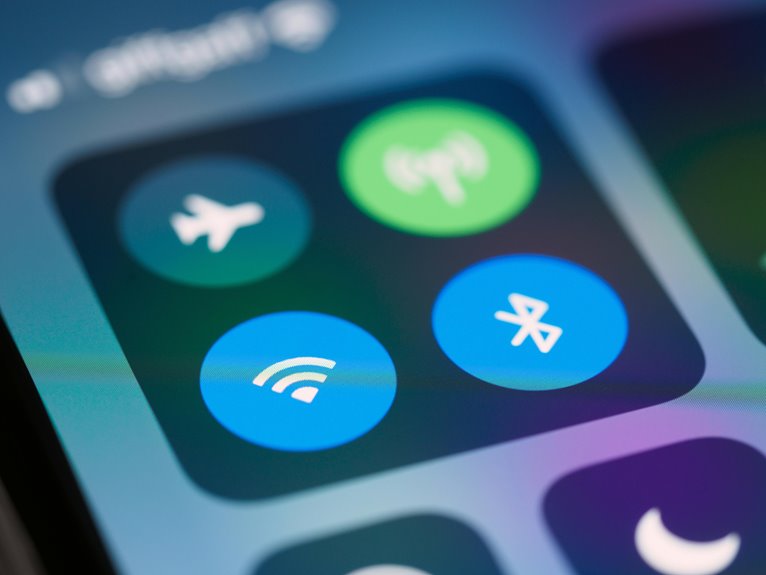
On some phones, you’ll also see shortcuts in the quick settings panel. After turning it on, your phone can tap to pay, share files, or read tags while it’s close enough.
Unless you’re setting up a wallet app, keep NFC on so your device stays ready whenever you need a fast, familiar tap.
NFC Problems and Quick Fixes
If NFC isn’t working, the issue is usually simple: the feature might be off, the phone mightn’t be close enough to the tag or terminal, or the case might be blocking the signal.
Start your NFC troubleshooting by turning on NFC, then unlock your phone and place it flat against the target. Remove thick or metal cases, and wipe the tag or payment reader.
If you still see NFC signal issues, restart your phone and try again in a quieter spot, away from magnets or other electronics. Check whether the app, card, or terminal supports NFC. On some phones, you may need to set the correct wallet app as default.
A few careful taps usually solve it, so you can get back to easy, confident contactless use.
Frequently Asked Questions
Can NFC Work if My Phone Battery Is Dead?
Usually, no. Once your phone battery is fully dead, NFC typically stops working. Some phones may allow a brief emergency tap to pay using stored NFC power, but only if the device supports that feature.
Do Both Phones Need NFC to Exchange Data?
Yes, both phones usually need NFC turned on for tap to share basic data. Some apps then switch to Bluetooth or Wi Fi after pairing. The exact limits depend on what each phone supports.
Can NFC Tags Be Rewritten or Locked Permanently?
Yes. Many NFC tags can be rewritten until you lock them permanently. Reusable tags let you change the stored data, while lockable tags can be set to read only forever. Check whether the tag supports rewriting before locking it, because permanent locking cannot be reversed.
Does NFC Use Mobile Data or Wi-Fi?
No, NFC does not use mobile data or Wi-Fi. It works through a close range signal between devices, so taps and pairing happen without an internet connection.
Are All Smartphones Compatible With Contactless Payments?
No. A smartphone needs NFC and a wallet app that supports tap to pay. Bank support, regional availability, and device setup also affect whether contactless payments work.