
If you want bass that hits hard without blurring mids or highs, you’ll appreciate these 2026 picks. They range from wired in‑ears with tight Pure Bass to over‑ears with tactile drivers, LDAC support, and tuned ANC, so you can feel the low end without losing clarity. I’ll run through models, what they do best, and key trade‑offs so you can pick the right punch for your listening style.
| JBL Tune 310C Wired In-Ear Headphones (Black) |

| Travel-Friendly Bass | Connectivity: Wired (USB-C / 3.5 mm) | Noise Control: Passive noise cancellation (passive noise control) | Driver Type / Size: 9 mm dynamic drivers | VIEW LATEST PRICE | Read Our Analysis |
| Baseus Bass BH1 ANC Headphones with LDAC and 80H |

| Longest-Lasting Power | Connectivity: Wireless Bluetooth 6.0 (also USB-C for charging) | Noise Control: Real-time Adaptive Hybrid ANC (active noise cancelling) | Driver Type / Size: 40 mm dynamic drivers | VIEW LATEST PRICE | Read Our Analysis |
| Skullcandy Crusher Evo Wireless Bluetooth Headphones (True Black) |

| Tactile Bass Experience | Connectivity: Wireless Bluetooth | Noise Control: Noise-isolating over-ear fit (passive isolation) | Driver Type / Size: Dual 40 mm full-range + dual bass drivers (dynamic) | VIEW LATEST PRICE | Read Our Analysis |
| Sony ULT WEAR Over-Ear Noise-Canceling Bluetooth Headphones |

| Premium Noise Control | Connectivity: Wireless Bluetooth (multipoint) | Noise Control: Dual noise canceling technology (active noise cancelling) | Driver Type / Size: (Not specified numerically) tuned drivers with V1 processor (over‑ear) | VIEW LATEST PRICE | Read Our Analysis |
| Bose QuietComfort Wireless Noise-Cancelling Headphones (Chilled Lilac) |
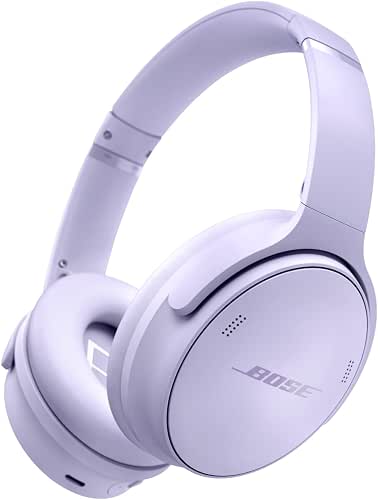
| Plush Comfort Performer | Connectivity: Wireless Bluetooth (also wired audio cable included) | Noise Control: Active noise cancellation + passive isolation | Driver Type / Size: (Not specified numerically) high-fidelity drivers tuned for deep bass | VIEW LATEST PRICE | Read Our Analysis |
More Details on Our Top Picks
JBL Tune 310C Wired In-Ear Headphones (Black)
Choose the JBL Tune 310C if you want wired, Hi-Res in-ears that prioritize punchy JBL Pure Bass and compatibility with modern USB-C devices. You’ll get 9 mm dynamic drivers, Hi-Res Audio support, and a wide frequency response that keeps bass tight and detail clear. The USB-C plug works with many phones, PCs, and gaming devices, and a 3-button remote with mic handles playback, volume, calls, and three EQ presets (Default, Bass, Vocal). The tangle-free flat cable, rounded eartips, and passive noise control make them travel-friendly. They’re lightweight plastic with included eartips and manual.
- Connectivity:Wired (USB-C / 3.5 mm)
- Noise Control:Passive noise cancellation (passive noise control)
- Driver Type / Size:9 mm dynamic drivers
- On-Device Controls:3-button remote with microphone (playback/volume/calls)
- Battery / Power (or Power Source):Powered by wired connection (no battery)
- Intended Use / Target Activities:Entertainment, travel, general mobile use (adult)
- Additional Feature:Hi-Res Audio support
- Additional Feature:USB-C wired interface
- Additional Feature:Tangle-free flat cable
Baseus Bass BH1 ANC Headphones with LDAC and 80H
If you want chest-thumping low end without sacrificing battery life or wireless fidelity, the Baseus Bass BH1 ANC headphones are built for you: they pair LDAC Hi-Res Wireless and SuperBass 2.0 with up to 80 hours playtime (55 with ANC) and real-time adaptive hybrid ANC, so you’ll get immersive, punchy bass and long listening sessions even in noisy environments. You’ll enjoy bio-cellulose diaphragms, 40mm dynamic drivers, and feather-soft memory-foam earcups for comfort. Bluetooth 6.0, a 5-mic AI ENC array, and voice boost make calls clear. Quick 10-minute charging gives 10 hours. Controls are simple push buttons; package includes USB-C cable and manual.
- Connectivity:Wireless Bluetooth 6.0 (also USB-C for charging)
- Noise Control:Real-time Adaptive Hybrid ANC (active noise cancelling)
- Driver Type / Size:40 mm dynamic drivers
- On-Device Controls:Push-button controls on earcups (playback/ANC/calls)
- Battery / Power (or Power Source):Rechargeable battery – up to 80 hours (ANC off), 55 hours (ANC on); quick charge
- Intended Use / Target Activities:Entertainment, fitness, travel, calling, running, cycling, workouts
- Additional Feature:LDAC Hi-Res Wireless
- Additional Feature:5-mic AI calls
- Additional Feature:80-hour battery life
Skullcandy Crusher Evo Wireless Bluetooth Headphones (True Black)
For bass lovers who want to feel every beat, the Skullcandy Crusher Evo delivers immersive, tactile low end thanks to its patented multi-sensory Crusher bass technology and dual bass drivers paired with two full-range 40 mm drivers. You’ll get punchy, room-filling sound for music and movies, plus up to 40 hours of playback and Rapid Charge (10 minutes gives you 4 hours). The Skullcandy app runs a hearing analysis to personalize sound. On-unit controls handle calls, tracks, and volume. The noise-isolating over-ear fit folds flat for travel, includes a USB-C cable, works with iPhone/Android, and carries a 1-year USA warranty.
- Connectivity:Wireless Bluetooth
- Noise Control:Noise-isolating over-ear fit (passive isolation)
- Driver Type / Size:Dual 40 mm full-range + dual bass drivers (dynamic)
- On-Device Controls:On-unit controls (playback/track/volume/calls)
- Battery / Power (or Power Source):Rechargeable battery – up to 40 hours; Rapid Charge 10 min → 4 hr
- Intended Use / Target Activities:Music and movies, immersive/tactile listening, general use
- Additional Feature:Tactile bass drivers
- Additional Feature:Personal Sound app
- Additional Feature:Rapid Charge support
Sony ULT WEAR Over-Ear Noise-Canceling Bluetooth Headphones
Audiophiles who crave chest-thumping low end will love the Sony ULT WEAR, which pairs dual noise-canceling processors with a one-touch ULT bass boost for massive, controlled impact without drowning out mids and vocals. You’ll get signature 1000X-series noise canceling, V1 processing, and quick ULT activation to feel beats, not muddiness. Battery lasts up to 30 hours, and a 3-minute charge buys 90 minutes. You can multipoint two devices, use Alexa, and rely on beamforming mics with wind-reducing mesh for clear calls. Thermo-foaming cushions, swivel fold design, recycled plastics, and no plastic packaging make them travel-friendly and eco-conscious.
- Connectivity:Wireless Bluetooth (multipoint)
- Noise Control:Dual noise canceling technology (active noise cancelling)
- Driver Type / Size:(Not specified numerically) tuned drivers with V1 processor (over‑ear)
- On-Device Controls:On-ear controls (ANC, ULT boost, playback, multipoint controls)
- Battery / Power (or Power Source):Rechargeable battery – up to 30 hours; quick charge 3 min → 90 min
- Intended Use / Target Activities:Travel, commuting, work (noise cancelling, multipoint, voice assistant)
- Additional Feature:V1 processor ANC
- Additional Feature:ULT bass boost button
- Additional Feature:Thermo-foaming cushions
Bose QuietComfort Wireless Noise-Cancelling Headphones (Chilled Lilac)
You’ll appreciate the Bose QuietComfort Wireless if you want powerful, punchy bass without sacrificing noise control-its active noise cancellation plus passive isolation keeps distractions out while adjustable EQ lets you dial in deeper lows. You’ll get two listening modes: Quiet for full cancellation and Aware to stay connected to surroundings. Deep, high-fidelity audio benefits from on-device EQ and clear controls. The over-ear fit, plush cushions, and padded headband make long sessions comfortable. Bluetooth with multipoint switching keeps you connected to multiple devices, and a wired cable with inline mic works when battery’s out. Battery lasts up to 24 hours; quick charge adds 2.5 hours.
- Connectivity:Wireless Bluetooth (also wired audio cable included)
- Noise Control:Active noise cancellation + passive isolation
- Driver Type / Size:(Not specified numerically) high-fidelity drivers tuned for deep bass
- On-Device Controls:On-ear controls (playback/ANC/multipoint) plus inline cable control when wired
- Battery / Power (or Power Source):Rechargeable battery – up to 24 hours; 15-min quick charge → ~2.5 hr
- Intended Use / Target Activities:Travel, work, daily use (noise cancelling, comfortable long sessions)
- Additional Feature:Two listening modes
- Additional Feature:Wired audio option
- Additional Feature:Adjustable EQ settings
Factors to Consider When Choosing Extra Bass Headphones
When choosing extra bass headphones, you’ll want to weigh bass response accuracy against punchy low-end impact so you don’t lose detail. Check driver size and sound signature to match the music you listen to, and test how well noise cancellation preserves bass in noisy environments. Also factor in battery life so the bass stays consistent on long sessions.
Bass Response Accuracy
Because accurate bass needs to sit with the rest of the spectrum rather than dominate it, check measured frequency-response graphs for a controlled low-frequency roll-off instead of an exaggerated bass peak-this preserves midrange clarity and prevents muddiness. You’ll also want to evaluate transient response and damping in specs or reviews, since tight, well-damped bass preserves attack and decay without bloat. Consider enclosure design: sealed over-ear cups or thoughtfully tuned ports reduce resonances and tighten low-end impact. Prefer models with detailed objective measurements and app-based tuning or adjustable EQ so you can tailor bass to genres and listening levels and verify accuracy. Together, these factors guarantee punchy bass that’s precise, musical, and balanced across the whole spectrum.
Driver Size Importance
Although driver diameter isn’t the only factor that shapes bass, it’s a useful starting point: larger drivers generally move more air and can produce deeper, more powerful low end, but driver type, excursion, enclosure coupling, and multi-driver designs matter just as much for tight, musical bass. You’ll find bigger diaphragms (40 mm vs. 9 mm) often deliver stronger low-frequency output, but don’t rely on size alone. Dynamic drivers usually give punchy results due to greater excursion, while planar and balanced armature designs behave differently. Check enclosure design and coupling-high excursion in a well-built housing yields tighter, more impactful bass. Multi-driver setups or dedicated sub drivers extend response without massive single drivers. Use frequency response, sensitivity specs, and listening tests to judge real-world bass.
Sound Signature Preference
How do you want your lows to feel – punchy and precise or big and immersive? Decide based on music and taste: electronic, hip-hop, and cinematic tracks shine with pronounced sub-bass, while acoustic, classical, and vocal-led pieces need a more balanced or mildly enhanced low end. Remember extra bass usually boosts 60–200 Hz, adding warmth and impact compared with neutral responses. Choose tuning: tight, controlled bass preserves punch and midrange detail; boomy, loose bass prioritizes rumble but can blur instruments and vocals in the 250 Hz–2 kHz range. Factor in your hearing sensitivity and usual listening volume-bass-heavy signatures can reduce clarity and cause fatigue at high levels. Always audition headphones at your typical volume to confirm the signature suits you.
Noise Cancellation Effectiveness
When you’re choosing extra-bass headphones, focus on real-world noise cancellation performance-not just marketing dB numbers-because effective ANC depends on microphone architecture, passive isolation, and how the tuning interacts with the processing. You should look for multi-microphone feedback and feedforward systems, which commonly cut 20–45 dB in targeted bands, and evaluate suppression across the bass range you use most, since low-frequency hums are easier to cancel than sudden highs. Check fit and over-ear seals or in-ear tips for passive isolation that trims high frequencies and prevents ANC overload. Remember boosted bass can hide residual noise but also forces ANC headroom, risking distortion or pumping. Prioritize designs with consistent processing and low latency to keep ANC stable during real listening sessions.
Battery Life Considerations
After you’ve assessed ANC performance and fit, check battery life closely-extra bass modes and active features shave hours off playtime, so quoted runtimes with ANC or bass boosting on matter more than peak numbers. You’ll want manufacturers’ playtime specs both with and without power-hungry features to judge real-world endurance. High-res codecs and stronger driver excursions for deep bass raise power draw, so longer advertised battery life usually signals better power management or a larger battery. Quick-charge specs are valuable: minutes of charge for hours of playback can rescue a commute when full charging takes hours. Match battery capacity to your typical use-daily commuting needs less headroom than long-haul travel. Always leave margin for bass-boosted listening and ancillary features.
Comfort For Long Sessions
Because you’ll likely wear extra-bass headphones for long stretches, prioritize fit and materials that prevent pressure points and heat buildup. Look for well-padded, memory-foam ear cushions and a softly padded headband to reduce strain during multi-hour sessions. Choose over-ear or well-sealed on-ear designs that distribute clamping force evenly-around 2–4 N is comfortable for most people. Keep weight low: aim for under ~300 g for over-ear models (or under ~60 g for wired in-ears) to minimize neck and head fatigue. Adjustable swivel/tilt earcups and extendable headbands let you dial in a custom fit and avoid hotspots. Finally, favor breathable materials and removable, washable earpads or tips to prevent sweat and heat buildup on long listening runs.
Connectivity And Codec Support
Wondering how to get the fullest, tightest bass from extra‑bass headphones? Choose wired USB‑C or 3.5 mm when you need lossless or near‑lossless audio and minimal latency – they preserve bass detail and timing. If you go wireless, codecs matter: aptX, aptX HD, LDAC and AAC tend to deliver richer low frequencies than SBC, reducing compression smear. For gaming or video, prefer low‑latency codecs (aptX LL, LC3plus) so deep impacts stay in sync with visuals. Multipoint Bluetooth adds convenience but can force codec negotiation that drops one connection to a lower‑quality profile, hurting bass fidelity. Always confirm your source device supports the same high‑quality codec as the headphones – mismatches will downgrade bass clarity.