
Think of finding the right adapter like tuning a vintage radio until a clear station cuts through static; one tiny tweak can change everything. You’ll want sturdy mounts, exact flange distance, and manual control for creative freedom. Whether you’re adapting cine glass to mirrorless or hooking lenses to Raspberry Pi projects, the choices below show where precision meets practicality – and a few surprises that might shift how you shoot.
| Fotasy 16mm C-Mount to Canon EOS RF Adapter |
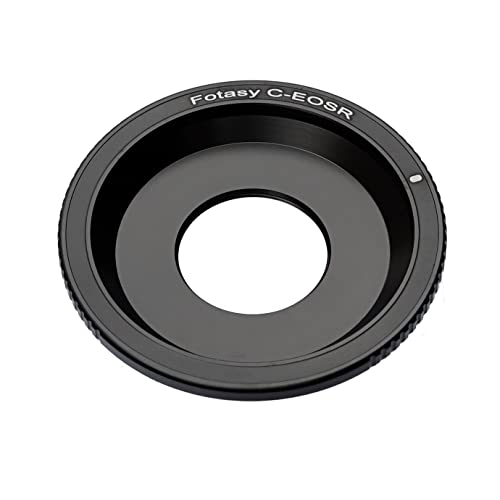
| Best for Canon RF | Mount Type: C‑Mount to Canon EOS RF | Mechanical/Manual Operation: Manual focus and exposure (no electronics) | Compatibility with C‑Mount Lens Standard: Supports 16mm C‑mount cine lenses | VIEW LATEST PRICE | Read Our Analysis |
| C-Mount to CS Extension Adapter Rings for CCTV |

| Versatile Lengths | Mount Type: C‑Mount to CS (extension rings) | Mechanical/Manual Operation: Passive mechanical spacer/adaptor (no electronics) | Compatibility with C‑Mount Lens Standard: Converts C‑mount lenses for CS mount cameras (C‑mount source) | VIEW LATEST PRICE | Read Our Analysis |
| Garosa 0.5X C-Mount 25mm Microscope Camera Adapter |

| Microscope Ready | Mount Type: Microscope interface to C‑Mount (C‑mount output) | Mechanical/Manual Operation: Manual field‑of‑view/focus ring (mechanical) | Compatibility with C‑Mount Lens Standard: C‑mount camera interface for microscopes (C‑mount output) | VIEW LATEST PRICE | Read Our Analysis |
| Fotasy C-to-E Mount 16mm Cine Lens Adapter |

| Best for Sony E | Mount Type: C‑Mount to Sony E (E‑mount) | Mechanical/Manual Operation: Manual focus and exposure (no electronics) | Compatibility with C‑Mount Lens Standard: Supports 16mm C‑mount cine lenses | VIEW LATEST PRICE | Read Our Analysis |
| Arducam 2.8–12mm Varifocal C-Mount Lens for Raspberry Pi HQ |

| Raspberry Pi Optimized | Mount Type: C‑Mount (with C‑to‑CS adapter included) | Mechanical/Manual Operation: Manual focus and aperture rings (manual lens) | Compatibility with C‑Mount Lens Standard: C‑mount lens (primary format) with C‑to‑CS adapter | VIEW LATEST PRICE | Read Our Analysis |
More Details on Our Top Picks
Fotasy 16mm C-Mount to Canon EOS RF Adapter
If you’re a mirrorless shooter who likes using compact cine lenses, the Fotasy 16mm C‑Mount to Canon EOS RF adapter is your straightforward bridge-its solid copper mount lets you fit 16mm C‑mount cine lenses to Canon EOS R bodies while retaining infinity focus, though you’ll have to control focus and exposure manually since there’s no electronic connection. You’ll mount compatible 16mm C‑mount lenses (up to ~46mm inner diameter) onto EOS R, RP, Ra, R3, R5, R6, R7 and R10 bodies. It’s durable, purely mechanical, and won’t support autofocus, automatic diaphragm or any electrical features-expect manual operation only.
- Mount Type:C‑Mount to Canon EOS RF
- Mechanical/Manual Operation:Manual focus and exposure (no electronics)
- Compatibility with C‑Mount Lens Standard:Supports 16mm C‑mount cine lenses
- Supports Infinity/Full Focus Range:Infinity focus supported and guaranteed
- Material/Build Construction:Copper lens mount (solid construction)
- Intended Use / Application:Adapting cine/movie C‑mount lenses to mirrorless Canon EOS R bodies
- Additional Feature:Copper lens mount
- Additional Feature:No electrical contacts
- Additional Feature:Fits 46mm max diameter
C-Mount to CS Extension Adapter Rings for CCTV
Security installers and DIY surveillance enthusiasts will find these C‑Mount to CS extension rings ideal when you need precise back-focus adjustment for CCTV cameras. You’ll convert C‑Mount lenses for use on CS‑Mount cameras quickly, choosing from rings sized 0.5mm to 100mm to dial in focus without shims. The rings measure 31mm OD and about 24.5mm ID, and their matte aluminum construction keeps them durable yet lightweight. They’re compatible with all CCTV cameras using C‑Mount and CS‑Mount interfaces, making them a simple, reliable solution when optical spacing demands fine adjustment for sharp surveillance imaging.
- Mount Type:C‑Mount to CS (extension rings)
- Mechanical/Manual Operation:Passive mechanical spacer/adaptor (no electronics)
- Compatibility with C‑Mount Lens Standard:Converts C‑mount lenses for CS mount cameras (C‑mount source)
- Supports Infinity/Full Focus Range:(Extension rings preserve focus; used to maintain focus range)
- Material/Build Construction:Matte aluminum construction
- Intended Use / Application:CCTV/security camera lens mounting / spacing (C↔CS conversion/extension)
- Additional Feature:Multiple thickness sizes
- Additional Feature:Matte aluminum construction
- Additional Feature:31mm external diameter
Garosa 0.5X C-Mount 25mm Microscope Camera Adapter
For microscopists who need reliable, distortion-free imaging, the Garosa 0.5X C-Mount 25mm adapter is a solid pick-its colorless optical glass and anti-halo coating deliver clear, uniform images when you hook a CCD camera to a trinocular stereo microscope. You’ll connect the microscope-threaded end to the trinocular head and the standard C-mount to your camera without worrying about size mismatch. A rotating focus ring lets you adjust the field of view to match the eyepiece framing. It accepts CS conversion rings, installs quickly on binocular or trinocular heads, and stays securely in place during routine use.
- Mount Type:Microscope interface to C‑Mount (C‑mount output)
- Mechanical/Manual Operation:Manual field‑of‑view/focus ring (mechanical)
- Compatibility with C‑Mount Lens Standard:C‑mount camera interface for microscopes (C‑mount output)
- Supports Infinity/Full Focus Range:Enables matching camera FOV and focus to microscope (full imaging)
- Material/Build Construction:Colorless optical glass + mechanical metal/plastic housing (stable optics)
- Intended Use / Application:Attaching CCD camera to trinocular microscope (microscopy imaging)
- Additional Feature:Colorless optical glass
- Additional Feature:Rotating focus ring
- Additional Feature:Secure trinocular fit
Fotasy C-to-E Mount 16mm Cine Lens Adapter
The Fotasy C-to-E Mount 16mm Cine Lens Adapter is a smart choice if you’re a cine-lens enthusiast who wants to mount vintage Bolex 16mm optics on modern Sony E-mount mirrorless bodies while retaining infinity focus. You get a lightweight, sturdy adapter (2.36 x 2.36 x 0.39 in, 0.81 oz) that fits many Sony models from NEX series to A7/A9 and ZV-E10. It’s fully manual-no electrical contacts, no autofocus or automatic diaphragm-so you’ll focus and set exposure on the lens itself. The smooth finish makes mounting effortless, and Fotasy provides manufacturer warranty details for peace of mind.
- Mount Type:C‑Mount to Sony E (E‑mount)
- Mechanical/Manual Operation:Manual focus and exposure (no electronics)
- Compatibility with C‑Mount Lens Standard:Supports 16mm C‑mount cine lenses
- Supports Infinity/Full Focus Range:Infinity focus supported
- Material/Build Construction:Lightweight strong metal (smooth surface)
- Intended Use / Application:Adapting 16mm cine lenses to Sony E‑mount mirrorless bodies
- Additional Feature:Sony E-mount specific
- Additional Feature:Lightweight 0.81 oz
- Additional Feature:2.36 x 2.36 x 0.39 in
Arducam 2.8–12mm Varifocal C-Mount Lens for Raspberry Pi HQ
If you need a compact, fast varifocal lens for Raspberry Pi High Quality projects, the Arducam 2.8–12mm is a strong pick-its F1.0–F1.6 aperture and 2.8–12mm range give you low-light performance and flexible framing for industrial or hobbyist telephoto work. You’ll mount it to the Pi HQ’s CS thread using the included C–CS adapter. Manual focus and aperture rings let you fine-tune framing and depth. It’s a 1/2″ optical format, 44.5mm diameter, 58.5mm long, and 140g-compact and sturdy. Expect 125°–43° horizontal FOV (120°–38° on 1/2.3″ IMX477). No IR filter; tripod and cable sold separately.
- Mount Type:C‑Mount (with C‑to‑CS adapter included)
- Mechanical/Manual Operation:Manual focus and aperture rings (manual lens)
- Compatibility with C‑Mount Lens Standard:C‑mount lens (primary format) with C‑to‑CS adapter
- Supports Infinity/Full Focus Range:Designed for normal/varifocal focus across range (manual focus)
- Material/Build Construction:Metal lens construction (standard lens barrel)
- Intended Use / Application:Varifocal lens for Raspberry Pi HQ/CS‑mount camera (industrial/embedded imaging)
- Additional Feature:Includes C–CS adapter
- Additional Feature:F1.0–F1.6 aperture range
- Additional Feature:125°–43° horizontal FOV

Factors to Consider When Choosing C-Mount Camera Lens Adapters
When choosing a C-mount adapter, you should first confirm mount compatibility so the lens and camera mate without mods. Check optical performance and build quality to guarantee sharpness and durability, and be aware of functional limitations like autofocus support or vignetting. Also consider size and weight since bulky adapters can affect balance and portability.
Mount Compatibility
Because mounts vary widely across cameras and lenses, you’ll want to confirm exact compatibility-matching your camera’s mount (Canon EOS RF, Sony E, CCTV CS, etc.) to the adapter and ensuring the adapter fits the lens mount (C‑Mount, CS‑Mount) and its physical dimensions so the lens mounts securely and performs correctly. Check that the adapter precisely matches both camera and lens mount types to avoid physical incompatibility. Verify inner/thread diameters and clearances so the lens seats without modification. Confirm the adapter preserves the correct flange focal distance and supports infinity focus for accurate focusing. Finally, note whether the adapter includes electrical contacts; if it doesn’t, you’ll need to rely on manual focus and aperture control because autofocus and electronic aperture won’t work.
Optical Performance
Though adapters often look simple, their optical design has a big impact on image quality, so choose ones whose glass, coatings, and mechanical alignment match your resolution needs. You should prioritize adapters that use high-grade, colorless optical glass to avoid haloing and guarantee uniformity across the frame. Look for multi-coated elements to cut flare and ghosting, improving contrast in high-contrast scenes. If you need precise framing, pick adapters with adjustable focus rings so you can fine-tune the field of view and sensor-to-lens alignment. Confirm the adapter preserves infinity focus so distant subjects remain sharp. Finally, inspect optical alignment during testing: even small internal misalignments cause distortion and inconsistent sharpness, so demand verified alignment specs or sample images before buying.
Build Quality
If you want an adapter that lasts and performs, pay close attention to build quality: choose models made from durable metals like copper or aluminum, with a finish-smooth or matte-that suits how you’ll mount and handle lenses. You’ll want a solid construction that holds a secure fit and resists accidental dislodging during movement or operation. Prioritize designs that balance strength and low weight so handheld use doesn’t become fatiguing or destabilize your rig. Since many C-mount adapters omit electrical contacts, the mechanical connection must be tight and free of wobble; inspect tolerances, threads, and seating faces. Tight machining, consistent finishes, and reliable locking mechanisms tell you an adapter will stay dependable over time.
Functional Limitations
When you pick a C-mount adapter, remember that most lack electronic contacts, so you’ll be doing focus, aperture, and exposure work by hand and can’t rely on autofocus, automatic diaphragm control, image stabilization, or metadata transfer-features that modern camera bodies often expect. That means you’ll manually set aperture on the lens, stop down for depth of field, and fine-tune focus yourself; autofocus won’t assist. Some adapters claim infinity focus, but you still need precise manual adjustment to achieve sharpness at distance. Also, without electronic communication, advanced features like in-body stabilization linked to lens or automatic EXIF recording won’t work. Factor these limits into your shooting style: if you prefer automated workflows, C-mount adapters may feel restrictive.
Size And Weight
Beyond handling manual controls, you’ll also want to think about an adapter’s size and weight, since they directly affect how your camera feels and performs. Choose lightweight adapters to reduce strain on the mount and maintain better balance with heavy lenses; that minimizes torque and the risk of damage. Compact dimensions help avoid blocking controls, hot shoes, or accessory ports, keeping your rig usable in tight setups. Beware of larger or heavier adapters that may need a tripod collar or support to prevent lens sag and guarantee steady framing. Finally, check adapter thickness and flange distance carefully-incorrect specs will ruin focus accuracy. Prioritize a slim, light adapter that matches your lens and camera for reliable handling and sharp results.
Frequently Asked Questions
Can C-Mount Adapters Be Used With Mirrorless Cameras Beyond Canon RF?
Yes – you can use C‑mount adapters with many mirrorless cameras beyond Canon RF; you’ll need the correct mount adapter, may lose flange focal distance compatibility or autofocus, and you’ll often rely on manual focus and aperture control.
Do C-Mount Adapters Affect Autofocus Performance?
Yes – they can. You’ll often lose autofocus or get unreliable AF with C-mount adapters because many adapters lack electronic contacts and flange distance mismatch prevents proper focusing systems, so you’ll usually focus manually or use contrast-detect AF.
Are There Weather-Sealed C-Mount Adapters for Outdoor Use?
Yes – but don’t expect armor-plated miracles: some C-mount adapters offer weather sealing or O-rings for outdoor use, so you can shoot in drizzle; check manufacturer specs and IP ratings before trusting them in heavy rain.
Can C-Mount Lenses Be Adapted to Full-Frame Sensors Without Vignetting?
No, you usually can’t fully avoid vignetting when adapting C-mount lenses to full-frame sensors because their image circles are smaller; you’ll get dark corners unless you crop, use a reducer, or accept reduced resolution and heavy corner falloff.
Do Adapters Introduce Any Color Cast or Optical Aberrations?
Imagine shooting a vintage CCTV lens and noticing a magenta tint – yes, adapters can introduce color casts or aberrations. You’ll sometimes see fringing, coma, or vignetting from cheap glass or misaligned mounts, so test gear first.