
Think of your room as a stage, and your speakers as the cast. You’ll want gear that’s reliable, clear, and fits how you actually live-whether that’s nearfield mixing, a TV setup, or desktop audio. I’ll outline five standout active bookshelf options for 2026, compare their strengths, and highlight what matters most so you can pick the right match for your space and sources.
| Edifier R980T 4″ Active Bookshelf Speakers (Pair) |
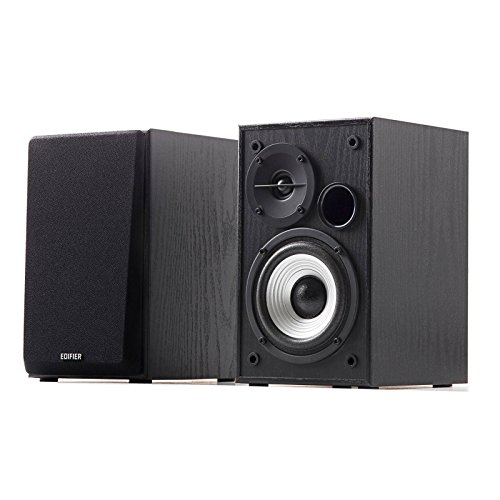
| Classic Budget Pick | Connectivity Options: Dual AUX (3.5mm + RCA) | Driver Configuration: 4″ drivers (active pair) – bookshelf woofer/tweeter pair implied | Power / Amplification: 24W RMS total | VIEW LATEST PRICE | Read Our Analysis |
| LONPOO 100W Bluetooth HiFi Active Bookshelf Speakers (LP-42M) |

| Powerhouse Hi‑Fi | Connectivity Options: Bluetooth 5.3, Optical, RCA, AUX, USB | Driver Configuration: 4″ aluminum woofer + 1″ silk dome tweeter | Power / Amplification: 100W RMS total (50W x 2, Class D) | VIEW LATEST PRICE | Read Our Analysis |
| Saiyin 30W Bluetooth Bookshelf Speakers with Optical/AUX |

| Compact TV/PC Option | Connectivity Options: Bluetooth 5.3, Optical, Coaxial, AUX, RCA | Driver Configuration: 3.5″ woofer + 0.5″ silk dome HORN tweeter | Power / Amplification: 60W total (listed as 30W x 2) | VIEW LATEST PRICE | Read Our Analysis |
| LEMEGA 40W Active Bluetooth Bookshelf Speakers |

| TV & Gaming Ready | Connectivity Options: Bluetooth, HDMI ARC, Optical, AUX, RCA, USB | Driver Configuration: 4″ woofer + 1.25″ tuned tweeters (+ additional bass drivers) | Power / Amplification: 40W total | VIEW LATEST PRICE | Read Our Analysis |
| Orange Bluetooth USB-C Active Bookshelf Computer Speakers |

| Desktop Powerhouse | Connectivity Options: Bluetooth 5.3, USB-C, AUX/RCA | Driver Configuration: 3″ carbon-fiber mid-bass + 1″ silk dome tweeter | Power / Amplification: 60W amplifier | VIEW LATEST PRICE | Read Our Analysis |
More Details on Our Top Picks
Edifier R980T 4″ Active Bookshelf Speakers (Pair)
If you want affordable, room-filling sound for music and movies without fussing over setups, the Edifier R980T is a great choice-its 24W RMS output and calibrated flared bass-reflex port deliver surprisingly immersive low end from compact, all-wood cabinets. You’ll appreciate the 100% wooden enclosures that cut resonance and give a classic finish. Two AUX inputs (3.5mm and dual RCA) let you keep two sources connected simultaneously, no swapping required. Included RCA, 3.5mm, and speaker wires get you running quickly, and the universal 110–240V supply keeps them compatible worldwide. They’re simple, reliable, and great value.
- Connectivity Options:Dual AUX (3.5mm + RCA)
- Driver Configuration:4″ drivers (active pair) – bookshelf woofer/tweeter pair implied
- Power / Amplification:24W RMS total
- Cabinet Material / Build:100% wooden enclosure (wood finish)
- Remote / Controls:On-unit controls (no remote mentioned) – cables included
- Intended Use / Compatibility:Music, movies, general listening; PC/phone via AUX
- Additional Feature:Dual simultaneous AUX
- Additional Feature:100% wooden enclosures
- Additional Feature:Flared bass-reflex port
LONPOO 100W Bluetooth HiFi Active Bookshelf Speakers (LP-42M)
Want punchy, room-filling sound without a separate amp? The LONPOO LP-42M gives you 100W RMS (50W x 2) from a Class D amp, a 4″ aluminum woofer and 1″ silk dome tweeter delivering 40 Hz–20 kHz. The 12 mm MDF woodgrain cabinets reduce resonance; built-in DSP tightens bass and clarifies vocals. You’ll get Bluetooth 5.3, optical, RCA, AUX and USB (including flash drive and PC connection), plus full-size binding posts. Removable grills, LED light, remote control and included cables simplify setup. Best placed along a wall or corner for fuller low end. Limited warranty applies.
- Connectivity Options:Bluetooth 5.3, Optical, RCA, AUX, USB
- Driver Configuration:4″ aluminum woofer + 1″ silk dome tweeter
- Power / Amplification:100W RMS total (50W x 2, Class D)
- Cabinet Material / Build:12 mm MDF wooden cabinet (woodgrain)
- Remote / Controls:Remote control included (battery not included) + onboard controls
- Intended Use / Compatibility:TV, PC, smartphone, tablet, turntable, DVD, game console
- Additional Feature:Built-in DSP technology
- Additional Feature:Removable fabric grille
- Additional Feature:USB flash playback
Saiyin 30W Bluetooth Bookshelf Speakers with Optical/AUX
Choose the Saiyin 30W Bluetooth bookshelf speakers if you need a compact, all-in-one solution that pairs Bluetooth 5.3 convenience with optical and RCA inputs for TV, PC, or turntable setups. You get a matched active/passive pair with 30W x2 output, 3.5-inch woofers and 0.5-inch silk dome horn tweeters for clear nearfield or surround use. Inputs include optical, coaxial, 3.5mm AUX and dual RCA-use LINE OUT for record players or add a preamp for PHONO outputs. Pair speakers with the supplied wire, control volume and inputs via remote or on-unit buttons, and stream wirelessly from phones or computers.
- Connectivity Options:Bluetooth 5.3, Optical, Coaxial, AUX, RCA
- Driver Configuration:3.5″ woofer + 0.5″ silk dome HORN tweeter
- Power / Amplification:60W total (listed as 30W x 2)
- Cabinet Material / Build:Wooden enclosure (bookshelf style) – active + passive pair
- Remote / Controls:Remote control + on-unit buttons for volume/input/mute
- Intended Use / Compatibility:Bookshelf, TV, PC, turntable, home theater surround
- Additional Feature:Active + passive pair
- Additional Feature:Remote compatible with Fire TV
- Additional Feature:Multiple digital inputs
LEMEGA 40W Active Bluetooth Bookshelf Speakers
For anyone who wants a simple, TV-ready upgrade, the LEMEGA 40W Active Bluetooth bookshelf speakers deliver easy HDMI ARC connectivity plus Bluetooth and optical inputs so you can hook up a TV, console, or phone without fuss. You’ll get HDMI and optical cables included, plus USB playback, RCA, and 3.5mm AUX for old gear. Four 4″ woofers, 1.25″ tuned tweeters and four bass drivers produce room-filling sound for movies, gaming, and music. Use front bass and treble controls, a dimmable LED display, and the full-function remote for quick tone and input adjustments. Setup is plug-and-play.
- Connectivity Options:Bluetooth, HDMI ARC, Optical, AUX, RCA, USB
- Driver Configuration:4″ woofer + 1.25″ tuned tweeters (+ additional bass drivers)
- Power / Amplification:40W total
- Cabinet Material / Build:Wooden cabinet (implied bookshelf design)
- Remote / Controls:Full-function remote control + front display and tone controls
- Intended Use / Compatibility:TV, gaming, living-room entertainment, music, movies
- Additional Feature:HDMI ARC input
- Additional Feature:Bass & treble controls
- Additional Feature:Front digital display
Orange Bluetooth USB-C Active Bookshelf Computer Speakers
If you need punchy, desk-friendly sound with modern connectivity, the Orange Bluetooth USB-C Active Bookshelf Speakers are a smart pick – they pair a 3-inch carbon-fiber mid-bass and 1-inch silk-dome tweeter with a 60W amp to deliver balanced, room-filling audio for gaming, streaming, or desktop music production. You’ll get Bluetooth 5.3, USB-C, AUX and RCA inputs for PCs, consoles, turntables and phones. The wooden cabinet and metal grille reduce resonance while keeping a compact, orange finish. Included cables, anti-interference audio lead and clear manual simplify setup. Email support and manufacturer assistance cover after-sales issues promptly.
- Connectivity Options:Bluetooth 5.3, USB-C, AUX/RCA
- Driver Configuration:3″ carbon-fiber mid-bass + 1″ silk dome tweeter
- Power / Amplification:60W amplifier
- Cabinet Material / Build:Wooden cabinet (wood enclosure) with metal grille
- Remote / Controls:On-unit controls (support/service noted) – remote not specified
- Intended Use / Compatibility:Desktop/PC, laptops, turntables, TVs, phones, mixers, gaming consoles
- Additional Feature:USB-C audio input
- Additional Feature:Carbon-fiber woofer
- Additional Feature:Bright orange finish
Factors to Consider When Choosing Active Bookshelf Speakers
When choosing active bookshelf speakers, you’ll want to compare sound quality metrics like frequency response, distortion, and imaging to match your listening preferences. Check power and output relative to your room size, note driver types and sizes for tonal character, and make sure the connectivity options (Bluetooth, USB-C, optical) fit your devices. Also consider how speaker placement and room acoustics will affect bass, clarity, and stereo imaging.
Sound Quality Metrics
Although room and placement matter, you’ll get the most consistent results by starting with measurable sound-quality metrics. First, check frequency response (for example, 40 Hz–20 kHz): wider, flatter curves usually mean more accurate reproduction across lows to highs. Compare driver sizes and types-larger woofers extend bass, while soft‑dome or titanium tweeters shape high‑frequency detail and smoothness. Examine SNR and THD (aim for THD <1%) to gauge background noise and fidelity at listening levels. Look at total RMS power and amplifier class to understand headroom and clean output without distortion. Finally, evaluate crossover design and any DSP or tonal controls, since good implementations improve phase coherence, channel balance, and consistent bass/treble accuracy across listening positions.
Power And Output
After checking frequency response, driver types, and distortion figures, you’ll want to focus on power and output because they determine how those measurements translate to real-world loudness and headroom. Look for RMS power ratings rather than peak numbers-RMS tells you continuous usable output, so choose higher watts for larger rooms or louder listening. Combine RMS with sensitivity (dB SPL at 1W/1m); a high-sensitivity speaker needs less power to reach the same volume. Consider amplifier class and efficiency (Class D, for example) since efficient amps deliver more clean output in compact enclosures and run cooler. Match total system power to room size-20–60W for small bedrooms, 60–150W+ for living rooms. Make sure impedance and power handling align between amp and speakers to avoid strain or distortion.
Driver Types And Sizes
Because drivers are the heart of any bookshelf speaker, you’ll want to pay close attention to their types and sizes: woofer diameter and material shape bass extension and control, while tweeter design and dome stiffness dictate clarity and sparkle. You’ll typically see 3″–5″ woofers; 4″–5″ models usually reach deeper, cleaner bass. Tweeters range 0.5″–1.25″ and use silk, cloth, or metal domes-stiffer or larger domes give crisper highs and higher output. Most actives use a two-way woofer+tweeter layout with an internal crossover splitting frequencies. Cone materials (paper, aluminum, carbon fiber, polypropylene) influence stiffness, damping, and transient response: stiffer cones lower distortion, lighter ones improve speed. Also watch nominal impedance and sensitivity, since low-impedance drivers draw more amp current while high-sensitivity units play louder with less power.
Connectivity Options Available
How will you connect your gear? You’ll want multiple wired inputs-3.5 mm AUX, RCA, optical (TOSLINK), and coaxial-so phones, PCs, TVs, CD players, and legacy components all plug in without adapters. Check for USB or USB-C ports: they deliver digital audio and even power/streaming from computers and mobiles with lower noise than analog feeds. If you stream wirelessly, prefer Bluetooth 5.x or newer; improved range (~10 m+), stability, and lower latency matter, and supported codecs affect quality. For TV setups, HDMI ARC/eARC simplifies hookup and guarantees low-latency audio return plus remote control integration. Finally, look for multiple simultaneous inputs or dual AUX ports so two sources stay connected without swapping cables.
Room Placement Effects
Once you’ve picked the right inputs and connections, where you put the speakers will shape what you actually hear. Place them 6–12 inches from a rear wall and you’ll hear stronger bass; pull them farther out to tighten low end and reduce boom. Don’t tuck them in a corner unless you want dramatic bass boost-often +3–6 dB-but expect muddiness and uneven room modes that mask midrange detail. Angle or toe-in the speakers toward your seat to sharpen high‑frequency clarity and detail; more toe‑in narrows the soundstage. Elevate them so the tweeters sit at your seated ear level to preserve imaging and tonal balance. Finally, aim for symmetry relative to side walls and surfaces to minimize comb filtering and lateral spectral imbalance.
Build Materials And Design
When you judge active bookshelf speakers, pay close attention to cabinet materials and driver design because they shape clarity, bass tightness, and imaging. Choose solid, dense cabinets-MDF or real wood-to cut resonance and coloration; internal bracing and thick panels further reduce flex and standing waves, preserving midrange accuracy. Note enclosure type: ported (bass-reflex) designs and flared ports extend low-frequency response but can introduce boominess if placement’s poor. Look for rigid, low-mass drivers-aluminum or carbon-fiber woofers with silk or fabric dome tweeters-for quicker transients and broader bandwidth. Removable grilles and finishes (woodgrain, paint, metal grilles) help room integration and aesthetics, though they barely change measured performance. Prioritize construction quality and driver materials to get the most accurate, stable sound from your speakers.
Controls And Features
Cabinet quality and driver design set the sonic foundation, but the controls and features determine how you actually interact with and tailor that sound to your setup. You should confirm inputs-Bluetooth (often v5.x), USB/USB-C, optical (TOSLINK), coaxial, 3.5 mm AUX, and RCA-so your TV, PC, phone, or turntable connects without adapters. Look for on-unit and/or remote controls for volume, input selection, mute, and track playback so you can adjust from the listening position or when speakers are wall-mounted. Built-in tone controls or DSP presets give quick EQ and mode changes for music, movies, or gaming. Check displays, dimmers, and clear input indicators for easy status checks. If you want more, prioritize paired-device memory, multi-input switching, USB playback, or HDMI ARC.
Final Thoughts
You’ve seen five strong active bookshelf options for 2026, each built for different priorities – affordability, power, connectivity, or desktop convenience – so pick what fits your space and source. Remember: 68% of listeners say convenience (wireless or USB) matters more than sheer wattage, so modern inputs often trump headline power in real setups. Trust your ears, match speakers to room size, and choose the one you’ll actually use daily.