
If you want to stay connected on one side without losing awareness, you’ll want a headset that balances comfort, call clarity, and durability. You’ll find everything from ultra‑light Bluetooth V5.0 buds with long talk time to rugged 3.5mm pro models with secure ear‑hooks and speech‑forward tuning. Pick the right features and you’ll keep conversations sharp and distractions low – here’s how to choose the best single‑ear option for your needs.
| New Bee Bluetooth V5.0 Wireless Handsfree Headset (Gold) |

| Longest Battery Life | Ear Configuration: Single-ear (adjustable for left or right) | Connectivity Type: Wireless Bluetooth | Intended Use / Primary Purpose: Hands-free calling / driving/business use | VIEW LATEST PRICE | Read Our Analysis |
| Bluetooth 5.3 Wireless Single-Ear Headset with APTX |

| Best for Call Clarity | Ear Configuration: Single-ear (mono, earhook) | Connectivity Type: Wireless Bluetooth | Intended Use / Primary Purpose: Hands-free calling / professional/road use | VIEW LATEST PRICE | Read Our Analysis |
| Single-Side In-Ear Mono Disposable Earphone |
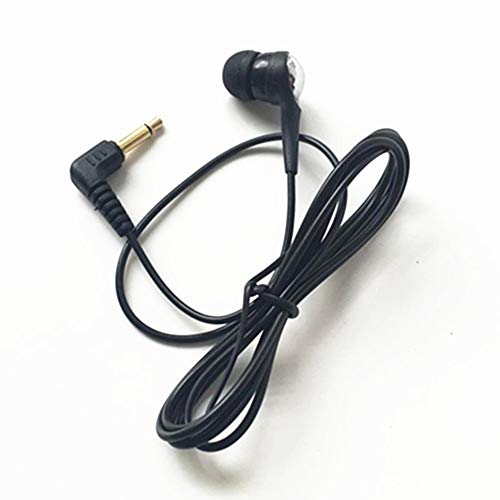
| Budget Disposable Pick | Ear Configuration: Single-ear (mono disposable) | Connectivity Type: Wired 3.5mm | Intended Use / Primary Purpose: Single-ear casual listening / sports | VIEW LATEST PRICE | Read Our Analysis |
| Reloop RHP-10 Mono Professional One-Ear Headphone |

| Professional Studio Grade | Ear Configuration: Single-ear (professional one-ear) | Connectivity Type: Wired XLR | Intended Use / Primary Purpose: Professional monitoring / studio use | VIEW LATEST PRICE | Read Our Analysis |
| EXMAX Left-Side 3.5mm Ear-Hook Headphone |
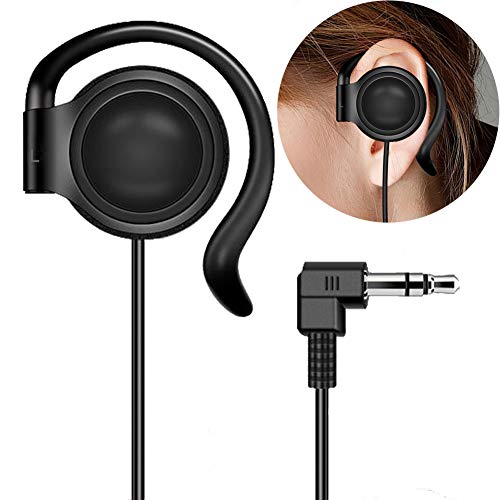
| Best for Spoken-Word Listening | Ear Configuration: Single-ear (left-side ear-hook) | Connectivity Type: Wired 3.5mm | Intended Use / Primary Purpose: Speech intelligibility / monitoring, commuting | VIEW LATEST PRICE | Read Our Analysis |
More Details on Our Top Picks
New Bee Bluetooth V5.0 Wireless Handsfree Headset (Gold)
If you need a lightweight, long‑lasting headset for calls on the go, the New Bee Bluetooth V5.0 is a great pick – its 12 g earpiece, 360° adjustable fit, and up to 24 hours of talk time mean you can wear it comfortably all day while staying reachable. You’ll get CVC 6.0 noise cancellation for clearer calls, though third‑party app calling isn’t supported. Charge in 2–3 hours and expect up to 22 hours of music or 60 days standby. It fits left or right, includes three ear tips and a carrying case, and pairs with most Bluetooth phones and laptops.
- Ear Configuration:Single-ear (adjustable for left or right)
- Connectivity Type:Wireless Bluetooth
- Intended Use / Primary Purpose:Hands-free calling / driving/business use
- Portability / Wearability:Lightweight (12 g) with carrying case
- Comfort/Fit Options:360° adjustable earbud; three ear tips
- Target Environments / Durability Notes:Everyday use for drivers/business; carrying case protects earpiece
- Additional Feature:CVC 6.0 noise cancelling
- Additional Feature:Up to 24h talk-time
- Additional Feature:Included carrying case
Bluetooth 5.3 Wireless Single-Ear Headset with APTX
The Bluetooth 5.3 single‑ear headset with aptX is ideal for professionals and on‑the‑move users who need clear, reliable calls while keeping one ear free for situational awareness. You’ll get Qualcomm QCC chip performance, dual mics with ENC plus CVC 8.0 to cut traffic, wind, and crowd noise, and optimized voice clarity for real calls. Bluetooth 5.3 delivers fast pairing, low power, and stable range to about 49 ft, plus dual-device pairing. aptX HD, AAC, and SBC support balanced audio for calls and media. It lasts up to 15 hours, has USB‑C fast charging, ergonomic earhooks, physical controls, and IPX7.
- Ear Configuration:Single-ear (mono, earhook)
- Connectivity Type:Wireless Bluetooth
- Intended Use / Primary Purpose:Hands-free calling / professional/road use
- Portability / Wearability:Ergonomic earhook with charging case
- Comfort/Fit Options:Multiple ear tip sizes; earhook
- Target Environments / Durability Notes:IPX7 sweat/rain protection; built for active/professional use
- Additional Feature:aptX HD / AAC support
- Additional Feature:Dual-device simultaneous pairing
- Additional Feature:IPX7 waterproof rating
Single-Side In-Ear Mono Disposable Earphone
You’ll find the Single-Side In-Ear Mono Disposable Earphone is best for anyone who only needs one-ear audio-think runners, couriers, or call-centric workers-because it delivers reliable mono sound through a standard 3.5mm jack without requiring adapters. You’ll get a low-cost, in-ear mono earbud with a 1.2 m cord and medium silicone eartip (latex-free) that fits most devices with a 3.5mm port: Android phones, MP3/MP4 players, laptops, tablets, and more. It’s designed for single-ear listening during sports or active shifts, offers durable construction for repeated use, and provides straightforward, no-fuss single-piece sound delivery.
- Ear Configuration:Single-ear (mono disposable)
- Connectivity Type:Wired 3.5mm
- Intended Use / Primary Purpose:Single-ear casual listening / sports
- Portability / Wearability:Lightweight disposable with 1.2 m cord
- Comfort/Fit Options:Medium silicone eartip (single size)
- Target Environments / Durability Notes:Durable for sports/running; disposable design
- Additional Feature:3.5mm mono jack
- Additional Feature:1.2 m cord length
- Additional Feature:Latex-free silicone tip
Reloop RHP-10 Mono Professional One-Ear Headphone
For DJs and audio pros who need a rugged, single-ear cueing solution, the Reloop RHP-10 delivers a pro-grade 50 mm neodymium driver in a compact, swivel-mounted design that stays comfortable through long sessions. You get professional audio performance with a flat comfort construction that’s lightweight and adjustable for extended wear. The swivel-mounted ear cup and water-resistant faux leather pad make single-ear monitoring practical and sweat-resistant. A sturdy XLR connection and ergonomically padded handle mean it’s built for gigging and travel. If you need reliable, portable one-ear monitoring, the RHP-10 balances durability, comfort, and pro-level sound.
- Ear Configuration:Single-ear (professional one-ear)
- Connectivity Type:Wired XLR
- Intended Use / Primary Purpose:Professional monitoring / studio use
- Portability / Wearability:Compact, swivel ear cup, lightweight
- Comfort/Fit Options:Swivel-mounted ear cup; padded ear pad
- Target Environments / Durability Notes:Built for professional/studio use; sturdy XLR connection
- Additional Feature:50 mm neodymium driver
- Additional Feature:Swivel-mounted ear cup
- Additional Feature:Sturdy XLR connection
EXMAX Left-Side 3.5mm Ear-Hook Headphone
If you need one ear free for situational awareness, the EXMAX Left-Side 3.5mm Ear-Hook Headphone is built for you-its left-only ear-hook and stereo-to-mono mixing guarantees every spoken word lands clearly in a single driver, so talk radio, podcasts, and dispatch audio come through intelligibly without losing channel information. You’ll appreciate its speech-forward tuning with no bass emphasis, extra-soft foam pad, and flexible 360° pivot ear-hook for long, comfortable wear. The 3.5mm plug is truly plug-and-play across phones, tablets, radios, and recorders. Sweat-proof cable, strong strain relief, and compact build make it durable and easy to carry.
- Ear Configuration:Single-ear (left-side ear-hook)
- Connectivity Type:Wired 3.5mm
- Intended Use / Primary Purpose:Speech intelligibility / monitoring, commuting
- Portability / Wearability:Lightweight ear-hook, tangle-resistant cable
- Comfort/Fit Options:360° pivot ear-hook; extra-soft foam pad
- Target Environments / Durability Notes:Sweat-proof, reinforced cable; designed for rugged daily use
- Additional Feature:Stereo-to-mono circuitry
- Additional Feature:Sweat-proof reinforced cable
- Additional Feature:360° pivot ear-hook
Factors to Consider When Choosing Single Ear Headphones
When choosing single ear headphones, you’ll want to prioritize fit and comfort so they stay secure during long wear. Check call and mic quality, battery life and charging, and whether the connection and codec support match your devices. Also consider durability and water resistance if you plan to use them outdoors or during workouts.
Fit And Comfort
Because you’ll likely wear single-ear headphones for different lengths and activities, prioritize fit and comfort from the start: pick an earbud style (in‑ear silicone tip, foam pad, or ear‑hook) that matches how long you’ll wear them, look for adjustable or swivel mounts with multiple tip sizes to secure a seal, and favor lighter, rotatable or side-specific designs to reduce ear and neck fatigue-also check IPX ratings and reinforced cables if you’ll sweat or move a lot. Beyond that, choose soft foam or padded ear-hooks for multi-hour sessions, verify small/medium/large tips are included, and prefer 360°-rotatable drivers or clear left/right orientation so you can align the speaker. Aim for units around 10–50 g and durable strain relief for reliable, comfortable wear.
Call And Mic Quality
Fit and comfort set the stage, but call and mic quality determine whether you’ll actually be heard clearly during long shifts or noisy commutes. You should prioritize headsets with dual microphones and ENC/CVC-style noise reduction to cut traffic, wind, and crowd noise for both incoming and outgoing speech. Check supported codecs and chipsets-voice-optimized codecs and Qualcomm QCC-series or similar chips give steadier Bluetooth links and clearer audio. Inspect mic placement and beamforming: close-to-mouth or directional beamforming mics outperform distant or omnidirectional units for transmit clarity. Consider measured talk-time and battery capacity since low battery can reduce transmit power and mic performance; aim for 8–15 hours for full-shift use. Finally, prefer models with tested call intelligibility or SNR improvement in noisy real-world reviews.
Battery Life And Charging
Often you’ll get the most value from single-ear headsets that deliver 12–15 hours of real talk or playback per charge, since that covers a full workday without hunting for a power outlet. You should also check charge time: USB-C fast charging that gives several hours of use in 10–20 minutes beats 2–3 hour full-charge cycles. See whether a charging case is included, since cases can extend total standby/talk time by multiple full charges and improve portability. Prioritize realistic talk-time figures and multi-day standby over marketing “up to” claims, because heavy call use and voice processing cut battery life. Finally, confirm power-management features-auto-sleep, low-power Bluetooth versions, and quick-pair behavior-to maximize daily endurance and reduce how often you recharge.
Connectivity And Codec Support
Battery life matters, but connectivity determines whether your single-ear headset will actually work with the devices you use. Check Bluetooth version-5.0+ gives better range, lower latency, and improved pairing stability compared with older standards. Match supported codecs (aptX, aptX HD, AAC, SBC) to your phone or laptop so voice calls sound clear and latency stays low.
If you juggle a phone and laptop, choose multipoint or dual-device pairing to avoid constant re-pairing when switching calls. For zero-latency reliability-live monitoring, broadcasting, or critical timing-use wired 3.5mm connections. USB-C audio offers higher-quality digital audio plus fast charging and power delivery, but it needs compatible gear and sometimes drivers. Prioritize the mix of wireless features and wired options that fits your workflow.
Durability And Water Resistance
Because you’ll likely wear a single-ear headset through sweat, rain, and repeated handling, durability and water resistance should be top priorities: check IP ratings (IPX4 vs IPX7), look for corrosion-resistant contacts and sealed housings, and inspect reinforced strain reliefs and pivot reinforcements so cables, connectors, and earhooks don’t fail after everyday use. You should pick IP levels based on use – IPX4 for sweat and splashes, IPX7 if immersion’s possible – and consider dust ingress ratings (IP5X/6X) for outdoor or dusty work. Examine connector materials (gold-plated or stainless contacts) and rigid or metal-reinforced pivot points to survive flexing. Finally, test cable routing and strain relief visually; robust joints dramatically cut the chance of failure from bending and yanking.